
For astronomy enthusiasts on Earth, witnessing the brilliant Milky Way stretching across the night sky is a crucial step in venturing into deep-sky observation. Yet, even when beginners know where to look, they often struggle to get a good view. What conditions are required to observe the Milky Way effectively? Why do some people see a clear, spectacular band of stars, while others see only a hazy sky or a faint, indistinct streak?
In reality, successfully observing the Milky Way depends on more than just location; it is influenced by a range of factors, including light pollution, lunar phases, weather, the season, geographical coordinates, and the human eye's dark adaptation. Understanding these key conditions can significantly increase the chances of a successful observation and help photography enthusiasts capture stunning images of the Milky Way.
Why Can We See the Milky Way from Earth?
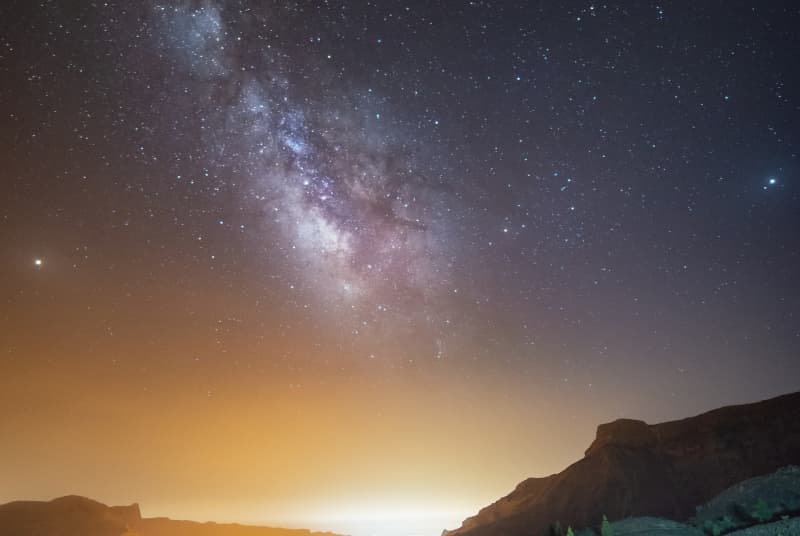
Before discussing the conditions required to observe the Milky Way, we must first understand what it actually is: the Milky Way is not a luminous band that physically exists in the sky; rather, it is a visual effect created by the vast number of stars, nebulae, and interstellar dust visible when we—situated within the Milky Way galaxy—view its galactic disk from the side.
The Milky Way spans approximately 100,000 light-years in diameter and contains hundreds of billions of stars; our solar system is located near the galaxy's Orion Arm. When we look from Earth toward the galactic center, our line of sight passes through the densely packed star fields of the galactic disk, revealing a bright, milky-white band of light that stretches across the night sky.
The Milky Way is not particularly bright; its surface brightness is far lower than that of city lights. Consequently, any artificial light source diminishes its visibility and severely hampers observation, which is why a dark environment is essential for viewing the galaxy.
Dark skies and the surrounding environment are the most critical conditions for observing the Milky Way.
If there is one decisive factor determining the success of Milky Way observation, it is the level of light pollution. The light pollution typically referred to in this context consists of background glow caused by light from city lighting, billboards, streetlights, and building illumination scattering into the sky. This scattered light reduces sky contrast, obscuring the otherwise faint glow of the Milky Way.
The Bortle Dark-Sky Scale is commonly used internationally to assess observing conditions:
Bortle Class 1: Exceptional dark sky; the structure of the Milky Way is clearly visible;
Bortle Class 2–3: Excellent observing locations;
Bortle Class 4: The main body of the Milky Way remains visible;
Bortle Class 5 and above: The Milky Way begins to appear indistinct;
Bortle Class 7 and above: The Milky Way is essentially invisible to the naked eye.
North America is home to many renowned dark-sky preserves that offer superb conditions for viewing the Milky Way; areas such as the deserts of the Southwestern United States, high-altitude mountain regions, and certain Canadian national parks all boast environments with minimal light pollution.
The Impact of Lunar Phases on Milky Way Observations
Many beginners overlook the impact of the moon on Milky Way viewing. In fact, the sky brightness caused by a full moon can exceed that of mild light pollution. Moonlight is essentially reflected sunlight; when the lunar surface is fully illuminated, it significantly raises the background brightness of the night sky, completely washing out the details of the Milky Way.
The best times for viewing the Milky Way generally include:
The three-day window around the new moon;
After the moon has set;
Late-night hours before moonrise;
Nights completely free from moonlight interference.
When planning Milky Way viewing sessions, astronomy enthusiasts in North America typically prioritize checking the lunar phase calendar over the weather forecast. Even with clear skies, the viewing experience will be severely compromised if it coincides with a full moon.
Atmospheric clarity determines the sharpness of the Milky Way's details.
Beyond light pollution and the phase of the moon, atmospheric transparency is a crucial factor for observing the Milky Way. Many people assume that any clear day is ideal for stargazing, but this is not necessarily the case; a meteorologically "clear" day does not guarantee excellent atmospheric transparency.
Key factors affecting transparency include:
Air humidity;
Thin high-altitude clouds;
Smoke and dust;
Smoke and soot from forest fires;
Industrial pollution particles.
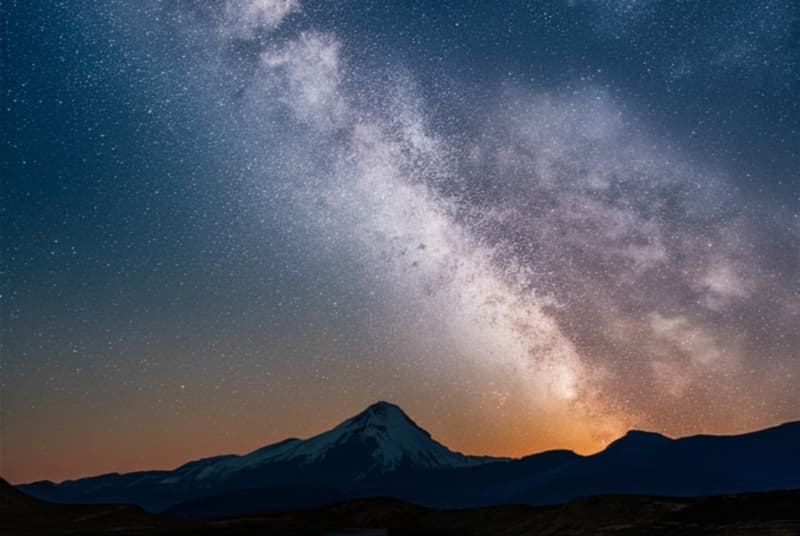
When there is a high concentration of suspended particles in the air, starlight scatters, causing the brightness of the Milky Way to diminish. In North America, high-altitude regions often offer superior atmospheric clarity; areas such as the Rocky Mountains, the Nevada plateau, and the Arizona deserts frequently provide excellent conditions for viewing the Milky Way due to their dry air and low levels of pollution.
Professional stargazers typically check the following simultaneously:
Cloud Cover
Transparency
Seeing
For Milky Way observation, transparency is the primary concern rather than seeing. While seeing mainly affects the observation of planets and binary stars, the Milky Way is a large-scale target that places a higher demand on transparency.
Best Season and Time for Viewing the Milky Way
Even with perfect weather and dark skies, the Milky Way may not look spectacular if you choose the wrong season. For the Northern Hemisphere, the Milky Way season generally runs from March to October.
The prime viewing periods are:
May through September;
10:00 PM to 3:00 AM;
The period after the Galactic Core has risen.
During summer, the Milky Way is positioned toward the constellations Sagittarius and Scorpius; at this time, we are viewing the direction of the Galactic Core, which appears at a high altitude. Particularly in regions near 30° North latitude, the Galactic Core rises higher, offering a more spectacular viewing experience. In contrast, at high latitudes, the Galactic Center remains low in the sky, resulting in a relatively limited field of view.
Dark adaptation of the human eye is an important factor that is often overlooked.
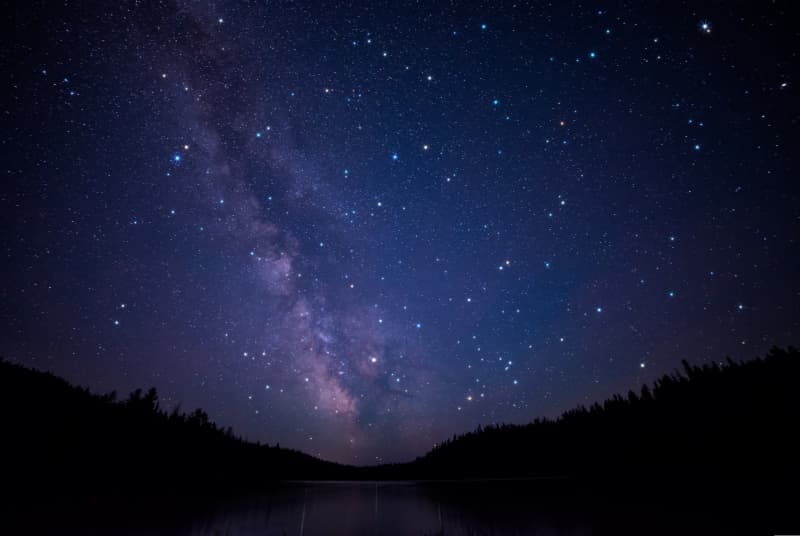
When an observer arrives at an ideal viewing location, they should not rush to look up for the Milky Way; instead, they should first allow their eyes to undergo the process of dark adaptation. In a dark environment, the rod cells in the retina gradually increase their light sensitivity. Achieving full dark adaptation typically takes 20 to 40 minutes.
During dark adaptation, avoid:
white light from mobile phone screens;
direct glare from car headlights;
white light from flashlights;
intense campsite lighting.
If illumination is required, it is best to use a red-light flashlight, as red light has less impact on the rod cells.
After full dark adaptation, the human eye's sensitivity to faint light can increase several thousand-fold; at this point, the dark nebulae, dust lanes, and structures of bright nebulae within the Milky Way become much more distinct.
Do you need a telescope to view the Milky Way?
Many people mistakenly believe that a telescope is required to see the Milky Way; in reality, the opposite is true.
The Milky Way is a massive celestial structure, and the best tools for observing it are often the naked eye or binoculars.
The naked eye allows you to see the overall outline of the Milky Way.
Binoculars with 7×50 or 10×50 specifications enable more detailed observation:
Stellar clouds;
Star clusters;
Dark nebulae;
Emission nebula regions.
In contrast, high-magnification astronomical telescopes have a narrow field of view and typically allow for the observation of only specific, localized targets within the Milky Way, such as:
The Lagoon Nebula
The Trifid Nebula
The North America Nebula (in Cygnus)
Therefore, when observing the Milky Way, prioritizing a dark-sky location and the right timing is often more important than purchasing large-scale equipment.
Summary: Conditions Required for Observing the Milky Way
In summary, the conditions required for observing the Milky Way are not determined by a single factor but rather by the interplay of multiple elements. An ideal environment for viewing the Milky Way meets several criteria simultaneously: minimal light pollution, a new moon phase, high atmospheric transparency, clear skies, the right season, and sufficient dark adaptation. Among these, getting away from city lights and choosing a moonless night typically yield the most significant improvements. For astronomy enthusiasts in North America, visiting a dark-sky preserve or a high-altitude location during the summer often offers the best opportunity to admire the spectacular structure of the Milky Way's core.