
A defining characteristic of the summer night sky is that Earth faces the direction of the Galactic Center—a region rich in bright stars, famous constellations, and a wealth of deep-sky objects. For astronomy enthusiasts in North America, clear nights from June through August offer views of many classic celestial sights, such as the Summer Triangle, Lyra, Aquila, Cygnus, Scorpius, and Sagittarius.
Observing the relative positions of bright stars and constellations helps people track seasonal changes. Although modern astronomy employs different constellation systems and naming conventions, the fundamental approach to navigating the summer sky remains much the same: first identify the most prominent bright stars, then use the geometric relationships between them to locate the surrounding constellations.

Why are these constellations visible in summer? Understanding the seasonal changes in the night sky
Some beginners are puzzled as to why the constellations appear and disappear with the seasons. In reality, constellations themselves don't disappear or appear with the seasons, and their positions in the universe remain largely unchanged. The main reason for these seasonal changes is the Earth's revolution around the Sun, causing us to face different parts of the sky at different times of the year.
In summer, the Northern Hemisphere faces the center of the Milky Way galaxy. Therefore, many constellations near the galactic center appear in the sky. At night, the Milky Way rises from the northeast, passes high in the sky, and extends to the southern region. Against this bright Milky Way background, many representative summer constellations are distributed, such as Cygnus, Lyra, and Aquila.
For observers in the Northern Hemisphere, the easiest time to observe constellations in summer is usually 1 to 2 hours after sunset. After the sky has completely darkened, you can first find a few very bright stars and then use the shapes they form to determine the positions of constellations. Mastering the seasonal patterns of the night sky is an important step from simply "stargazing" to true astronomical observation.
The Summer Triangle—The Most Prominent Feature of the Summer Night Sky
If you are looking for the most important landmark in the summer night sky, the Summer Triangle is undoubtedly the key feature to recognize. The Summer Triangle is not an official constellation; rather, it is a vast triangle formed by three bright stars belonging to three different constellations:
Vega (in the constellation Lyra);
Altair (in the constellation Aquila);
Deneb (in the constellation Cygnus).
These three stars are bright and prominently positioned, making them relatively easy to spot even near urban areas; consequently, they serve as vital navigational markers in the Northern Hemisphere's summer night sky.
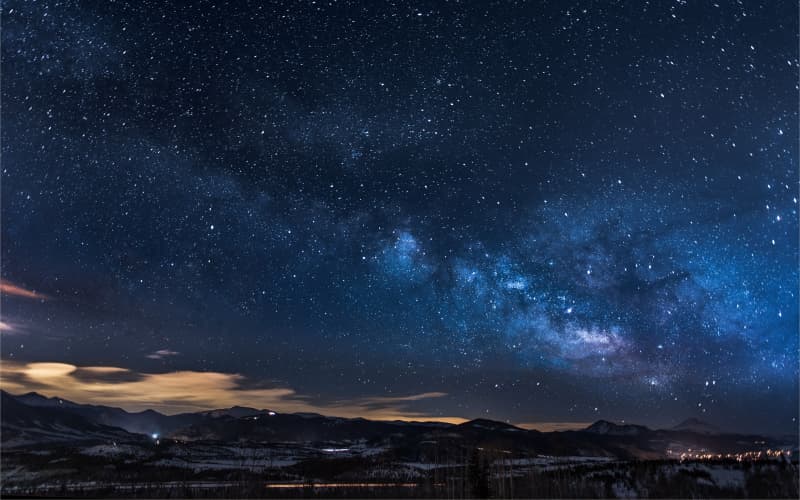
In North America, when looking up on a summer evening, one can see Vega positioned high in the sky, Deneb located near the Milky Way, and Altair situated on the opposite side of the Milky Way. Together, these three stars span the sky, forming a striking, massive triangle.
Once the Summer Triangle has been identified, observers can go on to locate surrounding constellations—such as Cygnus along the path of the Milky Way, or Sagittarius and Scorpius to the south.
Lyra and Vega: A Bright Blue-White Star in the Summer Night Sky
Lyra is one of the most easily recognizable small constellations of the summer, and its most famous star is Vega. Vega is among the brightest stars in the entire sky and serves as a hallmark of the summer night sky in the Northern Hemisphere. It shines with a distinct blue-white light—indicating a high surface temperature—and is classified as an A-type main-sequence star.
Locating Vega is very simple for beginners. You need only look for a brilliant blue-white star in the summer night sky and then observe the small, parallelogram-shaped star pattern nearby to confirm the position of Lyra.
Aquila and Altair: A Bright Summer Star Beside the Milky Way
Aquila is another prominent constellation in the summer night sky, and its brightest star is Altair. Located approximately 17 light-years from Earth, Altair is one of the bright stars situated relatively close to our solar system. Its most distinctive characteristic is its extremely rapid rotation, which gives it a slightly flattened shape.
When looking for Altair in the sky, one can use the Summer Triangle as a reference. Once Vega and Deneb have been identified, the bright star located on the opposite side of the Milky Way is Altair. It is flanked by two fainter stars; in traditional folklore, these are envisioned as the Cowherd carrying a carrying pole, forming the classic imagery associated with the legend of the Cowherd and the Weaver Girl.
Cygnus and Deneb: The Northern Cross Spanning the Milky Way
Cygnus is one of the most iconic constellations in the summer night sky. Situated in the central region of the Milky Way, it resembles a swan in flight with its wings spread wide. Its most distinctive feature is a cross-shaped arrangement formed by its primary stars, earning it the nickname "the Northern Cross." Among these stars, the brightest—Deneb—serves as a key vertex of the Summer Triangle, alongside Vega and Altair.
Set against the backdrop of the Milky Way, this region is rich in stars and deep-sky objects, making it an excellent target for binocular observation. In areas with minimal light pollution, the Milky Way can be seen passing through the vicinity of Cygnus, creating a spectacular sight in the summer night sky.
Scorpius and Sagittarius: The Core Region of the Southern Summer Sky
Beyond the Summer Triangle, the constellations Scorpius and Sagittarius are prominent features of the summer night sky in the south. Scorpius boasts a distinctive shape; its curved body and tail make it one of the easiest constellations to recognize. Its most famous star is Antares—also known as the "Great Fire Star"—a red supergiant that ancient observers named for its color, which resembles that of the planet Mars.
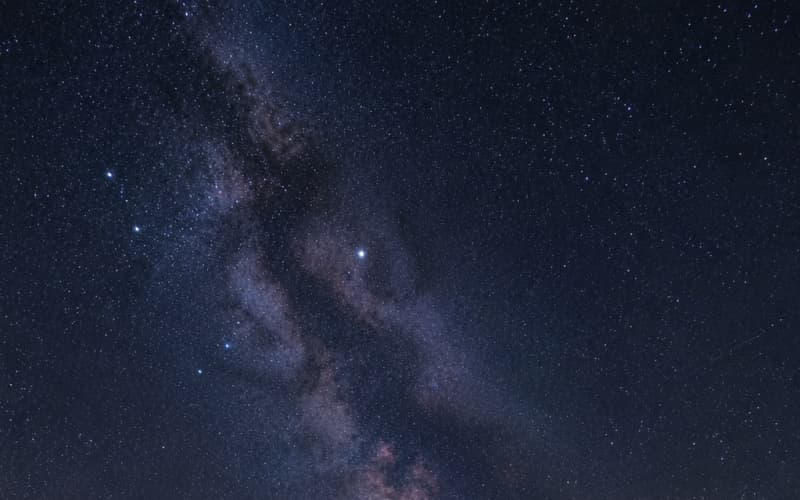
The constellation Sagittarius lies in the direction of the Galactic Center. From mid-to-low latitudes in North America, looking south on a summer night reveals the brightest and densest sections of the Milky Way. Because the region near the Galactic Center teems with nebulae, star clusters, and stars, the area encompassing Scorpius and Sagittarius is a prime target for amateur astronomers engaged in deep-sky observation.
How can you quickly locate the summer night sky in North America?
Beginners can follow a simple sequence to navigate the summer sky:
First, locate the Summer Triangle; it serves as the most reliable reference point for the entire summer sky. Next, identify the corresponding constellations based on its three bright stars:
Vega → Lyra;
Altair → Aquila;
Deneb → Cygnus.
Then, follow the Milky Way southward to find the regions of Scorpius and Sagittarius. If you are observing from the western United States, rural Canada, or other areas with dark skies, you can also use binoculars to explore the star clusters and nebulae within the Milky Way.
Keep in mind that urban light pollution reduces the visibility of the Milky Way but does not prevent you from seeing the bright stars. Therefore, even if you live near a city, the summer sky remains well worth exploring—provided you choose an open viewing location.