
The Sun, the Moon, and planets such as Venus, Jupiter, and Mars—which we see in the sky every day—appear to move freely, yet they actually travel along an invisible path known as the ecliptic. For many astronomy enthusiasts in North America who are new to stargazing, understanding the nature, location, and identification of the ecliptic is essential; mastering this knowledge allows one to quickly locate the five major planets in the night sky and better comprehend the Sun's changing position throughout the seasons.
What is the ecliptic, and why is it so important in astronomy?
The ecliptic is an imaginary great circle formed where the plane of Earth's orbit around the Sun intersects the celestial sphere. When observing from Earth, we do not perceive Earth's motion around the Sun; instead, we see the Sun moving slowly against the background of the sky, completing a full circuit in approximately one year. This path traced by the Sun over the course of the year is the ecliptic.
Why are the five major planets all distributed near the ecliptic?
If you frequently observe the night sky, you will notice that Mercury, Venus, Mars, Jupiter, and Saturn rarely stray far from a specific region of the sky; this is because they all orbit the Sun. Furthermore, since their orbits lie on nearly the same plane, they always appear near the ecliptic when viewed from Earth—which is why astronomers often say, "To find the planets, first find the ecliptic."
For observers in North America, if a particularly bright celestial object that barely twinkles appears in the night sky near the ecliptic, it is likely Venus, Jupiter, Mars, or Saturn, rather than an ordinary star.
Where is the ecliptic located in the night sky, and how can you find it quickly?
Since the ecliptic is an imaginary line, it cannot be seen directly in the sky. However, there are two ways to determine its approximate location.
The first method is to look for the zodiac constellations. The ecliptic passes through thirteen zodiac constellations, including Aries, Taurus, Gemini, Leo, Libra, Scorpio, and Sagittarius. Once you are familiar with the positions of these constellations, you can roughly trace the path the ecliptic follows.
The second method involves observing the planets. Because the five major planets always move near the ecliptic, locating a bright planet—and using star-charting software—allows you to infer the general trajectory of the ecliptic.
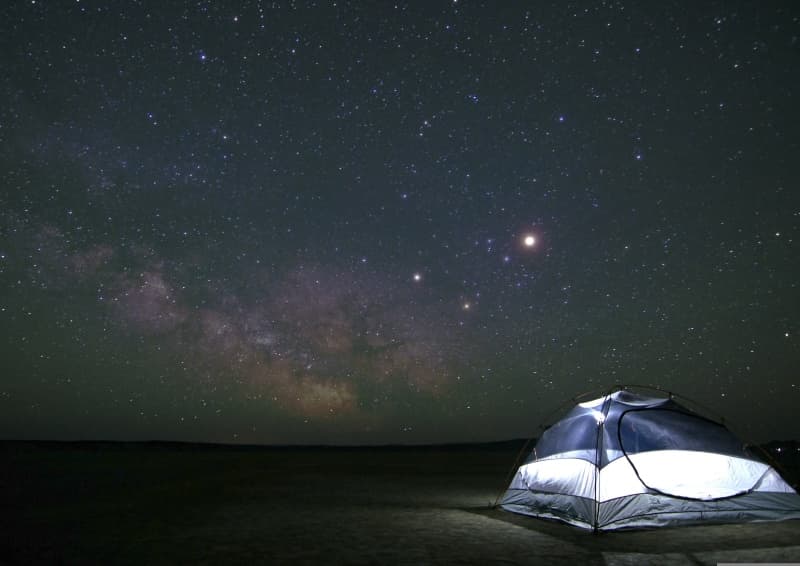
For beginners new to stargazing, combining these two methods is the most effective approach; it also helps build a comprehensive understanding of the structure of the night sky.
Why does the sun's altitude differ between summer and winter?
Many people notice that at noon in summer, the sun hangs almost directly overhead, whereas in winter, it remains relatively low in the sky. This phenomenon is related to the ecliptic.
Due to the Earth's axial tilt of approximately 23.5°, the sun's position along the ecliptic changes continuously throughout the year. When the sun moves to the northern side of the ecliptic, the Northern Hemisphere experiences summer; the sun rises higher, and daylight hours are longer. Conversely, when the sun moves to the southern side of the ecliptic, the Northern Hemisphere enters winter; the sun's altitude decreases, and daylight hours shorten.
Planets located near the ecliptic—such as Jupiter, Mars, and Saturn—also appear at different altitudes depending on the season, as their positions along the ecliptic vary. Consequently, it is not contradictory for Jupiter to hang high in the night sky while the sun appears lower during the day; this simply results from their differing positions along the ecliptic.
How can you use the ecliptic to locate planets while stargazing in North America?
For astronomy enthusiasts in North America, understanding the ecliptic is primarily valuable because it enables the quick identification of planets and significant celestial events.
Before observing, you can check a star chart app to identify the constellations through which the ecliptic passes. Once night falls, focus on the brightest celestial bodies near the ecliptic; by considering characteristics such as color, brightness, and whether the light twinkles, you can readily distinguish between Venus, Jupiter, Mars, and Saturn.
As you gain observing experience, you may even be able to pinpoint the locations of major celestial bodies in the night sky without any aids, relying solely on the constellations along the ecliptic and the distribution of the planets.