
For beginners in astronomy, learning to identify bright stars in the night sky is a crucial first step in stargazing. Whether it's the dazzling Canis Major α in the North American winter night sky, or Lyra α and Aquila α near the Milky Way in summer, these bright stars form most people's earliest memories of the night sky.
So, which star is actually the brightest in the night sky? Why are some stars significantly brighter than their surroundings? And to which constellations do the bright stars that frequently appear in astronomical observations, star chart apps, and astronomical location tools belong?

In modern astronomy, Apparent Magnitude is generally used to measure the brightness of a star as seen from Earth. The smaller the apparent magnitude, the brighter the star; negative numbers represent extremely bright objects, thus, stars that fall into the first-magnitude range.
There are approximately 21 stars that reach first magnitude or brighter. Since some stars are variable stars, their brightness fluctuates, so the ranking may vary slightly across different astronomical sources, but the overall ranking is generally consistent.
It's important to note that this list only includes stars:
Excludes planets such as Jupiter and Venus
Excludes the Moon
Excludes the Sun
Below, we will list the 21 brightest stars in the night sky, ranked by brightness, starting from number 21.
Numbers 21-16: Important Bright Stars in the Spring and Winter Skies
Number 21: Leo α
Leo α is the brightest star in the constellation Leo and a very important first magnitude star in the spring night sky. In North America during spring, Leo α is generally located in the southern sky and is part of the Zodiac constellations.
Because it is located near the ecliptic, the Moon and planets frequently pass in its vicinity.
20th: Crux β
Crux β, located in the constellation Crux (Southern Cross), is one of the most famous bright stars in the southern sky.
Due to the southern location of the Crux constellation, it is practically impossible to observe it completely from most of North America. Only in the low latitudes of the southern United States is it possible to see parts of the Southern Cross in the low sky.
19th: Cygnus α
Cygnus α is the brightest star in Cygnus and a member of the famous Summer Triangle.
In North American summer Milky Way observations, Cygnus α is almost always one of the most important navigation stars. It is located near the Milky Way's core extension, so Milky Way photographers often locate Cygnus α first.
Although Cygnus α is over 2600 light-years from Earth, its extremely high actual luminosity makes it one of the brightest stars in the entire sky.
18th: Piscis Austrinus α
Located in Piscis Austrinus, Piscis Austrinus α is a very lonely yet prominent bright star in the autumn night sky.
Due to the lack of particularly bright stars around it, it stands out exceptionally in the southern autumn sky.
In recent years, Piscis Austrinus α has also received considerable attention due to the possibility of a planetary system.
17th: Gemini β
Gemini β is the brightest star in Gemini and a very easily recognizable orange giant star in the North American winter night sky.
In Gemini, Gemini β and Castor form a very distinct "twin structure," which is very helpful for beginners in identifying the winter night sky.
16th: Virgo α
Virgo α is the brightest star in Virgo and a core member of the Spring Triangle.
Many North American stargazers use the direction of the Big Dipper's handle to find Boötes α, and then continue extending it to find Virgo α.
This is the classic method of star navigation:
"Arc to Boötes α, spike to Virgo α".
15th to 11th: A large number of bright stars appear in the summer Milky Way region
15th: Scorpius α
Scorpius α, located in Scorpius, is a famous red supergiant star.
Due to its distinctly reddish color, it is highly recognizable near the summer Milky Way. Many people observing Scorpius α for the first time with a telescope will notice its unique orange-red glow.
Scorpius α's color is very similar to Mars.
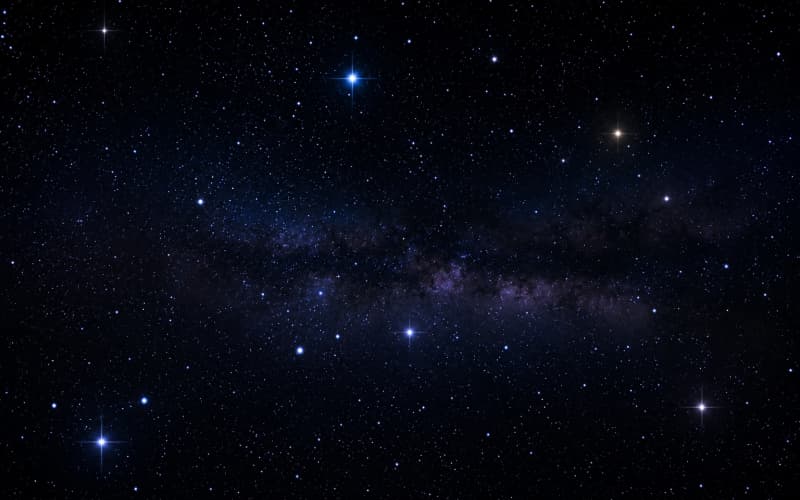
14th: Taurus α
Taurus α is a famous bright orange star in Taurus, located near the Hyades star cluster.
In the North American winter sky, Taurus α and the Pleiades form a highly representative winter observation area.
13th: Crux α
Crux α is the brightest star in the Southern Cross constellation.
Due to its very southern location, it is not easily observed in most parts of North America, but it is extremely well-known in the Southern Hemisphere night sky.
12th: Aquila α
Aquila α is the brightest star in Aquila and a core member of the Summer Triangle.
After the Milky Way rises in North America during the summer, Aquila α is usually located in the eastern region of the Milky Way and is very easy to identify.
Many beginners often find the Milky Way for the first time through the Summer Triangle, which consists of Lyra α, Cygnus α, and Aquila α.
11th: Centaurus β
Centaurus β is located in Centaurus and is a famous blue-white giant star in the southern sky. Because of its proximity to Centaurus α, it is highly representative of observations in the Southern Hemisphere.
10th to 6th: The Official Dominant Stars of the North American Winter Sky
10th: Eridanus α
Eridanus α is one of the fastest rotating stars in the entire sky.
Due to its rapid rotation, its equatorial region has even bulged significantly, giving it an "oblate spheroid" structure rather than a perfect sphere.
9th: Orion α
Orion α is a famous red supergiant star in Orion.
It is also one of the most watched potential supernova candidates. Since Orion α is nearing the late stages of its stellar evolution, a supernova explosion may occur sometime in the future.
8th: Canis Minor α
Canis Minor α is a member of the Winter Triangle.
It, along with Canis Major α and Orion α, forms the most classic stellar positioning structure in the North American winter night sky.
7th: Orion β
Orion β is actually brighter than Orion α.
It is an extremely hot blue supergiant and one of the brightest stars in the Orion constellation.
Orion β also has a relatively easy-to-observe companion system when observed with small telescopes.
6th: Auriga α
Auriga α is one of the brightest yellow stars in the North American winter sky.
Even in urban light pollution, Auriga α remains very visible, so many stargazing apps use it as an important location star.
5th to 1st: The Most Famous Superbright Stars in the Sky
5th: Lyra α
Lyra α is the brightest star in Lyra.
It is not only the core of the Summer Triangle but also one of the brightest stars in the Northern Hemisphere during the summer.
Because Lyra α is only about 25 light-years from Earth, it appears exceptionally bright in the night sky.
4th: Boötes α
Boötes α is one of the brightest stars in the Northern Hemisphere spring night sky.
It has a very distinct orange hue and is one of the first bright stars many North American stargazers learned to identify.
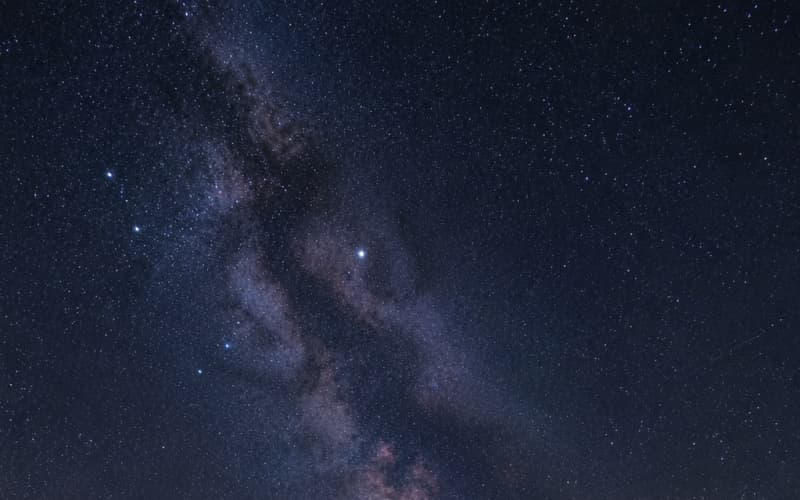
3rd: Centaurus α
Centaurus α is the closest star system to our solar system.
It is actually a multiple star system, including the famous Proxima Centauri.
2nd: Carina α
Carina α has an incredibly bright true brightness.
Although it is over 300 light-years from Earth, it is still the second brightest star in the entire sky.
Due to its southern location, it is not easily observed in most parts of the United States.
1st: Canis Major α
Canis Major α is the brightest star in the entire sky.
It is located in the constellation Canis Major and has an astonishing apparent magnitude of -1.46.
Canis Major α is so bright primarily for two reasons:
Its extremely high luminosity
Its very close proximity to Earth, approximately 8.6 light-years away.
In the winter night sky over North America, Canis Major α is almost impossible to mistake. Simply locate the three stars of Orion's Belt and extend your line downwards and to the left along their axis to find this exceptionally bright star.
Why is recognizing these bright stars so important for stargazing?
For astronomical observers, these brightest stars are not only beautiful targets in the night sky but also the core of the entire celestial navigation system. Many novice astronomy enthusiasts find observing the night sky complex mainly because they lack a "bright star map." Recognizing these stars makes the entire Northern Hemisphere night sky much clearer.