
During astronomical observations, astronomers discovered early on that stars in different regions exhibited significant differences in color, brightness, and motion, but the underlying reasons remained unclear. It wasn't until the mid-20th century, through continuous analysis and summarization of observational data, that astronomers gradually realized that these differences reflected the "birth age" and "chemical composition" of the stars—in other words, different stars were born from different "populations."
To better describe these differences, astronomers introduced the concept of a stellar population to represent a group of stars with similar characteristics in age, chemical composition, and spatial distribution. This significant discovery that stars were born in different eras provides a crucial clue to understanding the evolution of the Milky Way and even the entire universe.
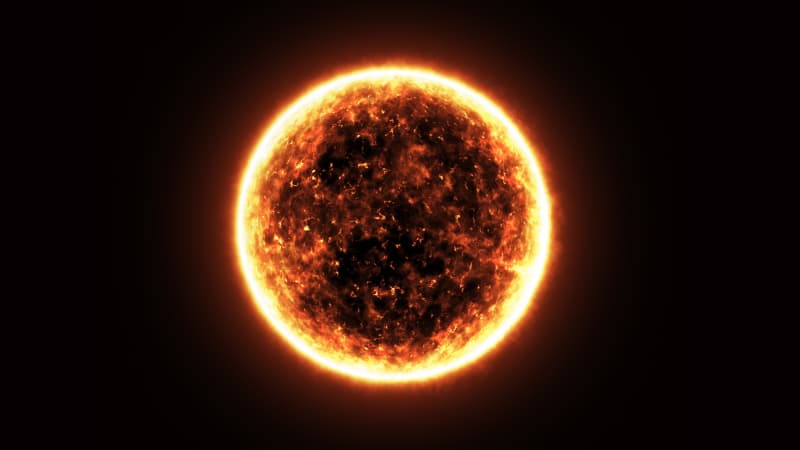
The Concept of Star Populations: From Observational Differences to Systematic Classification
The modern stellar population classification in astronomy was primarily proposed by Walter Bader in the 1940s. Through observations of the Andromeda Galaxy and the Milky Way, he discovered that stars could be clearly divided into two categories: one group of young stars distributed in the spiral arms of galaxies; and another group of older stars distributed in the galactic centers and globular clusters.
While Jan Oort had noted these differences in the motion and spatial distribution of stars even earlier, it was only after Walter Bader proposed a systematic classification method that the stellar population classification truly became a crucial foundation for stellar classification in astronomy.
First, let's discuss what "metallicity" is, as it's key to understanding Stellar Populations.
In astronomy, the meaning of "metal" is completely different from our everyday understanding. In astronomy, all elements except hydrogen and helium (including carbon, oxygen, iron, etc.) are collectively called "metals," and the proportion of these metallic elements in a star is called metallicity.
Metallicity is important because it records the "chemical environment" of the universe in which a star was born. The early universe contained almost only hydrogen and helium. With each generation of star evolution and explosions, heavier elements were continuously created and diffused into space.Therefore:
(1) The younger the star, the higher its metallicity usually is.
(2) The older the star, the lower its metallicity generally is.
Below, we will introduce the current astronomical definitions of different star populations:
Population I: Metal-rich young stars
Population I stars are the most familiar type of star. They are mainly distributed in the spiral arms of the Milky Way, including a large number of blue young stars and middle-aged stars similar to the Sun. A common characteristic of these stars is their high metallicity, because they were born from interstellar matter accumulated by multiple generations of stars.
Our Sun belongs to Population I stars, with a metallicity of about 1% to 2% of its total mass. This high metallicity indicates that various cosmic materials are more abundant in this region, making it easier for planets to form. This is why the probability of finding planetary systems around stars similar to the Sun is higher.

Population II: Ancient and metal-poor stars
Even older than Population I are Population II stars. These stars formed in the early universe and have a much lower metallicity than Population I stars, hence they are also called "metal-poor stars." This group of stars is typically found near the core of the Milky Way and in globular clusters, with more random and tilted orbits.
Because these stars formed in a cosmic environment lacking heavy elements, the probability of planetary systems forming around them is low. Many known ancient stars belong to this group, such as the famous Mathuzad, whose age is close to that of the known universe itself.
Population III: The Theoretical First Generation of Stars
Besides the clearly identifiable Population I and II stars, astronomers have identified a third group: Population III. These stars are the first generation of stars after the birth of the universe. They formed in primordial gas composed almost entirely of hydrogen and helium, and therefore contain no metallic elements.
Astronomical theoretical models predict that these stars have extremely large masses, possibly tens or even hundreds of times that of the Sun. Due to their enormous mass, Population III stars experience extremely violent nuclear reactions and have exceptionally short lifespans, typically only a few million years, far shorter than the 10 billion-year lifespan of Sun-like stars like the Sun.
So why haven't the first generation of stars been discovered yet?
A somewhat contradictory question arises: if the first generation of stars (i.e., Population III stars) truly existed, why haven't astronomers been able to observe them?
There are three main reasons:
(1) First, the issue of stellar lifespan: Due to their enormous mass, Population III stars undergo extremely rapid nuclear combustion, completing their evolution in the early universe and disappearing in supernova explosions. Therefore, it's almost impossible for them to still exist in today's universe.
(2) Second, the issue of distance: Population III stars were born in the early universe. To observe their traces, we need to observe extremely distant parts of space, perhaps near the edge of the observable universe. At such distances, even the most advanced telescopes in the world today struggle to distinguish the existence of a single star.
(3) Finally, the issue of observation difficulty: even if we detect light signals from the early universe, these signals often originate from a galaxy or star cluster, not a single star. Therefore, current observations of the first generation of stars rely more on indirect evidence: for example, the existence of stars with extremely low metallicity in Population II, which infers the remnants of the first generation of stars. When will we be able to truly confirm the existence of first-generation stars?
Although stars truly belonging to Population III have not yet been directly observed, astronomers have discovered many "extremely metal-poor stars." These stars have extremely low metal content, and astronomers speculate that they were formed from the material of first-generation star explosions. These stars are like "fossils" of the early universe's history, providing us with important clues.
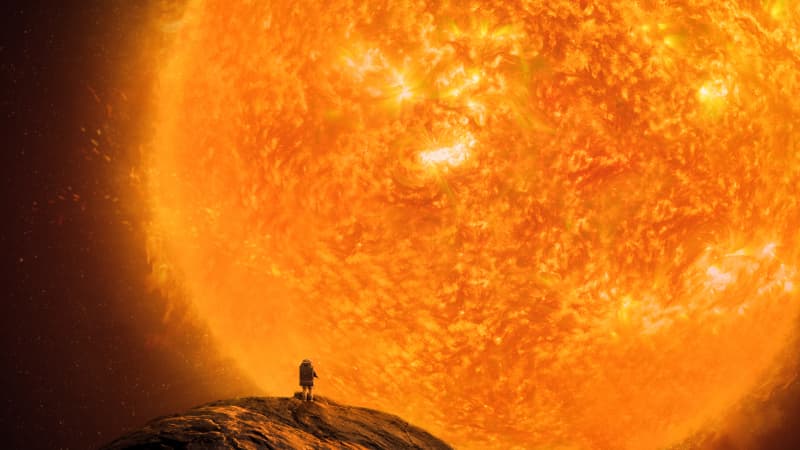
With the continuous development of astronomical observation technology, humanity will gradually approach the answer to this question. Perhaps in the not-too-distant future, by observing the spectral characteristics of early galaxies, we can indirectly identify the existence of first-generation stars.
Star Populations are the Key to Understanding the Evolution of the Universe
The concept of star populations is not merely a classification of different types of stars; it records the evolution of the universe from simple to complex. From the metal-free first-generation stars to the subsequent star populations rich in various elements, each type of star tells a different stage of the universe's long evolutionary history.
The Sun, which we see every day, is just an ordinary member of this long evolutionary process. But it is precisely these ordinary stars that have given birth to complex planetary life systems like Earth, allowing us to reflect on the origin of the universe.