
Nebulae are mainly classified into three types: emission nebulae, reflection nebulae, and dark nebulae. This classification is primarily based on their luminescence patterns. Additionally, from a formation perspective, they can be divided into planetary nebulae and supernova remnants. Understanding these classifications not only helps amateur astronomers recognize the characteristics of different nebulae but also provides a better understanding of the birth and death processes of stars.
What is a Nebula?
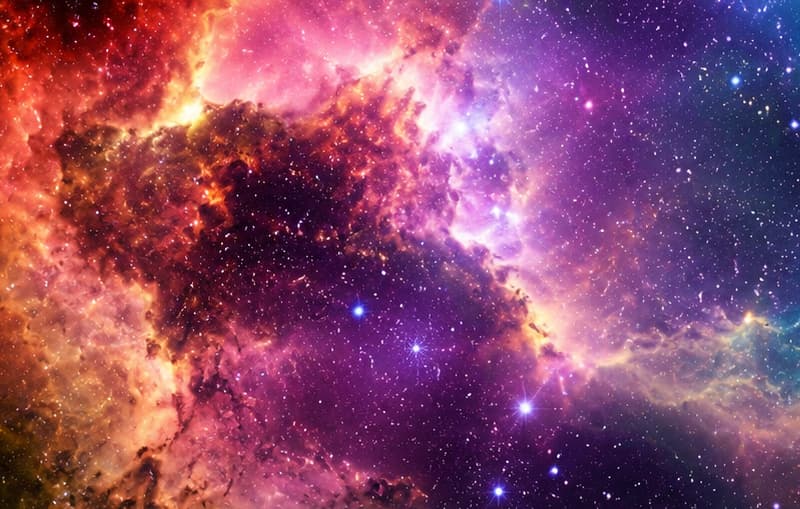
Nebulae are giant cloud-like celestial bodies composed of gas (mainly hydrogen) and interstellar dust, distributed throughout space. Nebulae are both the cradle of star formation and the interstellar matter left behind after stars die, playing a crucial role in the evolution of the universe.
Most nebulae in the universe are too dim to be observed directly with the naked eye, but there are exceptions, such as the Orion Nebula, which can be seen directly with the naked eye under good observation conditions. This is one of the first targets for many beginner astronomers.
Nebulae are classified into three basic types based on their emission patterns:
Emission Nebulae
Emission nebulae are the most common and typical type of nebula in space. They emit light because massive stars exist within or near them. The large amounts of ultraviolet radiation emitted by these stars ionize and excite the gas within the nebula. When the gas returns to a lower energy level, it releases energy as visible light, thus producing the luminescence.
Representative examples of this type of nebula include:
The Orion Nebula
The Eagle Nebula (which contains the famous Pillars of Creation)
These nebulae typically appear red or pink, a result of the emission spectrum of hydrogen gas.
Reflection Nebulae
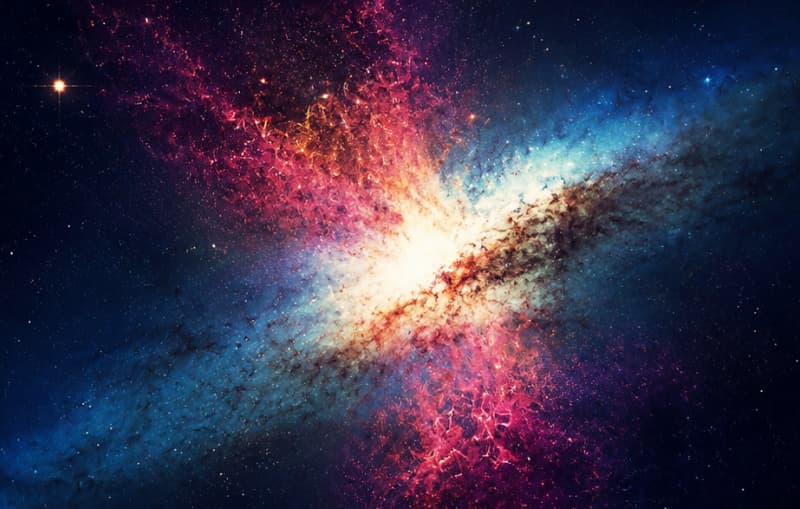
Unlike emission nebulae, reflection nebulae do not emit light themselves. They are visible because dust particles within the nebula reflect and scatter light emitted by nearby stars.
These types of nebulae typically lack sufficiently hot stars to excite the gas within them to emit light, thus reflecting only the light from other stars. Because blue wavelengths are shorter and more easily scattered, emission nebulae usually appear blue.
Typical examples include:
Iris Nebula
Pleiades Reflection Nebula
Dark Nebulae
Dark nebulae neither emit nor reflect light; they can only be detected by blocking background light sources.
When the dust density within a nebula is high enough, it blocks light from stars, galaxies, or other luminous nebulae behind it, creating a "shadow" against a bright background. Therefore, dark nebulae are usually only easily identifiable against a bright background.
Dark nebulae present a completely different form of light. They neither emit nor reflect light; they are "seen" by blocking background light sources.
Typical examples include:
Horsehead Nebula
Classified by formation mechanism: Products of stellar evolution
Planetary Nebulae
Planetary nebulae are not related to planets; the name is merely a historical designation. They form in the late stages of the evolution of intermediate-mass stars. When a star's life ends, it ejects its outer layers of gas, which are then excited by the ultraviolet radiation of the central white dwarf, forming a luminous shell structure.
Typical examples include:
Ring Nebulae
Cat's Eye Nebula
Supernova Remnants
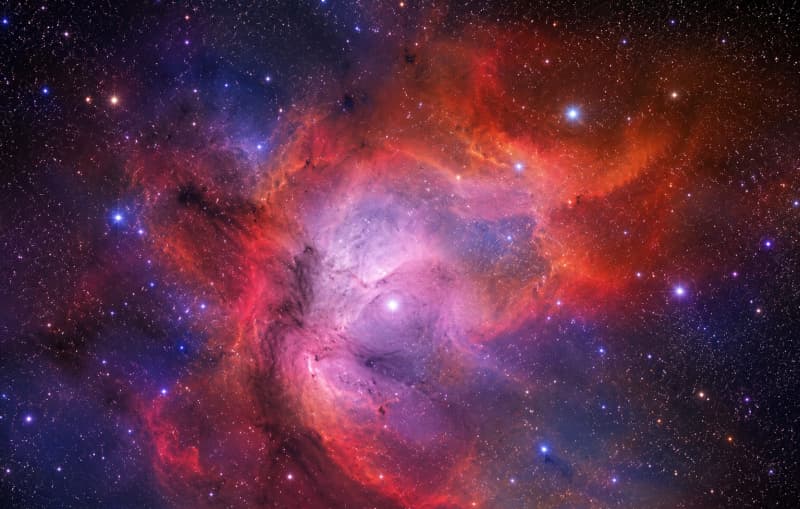
When a star undergoes a supernova explosion, it releases enormous energy in a very short time, ejecting material from the outer layers of the star at high speed into surrounding space. This material interacts with the interstellar medium, forming an expanding gas structure—the supernova remnant.
These nebulae typically have complex internal structures, containing shock waves and high-energy radiation, and are important subjects for astronomical research on stellar death.
The most famous example is:
Crab Nebula
Conclusion
Nebulae are not a single type of celestial body, but are divided into many different types according to different luminescence patterns and formation mechanisms. Whether it is an emission nebula, a planetary nebula left by the death of a star, or a supernova remnant, they all play an important role in the evolution of the universe.