
It is time once again to enjoy the annual Perseid meteor shower. As one of the most famous and reliable meteor showers of the year, the Perseids are known for their high meteor count, moderate speed, and extended viewing window.
The 2026 Perseid meteor shower will reach its peak during the daytime on August 13. Because observers in North America will be unable to see the exact peak moment directly, the best viewing window will fall between the night of August 12 and pre-dawn on August 13. Viewing conditions this year are fairly ideal with minimal moonlight interference, making fainter meteors easier to spot and rendering it an excellent opportunity for outdoor stargazing.
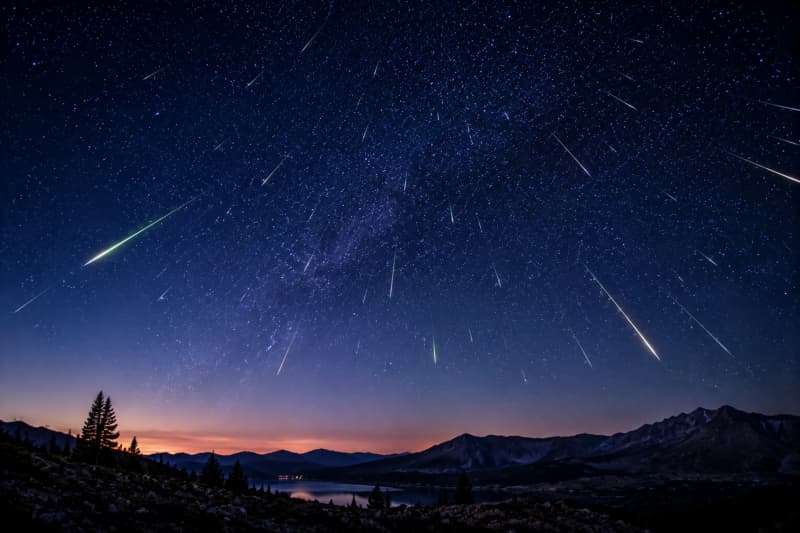
Unlike ordinary night-sky observation, watching a meteor shower does not require a telescope—your naked eyes are the best tool. As long as you choose a location far from city lights and know how to look, you can enjoy the spectacular sight created by cosmic dust colliding with Earth's atmosphere.
What Are the Perseids? Why Do They Appear Every August?
The Perseid meteor shower is a periodic event that typically occurs from late July to mid-August each year. The parent body of the Perseids is Comet 109P/Swift-Tuttle. As this comet orbits the Sun, it continuously sheds material composed of ice, rock, and dust. When these tiny particles drift near Earth's orbit and Earth passes through their path, the dust enters Earth's atmosphere at extremely high speeds.
Upon entering the atmosphere, high-speed friction and compressive heating rapidly vaporize the meteoroids' surfaces, causing them to emit bright light—producing the "shooting stars" we see.
Although we observe streaks of light zip across the night sky, meteors usually originate from tiny particles ranging from millimeters to centimeters in size. They burn up at high altitudes within the atmosphere, tens to over a hundred kilometers above the ground.
Best Viewing Times for the 2026 Perseid Meteor Shower
According to astronomical forecasts, the 2026 Perseid meteor shower will peak during the daytime on August 13. Therefore, the prime viewing times are concentrated in:
Prime Viewing Times:
Night of August 12, 2026
From the early hours of August 13 until before sunrise
Generally, meteor shower viewing is better during the latter half of the night. As the Earth rotates, the observer's position gradually turns into the headwind direction of the meteor stream, encountering more dust particles entering the atmosphere. Consequently, you are far more likely to spot higher numbers of meteors between 2:00 AM and dawn than in the early evening.
In addition, moonlight interference will be weak during the 2026 Perseids. The darker sky background will make faint meteors much easier to detect.
Where Is the Radiant Point? Do You Need to Stare Directly at It?
The trajectories of meteors in a shower all appear to radiate outward from a specific region of the sky, known as the radiant point. The radiant point of the Perseids is located near the constellation Perseus, which gives the shower its name.
However, the radiant point is merely a visual effect created by perspective, rather than the place from which meteors physically originate. This phenomenon is similar to watching straight train tracks that seem to converge at a distant point.
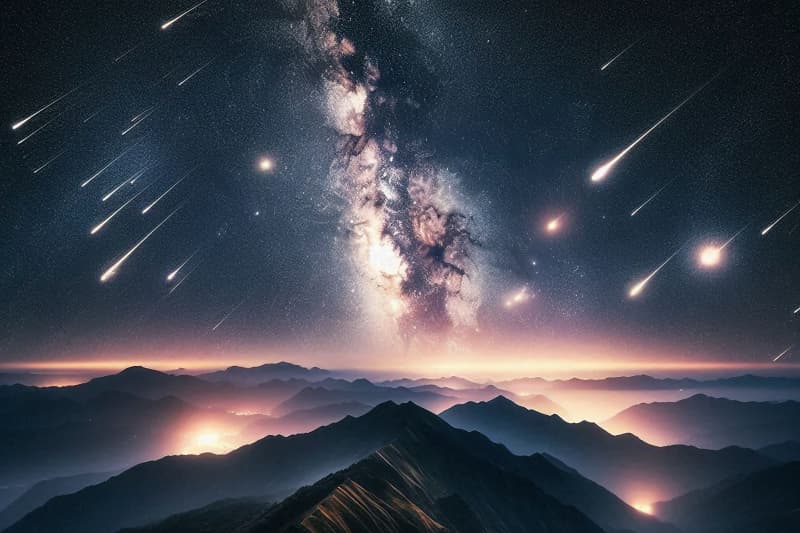
In reality, meteors can appear across vast areas of the sky. If you stare continuously at the radiant point itself, you risk missing longer, more visible meteor trails. The best method is to lie down and scan a wide field of view, covering the area surrounding the radiant point.
How to Find the Perseids in North America
For beginner stargazers in the United States and Canada, finding the Perseids is relatively simple because meteor showers do not require pinpointing individual stars with high precision.
That said, knowing the constellations around the radiant point helps determine which direction to face. Perseus sits in an easily navigable area of the Northern Hemisphere sky, near two prominent constellations:
Cassiopeia
Auriga
These two constellations are highly recognizable for North American observers. The radiant point of the Perseid meteor shower lies roughly in the region between Cassiopeia and Auriga.
If you are unfamiliar with constellations, there is no need to worry. Simply use a astronomy smartphone app in advance to confirm the northeastern direction. When the meteors appear, you won't need telescopes or professional equipment—just a little patience as you watch.
Where Are the Best Locations to Watch the Perseids?
The biggest enemy of meteor watching is light pollution, not equipment. Streetlights and architectural lighting in cities brighten the background sky, hiding fainter meteors. Therefore, choosing an appropriate location is far more crucial than buying expensive equipment.
Ideal places in North America to watch the Perseid meteor shower include:
National parks
Rural areas
Open suburban locations
International Dark Sky Reserves
Many regions in the western United States feature vast landscapes with low light pollution, making them exceptionally well-suited for summer meteor watching. Parts of Canada also offer outstanding dark-sky conditions thanks to lower population density.
When observing, choose an open location free from trees or buildings blocking your view of the sky.