
There was a time when gazing up at the night sky was an everyday occurrence. On nights away from city lights, people could not only see thousands of stars but also clearly admire the Milky Way stretching across the heavens. However, as urbanization accelerates, more and more people find that fewer stars are visible at night, and the Milky Way has become a rare sight. The impact of light pollution on the night sky has become a major concern for the global astronomical community; it has not only altered the stargazing experience but also profoundly affected the ecological environment, scientific research, and human culture.
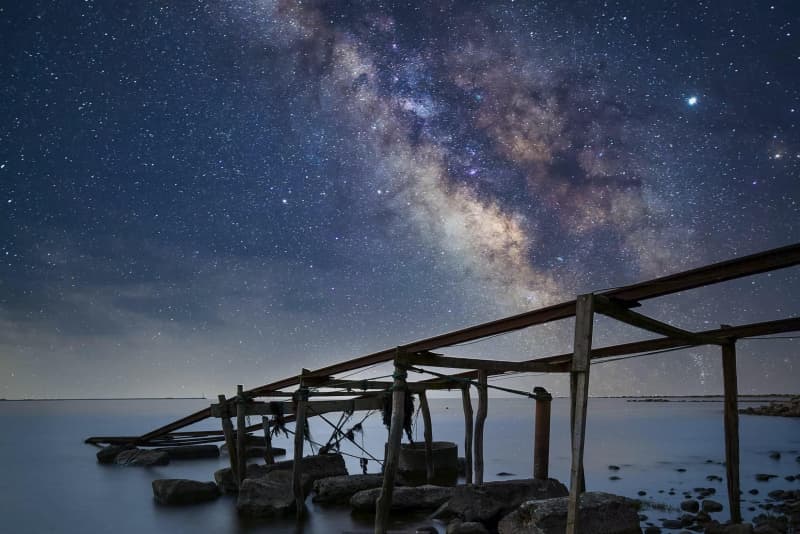
Why is it becoming increasingly difficult to see the Milky Way and a sky full of stars?
Many people share a common experience: while they could look up and see a sky teeming with stars during their childhood, today they see only a few bright stars in the urban night sky. This is not because the Milky Way has vanished or the stars have dimmed; rather, light pollution is making the background of the night sky increasingly bright.
Streetlights, billboards, architectural lighting, and landscape lights in cities constantly scatter light upward into the sky. When this light—originally intended for illumination—reflects off airborne particles such as dust and water vapor, it creates a bright "curtain of light" that obscures the faint starlight. The Milky Way itself has relatively low luminosity, making it nearly impossible to see with the naked eye in areas with severe light pollution.
Therefore, the reason we see the Milky Way less and less is not that the galaxy itself has changed, but that the environment of the night sky has altered.
Why does light pollution affect astronomical observation?
A dark night sky is one of the most crucial conditions for astronomical observation.
Light from stars, nebulae, and the Milky Way travels for decades, centuries, or even millions of years to reach Earth, and many of these celestial objects are inherently faint. As city lights raise the background brightness of the night sky, the human eye's ability to distinguish differences in brightness diminishes significantly; consequently, many faint stars and deep-sky objects "disappear" into the background glow.
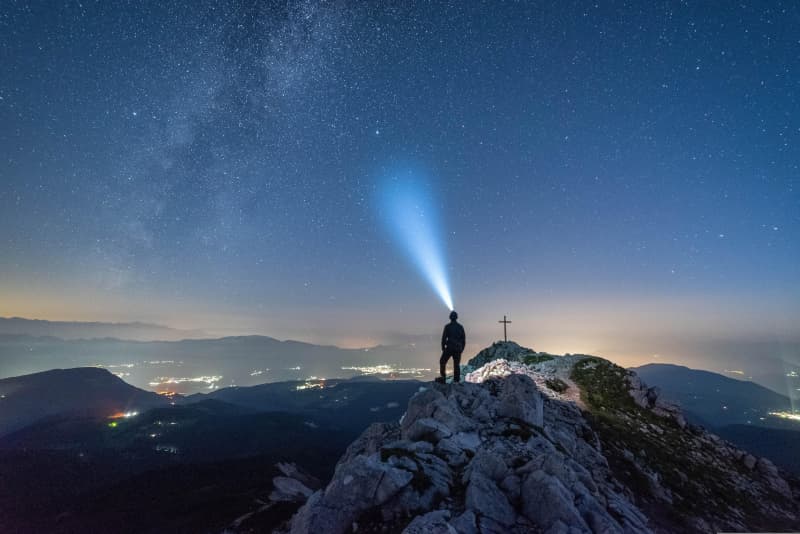
Even with binoculars or telescopes, achieving optimal observational results is difficult in areas plagued by severe light pollution. This is precisely why many astronomy enthusiasts in North America travel to national parks, mountainous regions, or deserts to stargaze—to escape urban light pollution and enjoy a pristine night sky.
The Bortle Scale: What Class Is Your Night Sky?
To measure the quality of the night sky, the Bortle Scale is widely used internationally.
This standard classifies the night sky into nine levels based on the degree of light pollution. Class 1 represents skies with virtually no artificial light pollution, where the Milky Way, zodiacal light, and numerous deep-sky objects are easily visible; Class 9 represents inner-city environments, where typically only the Moon, a few bright planets, and the brightest stars can be seen.
Currently, most urban residents live under Class 5 to Class 9 skies, making it difficult to view the true Milky Way even in clear weather. However, certain "Dark Sky Parks" and nature reserves in North America still offer high-quality skies approaching Class 1 or 2, making them coveted destinations for photographers and stargazing enthusiasts.
The impact of light pollution goes far beyond the inability to see the stars.
Many people believe that the primary consequence of light pollution is a diminished stargazing experience; in reality, however, it exerts a lasting impact on natural ecosystems.
Artificial light at night disrupts the migration routes of birds, interferes with insect pollination and the ability of sea turtle hatchlings to navigate toward the ocean, and can upset the circadian rhythms of various wildlife species. Furthermore, excessive artificial light affects human melatonin secretion and reduces sleep quality, potentially leading to long-term health risks.
For astronomers, light pollution means that fewer locations are suitable for ground-based observation, forcing many large observatories to be built in remote, sparsely populated mountainous or desert regions where light pollution is minimal.
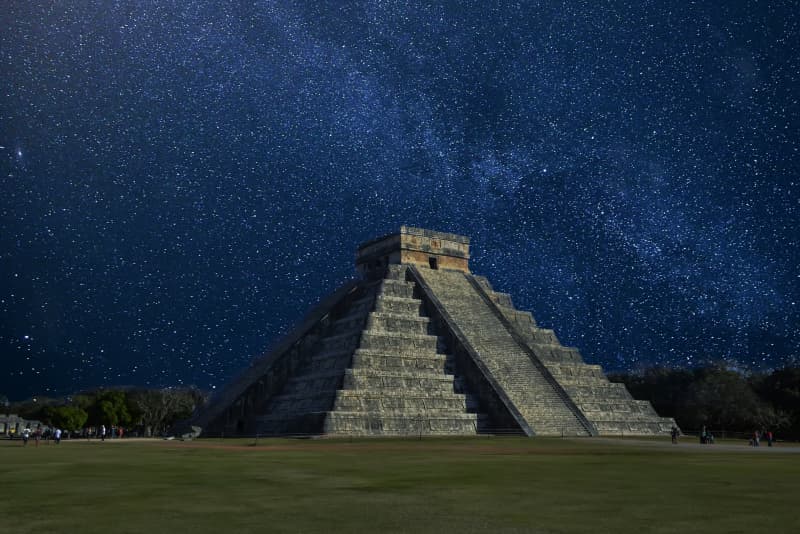
Therefore, mitigating light pollution is not only a matter of enabling astronomical observation but also a crucial issue for ecological conservation and human quality of life.
Where in North America is best for viewing the Milky Way?
Although urban night skies are becoming increasingly bright, North America still boasts many world-renowned dark-sky observation sites.
The western United States and Canada are home to a wealth of national parks, nature reserves, and International Dark Sky Parks. Far removed from city lights, these areas offer spectacular views of the Milky Way, meteor showers, and thousands of stars visible to the naked eye during clear, moonless summer nights.
When planning a stargazing trip, beginners should—in addition to checking the weather forecast—try to avoid the period around the full moon, as moonlight reduces the contrast of the night sky. Selecting an observation site by consulting light pollution maps often yields a more significant improvement in viewing quality than purchasing expensive equipment.
How can the impact of light pollution on stargazing be minimized?
While individuals cannot alter a city's entire lighting environment, there are still ways to improve the stargazing experience.
First, try to get away from city centers and observe from the suburbs or designated dark-sky reserves. Second, choose nights with no moon or around the time of the new moon, when the sky background is darkest. Third, minimize the use of bright light sources—such as mobile phones and flashlights—at the observation site to preserve your eyes' dark adaptation.
In recent years, an increasing number of countries have begun promoting the concept of responsible lighting. By adopting fixtures that direct light downward, utilize low color temperatures, and operate on an as-needed basis, they can ensure nighttime safety while reducing the amount of wasted light scattered into the sky. As public environmental awareness grows, dark-sky preservation and the mitigation of light pollution are becoming significant issues of global concern.