
The distinctive red glow of Mars in the night sky holds great appeal for many astronomy enthusiasts, and the planet can become exceptionally bright during certain years. So, when is Mars at its brightest? Why does it sometimes appear as the most dazzling "red star" in the night sky, while at other times it looks dim and lackluster? Understanding the astronomical patterns behind these fluctuations in brightness helps observers determine the best times for viewing the planet.
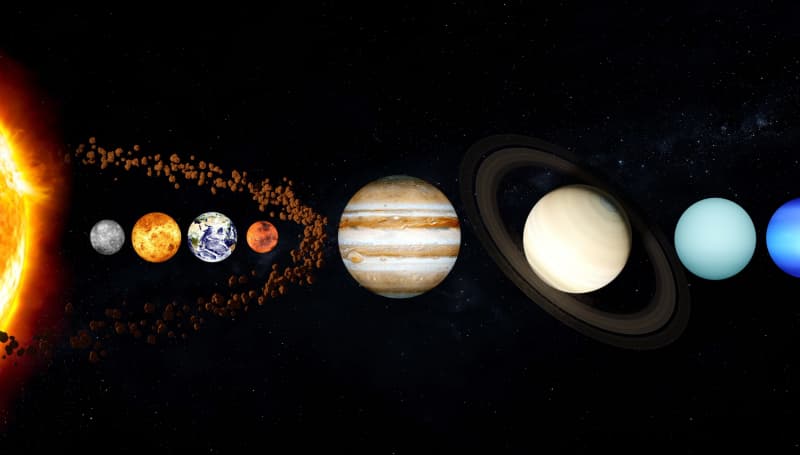
When is Mars brightest? The answer is closely linked to "opposition."
Mars reaches peak brightness around the time of opposition. "Opposition" refers to the alignment where Mars, Earth, and the Sun form a nearly straight line with Earth in the middle; viewed from Earth, Mars and the Sun appear in opposite directions in the sky. Consequently, Mars rises at sunset, remains visible throughout the night, and reaches its highest point around midnight.
Two main factors influence the brightness of Mars in the night sky: first is distance—the closer Mars is to Earth, the brighter it appears; second is the illuminated surface area—during opposition, the side of Mars facing Earth is almost fully illuminated by the Sun, similar to the phase of a full moon.
Around the time of opposition, the distance between Mars and Earth typically shrinks to tens of millions of kilometers, whereas at their farthest apart, the distance can exceed 400 million kilometers. Since brightness is inversely proportional to the square of the distance, Mars can appear dozens or even hundreds of times brighter near opposition than it does at its most distant point.
This is why many astrophotography projects and major Mars observation events are scheduled to coincide with the period of opposition.
Why does the brightness of Mars vary significantly from year to year?
Observers may notice that Mars appears exceptionally brilliant in some years, whereas in others—even during opposition—it is not as bright as one might expect.
This is actually due to the distinctive shape of Mars's orbit; unlike Earth's nearly circular orbit, the orbit of Mars is notably eccentric. The point in its orbit closest to the Sun is called perihelion, and the point farthest away is called aphelion; the difference in distance from the Sun between these two points exceeds 40 million kilometers.
If Mars reaches opposition near its perihelion, the famous "perihelic opposition" occurs.
In this scenario:
The distance between Mars and Earth is shorter
The apparent diameter is larger
Brightness is significantly enhanced
Surface details are easier to observe
When opposition occurs near aphelion, it is known as an "aphelion opposition." Although Mars remains brighter than usual during such events, the viewing conditions are far inferior to those of a perihelion opposition.
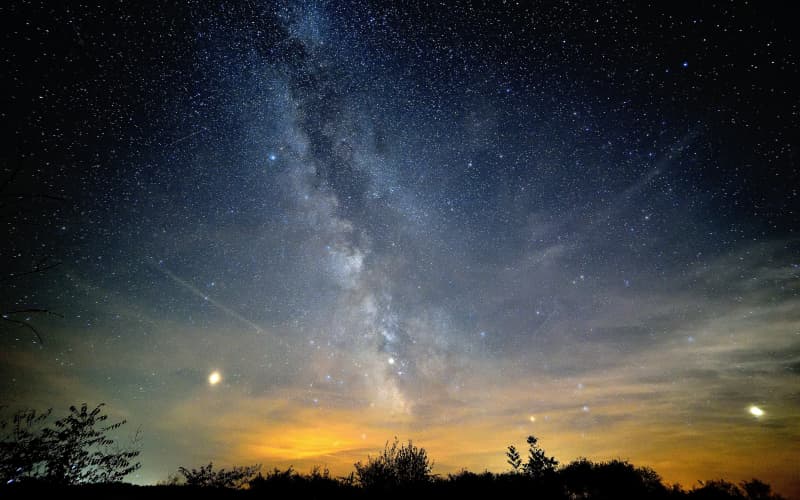
Therefore, determining when Mars is at its brightest depends not only on whether it is in opposition but also on its specific position along its orbit.
How Mars's brightness changes: Understanding it in terms of magnitude
Astronomers typically use "apparent magnitude" to measure the brightness of celestial objects. The lower the number—or even a negative value—the brighter the object.
The range of variation in Mars's brightness is remarkable:
At its faintest, it is approximately magnitude +1.8.
During an average opposition, it is approximately magnitude -1.5.
During an optimal perihelic opposition, it can reach magnitude -2.9.
For comparison:
The brightest star is approximately magnitude -1.46
Jupiter is typically around magnitude -2.5
Venus can reach a maximum brightness of magnitude -4.7
Consequently, during an optimal opposition, Mars can outshine every star in the night sky, surpassed only by Venus and Jupiter. It is easily visible to the naked eye, even amidst urban light pollution.
For observers in North America, when Mars reaches a negative apparent magnitude, it typically displays a distinct orange-red glow, appearing very prominent in the southeastern or southern sky.
How to Quickly Spot Mars, the Brightest Red Object in the Night Sky
Mars is most notable for its color; while most stars in the night sky appear white, bluish-white, or pale yellow, Mars displays a distinct reddish-orange hue. This coloration is due to the planet's surface being rich in iron oxide—commonly known as rust.
You can use the following techniques to locate Mars: first, observe its color—Mars typically displays a red hue that is softer and steadier than that of stars. Second, observe the degree of scintillation (twinkling); because stars are extremely distant, their light is significantly affected by atmospheric turbulence, whereas Mars, being a solar system object with a resolvable apparent diameter, twinkles much less. Third, you can utilize star-charting software; many astronomy apps now display the real-time position of Mars, allowing even beginners to quickly locate the target.
During the autumn and winter observing seasons in North America, Mars often appears near the ecliptic, standing out in stark contrast to the bright stars of the zodiac constellations, making it an excellent target for practicing sky-locating skills.
What equipment yields the best results for observing Mars when it is at its brightest?
To the naked eye, Mars appears as a bright red point of light; however, viewing finer details requires an astronomical telescope, and the results vary significantly depending on the equipment used.
1. Binoculars (7×50, 10×50):
While surface features cannot be resolved, one can observe changes in the planet's color and distinguish it from the stars.
2. 80mm to 100mm refracting telescopes:
Capable of resolving the disk shape of Mars; polar caps may be faintly visible on nights with good seeing.
3. Reflecting telescopes with apertures of 150mm or larger:
An ideal aperture range for observing Mars. Observers will have the opportunity to see features such as the north and south polar caps, dark regions, traces of dust storms, and surface albedo features.
Using a red, orange, or specialized planetary filter during observation can further enhance the contrast of details on the Martian surface. Consequently, the period when Mars is at its brightest is ideal not only for visual observation but also for planetary photography and video stacking.
Does light pollution affect Mars observation?
Compared to faint deep-sky objects, Mars is relatively less affected by light pollution. This is because the planet itself is quite bright, making it generally easy to observe even from the centers of major North American cities. However, light pollution does impact the quality of observation—specifically regarding color discrimination, contrast of surface details, and the quality of planetary photography.
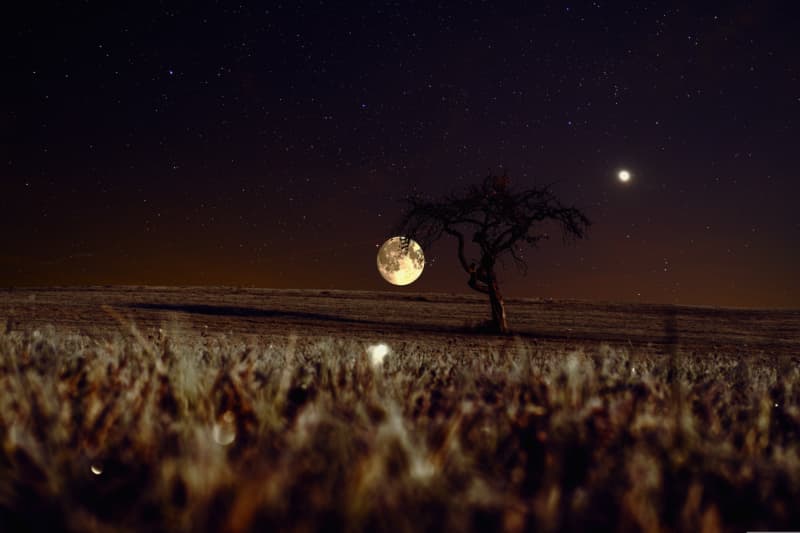
Atmospheric stability has a greater impact on Mars observation than light pollution does; even in a Dark Sky Reserve, severe atmospheric turbulence can cause the Martian disk to appear constantly shaky and blurred. Therefore, when preparing to observe Mars, one should pay attention to factors such as jet stream intensity, temperature fluctuations, and atmospheric stability, rather than just sky brightness. Observing Mars when it is high in the sky typically yields the best results.
When is Mars brightest, and how can you make the most of the best viewing opportunities?
The answer is that Mars reaches peak brightness—often the greatest seen in a year or even over a multi-year cycle—around the time of opposition, with "perihelic opposition" offering the most spectacular viewing experience. Because both Mars and Earth orbit the Sun, the distance between them constantly changes, causing periodic fluctuations in Mars's brightness. For astronomy enthusiasts in North America, the best results come from tracking the schedule of Mars oppositions, understanding how its apparent magnitude varies, and using telescopes alongside star charts for observation. When Mars reaches a negative magnitude and hangs high in the night sky, it becomes not only one of the easiest planets to identify but also a superb target for studying planetary motion and surface features, as well as for practicing astrophotography.