
In the spring night sky lies a deep-sky object that—while seemingly unassuming—contains hundreds of stars: the famous Praesepe (M44), also known as the "Ghost Cluster" or the Beehive Cluster. For amateur astronomers just beginning their journey, Praesepe is a rewarding target; it is easily viewed through binoculars and bridges the gap between ancient Chinese asterism culture and modern astronomical research.
In traditional Chinese astronomy, Praesepe was once perceived as a mysterious mass of "white gas" located near the "Ghost Mansion" (Gui Xiu)—one of the Twenty-Eight Mansions—and was thus steeped in an aura of mystery. Ancient observers identified four stars within the Ghost Mansion as the "Ghosts" themselves and believed the hazy patch of light enclosed by them represented a unique phenomenon. However, with the advent of modern telescopes, astronomers discovered that Praesepe is neither a gas cloud nor an "ominous vapor," but rather an open star cluster composed of actual stars.
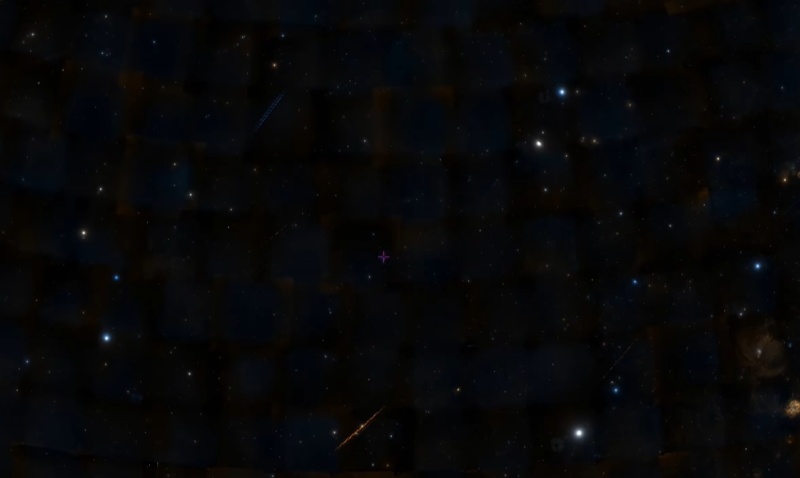
Today, Praesepe has become a favorite deep-sky target for amateur astronomers in North America. This stellar grouping, located more than 500 light-years from Earth, can be observed through simple binoculars or even with the naked eye under favorable, dark-sky conditions.
What is *Jishiqi*? The True Identity of the M44 Beehive Cluster
In modern astronomy, *Jishiqi* is formally known as M44 (Messier 44) and is classified as an open cluster. Located in the direction of the constellation **Cancer**, it is a prominent member of the Messier catalog.
An open cluster is a group of stars formed from the same vast cloud of gas and dust; bound by mutual gravity, these stars originate at roughly the same time and thus share similar ages and chemical compositions.
Unlike globular clusters, which possess a dense, spherical structure, open clusters exhibit a much looser arrangement. When viewed through a telescope, the stars appear clustered together—resembling a swarm of bees—which is why Western astronomers call it the Beehive Cluster.
For beginners, this cluster is an excellent first target for deep-sky observation, as its distinct stellar grouping can be clearly seen without the need for large, complex equipment.
Why did the ancients call it "Jishiqi" (Exhalation of Accumulated Corpses)? The "Ghost" Star Cluster in Chinese Asterism Culture
In the system of ancient Chinese astronomy, the sky was divided into twenty-eight lunar mansions. The seven mansions belonging to the Vermilion Bird of the South include:
Jing (Well), Gui (Ghost), Liu (Willow), Xing (Star), Zhang (Extended Net), Yi (Wings), and Zhen (Chariot).
"Jishiqi" is located within the region of the Gui (Ghost) Mansion; consequently, the ancients endowed it with a unique name and symbolic significance. The Gui Mansion consists of four relatively faint stars; nestled between them, one can discern a hazy patch of white light—this is what the ancients termed "Jishiqi."
Unable to explain the true nature of this misty patch, the ancients interpreted it through the lens of their cultural context, associating it with concepts such as "ghostly vapors" and "corpses."
However, modern science has proven this interpretation incorrect. "Jishiqi" is neither a peculiar gas nor a symbol of death, but rather a cluster of stars situated hundreds of light-years away. Observations via modern telescopes clearly reveal the multitude of individual stars that comprise it.
This shift reflects the evolution of astronomy: humanity has progressed from initially interpreting the heavens through the naked eye and cultural symbolism to studying the universe's true structure using scientific instruments.
How to Find the Beehive Cluster (M44): A Guide for North American Stargazers
For astronomy enthusiasts in the United States and Canada, the best way to locate the Beehive Cluster (M44) is to use nearby prominent constellations as reference points.
Although the constellation Cancer itself is not particularly bright and can be difficult to spot in the night sky, it is situated between two very distinct constellations:
Leo lies to the east;
Gemini lies to the west.
To find the Beehive Cluster, you can start by locating the two bright stars in Gemini—Castor and Pollux—or by finding Regulus, the brightest star in Leo. Then, look for the region of Cancer between them; the Beehive Cluster (M44) is located in this area of the sky.
Due to the relatively low brightness of the stars in Cancer, light pollution in urban areas may hinder your ability to spot them. Therefore, it is recommended to choose locations such as:
suburbs;
national parks;
dark-sky reserves;
These locations can significantly increase your chances of a successful observation.
What equipment should be used to observe the Beehive Cluster (M44)?
The Beehive Cluster is an excellent deep-sky object for beginners, as it does not require expensive equipment.
Naked-eye observation
Under dark skies away from city lights and with good atmospheric transparency—where the cluster's overall magnitude is approximately 3.7—it is possible to spot a faint, hazy patch of light.
However, the naked eye reveals only a misty area; individual stars cannot be distinguished.
Binocular observation
For beginners, 10×50 or 7×50 binoculars are highly recommended.
Through binoculars, you can see:
A cluster of multiple stars;
A distinct honeycomb-like structure within the cluster;
A wider starry background.
Small Astronomical Telescopes
Using an entry-level astronomical telescope allows for the observation of individual stars within the cluster.
However, please note that the Beehive Cluster covers a relatively large area; using too high a magnification may prevent the entire cluster from fitting within the field of view.
How far is M44 (Praesepe) from Earth, and how many stars does it contain?
According to modern astronomical research, M44 is located more than 500 light-years from Earth, making it one of the large open clusters closest to us.
It is approximately 600 million years old, has a total mass of about 500 to 600 solar masses, and currently has a confirmed membership of around 1,000 stars. However, most of these stars are faint; only a few dozen of the brighter members can be clearly observed through small telescopes.
Compared to the Sun, which has existed for about 4.6 billion years, the stars in M44 are significantly younger. These stars formed together in the same star-forming region and have gradually dispersed into the space of the Milky Way over time.
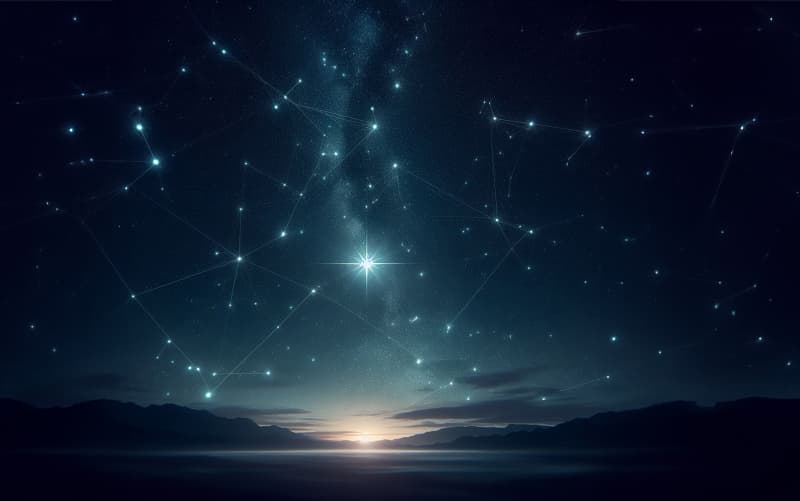
Studying open clusters like M44 helps scientists understand the process of star formation and how stars within the Milky Way evolve over time.
Summary: The Beehive Cluster (M44) is an ideal entry-level target for deep-sky exploration.
The Beehive Cluster (M44) is not only a beautiful deep-sky object but also a celestial body that bridges ancient asterism traditions with modern astronomy.
Once thought to be a mysterious "mist," it is now known to be a star cluster—resembling a beehive—located over 500 light-years from Earth. Amateur astronomers in North America can view this cosmic cluster, nestled within the constellation Cancer, using binoculars or a small telescope.
For novice stargazers, locating M44 offers more than just a simple viewing experience; it serves as a significant step toward understanding star clusters, star formation, and the structure of the Milky Way.