
Under suitable time and observation conditions, artificial satellites, and even very bright space stations, can be seen with the naked eye. These artificial celestial bodies typically appear as slow-moving, non-flickering points of light in the night sky, clearly distinguishable from ordinary stars.
What kind of point of light is an artificial satellite?
In the night sky, artificial celestial bodies usually look like slowly moving "stars," distinctly different from real stars. Satellites and space stations do not flicker and move in a relatively uniform straight line, typically traversing the sky within a few minutes.
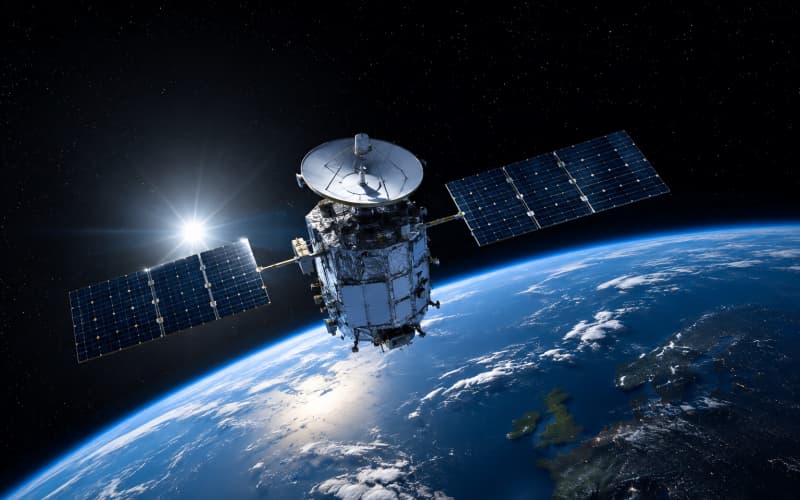
This "non-flickering + continuous movement" characteristic is the simplest way to distinguish satellites from ordinary stars. Furthermore, the brightness of satellites is generally relatively stable, without the obvious flashes or color changes seen in airplane navigation lights.
Why can artificial satellites be seen with the naked eye?
Like the moon, artificial satellites do not emit their own light. We can see them because their metallic structures and solar panels reflect sunlight.
During the period between sunset and sunrise, the ground is already dark, but satellites high in the sky are still illuminated by the sun. This "dark ground, bright sky" condition makes satellites clearly visible moving points of light in the night sky.
When is the best time to observe?
The best times to observe artificial satellites are generally:
About one hour after sunset
About one hour before sunrise
During these two time periods, the sky is dark enough, and the satellites are still within the sunlight's range, making them relatively easy to see. If it's too late, the satellites will disappear after entering Earth's shadow; if it's too early, the sky is too bright, making observation difficult. Furthermore, being away from urban light pollution significantly improves the observation experience.
What are "Starlink satellites"?
Sometimes you can see a "string of bright points lined up in a straight line" in the sky, resembling a moving train. This phenomenon is usually caused by SpaceX Starlink satellites passing through the sky.
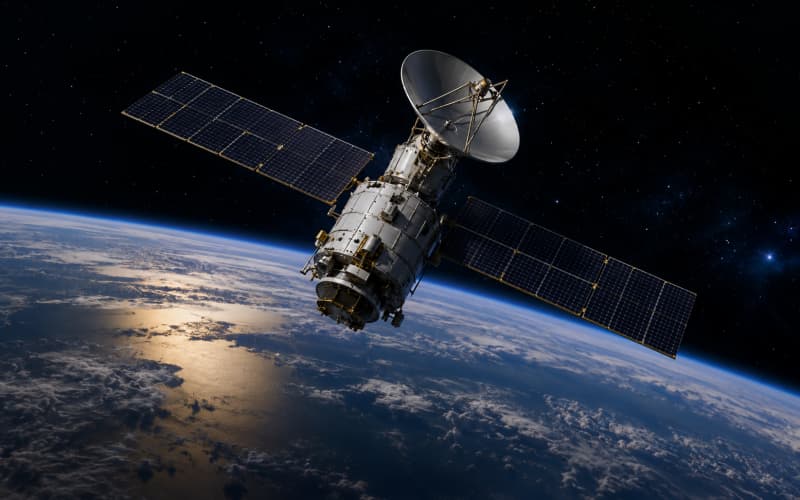
In the immediate hours and days following launch, Starlink satellites are aligned in a single orbit with relatively small gaps, appearing as a continuous string of bright spots from Earth. Over time, they gradually disperse into their respective orbits, making this orderly alignment difficult to observe with the naked eye.
How to Identify the International Space Station
Of all man-made objects, the International Space Station (ISS) is the easiest to observe directly with the naked eye. It typically appears as a very bright, moving point of light, sometimes even approaching the brightness of Venus.
Compared to ordinary satellites, the space station exhibits the following characteristics in the night sky:
Greater brightness
More noticeable movement
Usually longer visibility period
Why is the space station brighter than ordinary satellites?
The space station is easier to see than man-made satellites primarily because of its larger size and extensive solar panels. These structures reflect more sunlight, significantly increasing its brightness.
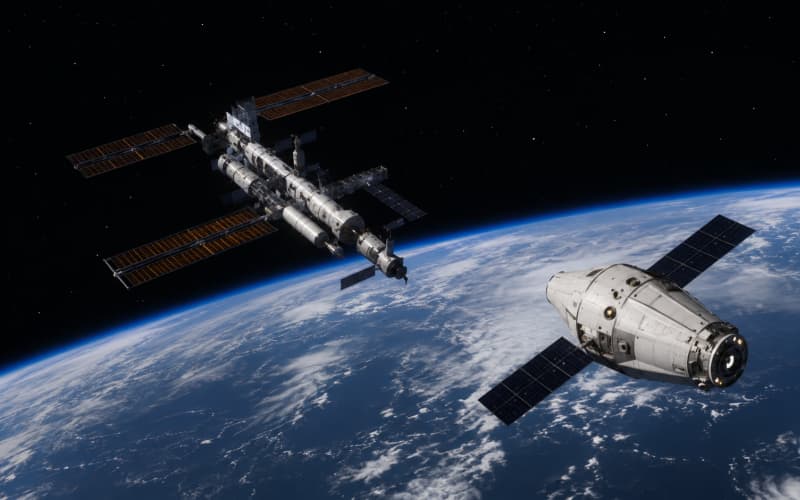
In contrast, most ordinary satellites are smaller and have limited light-reflecting capabilities, making them typically faint and difficult to detect with the naked eye.
How to Improve Your Observation Success Rate
To make it easier to spot satellites or space stations, consider the following methods:
Choose an observation location with low light pollution.
Check satellite transit times in advance (there are dedicated websites or apps available).
Observe in an open area (avoid building obstructions).
Allow your eyes to acclimatize to darkness.
These simple preparations can significantly improve your observation success rate.
Under the right time and conditions, satellites and space stations are perfectly visible to the naked eye. They typically appear as flicker-free, continuously moving points of light. Space stations, due to their larger size and higher brightness, are easier to identify.