
What would happen to Earth if the Moon suddenly disappeared one day? Many people's reaction would simply be: the night sky would be darker, and the bright moonlight would be gone forever. But in fact, the Moon's influence on Earth far exceeds what most people imagine. It's not just a natural satellite of Earth; it profoundly affects Earth's tides, climate, rotation, ecosystems, and even the evolution of life.
Scientists believe that without the Moon, Earth would not have such a stable environment. The complex evolution of life might have been difficult to occur, and the trajectory of human civilization would likely have been completely different. The Moon is not just a satellite orbiting Earth; it is a "balancer" for the long-term stability of Earth's ecosystem.
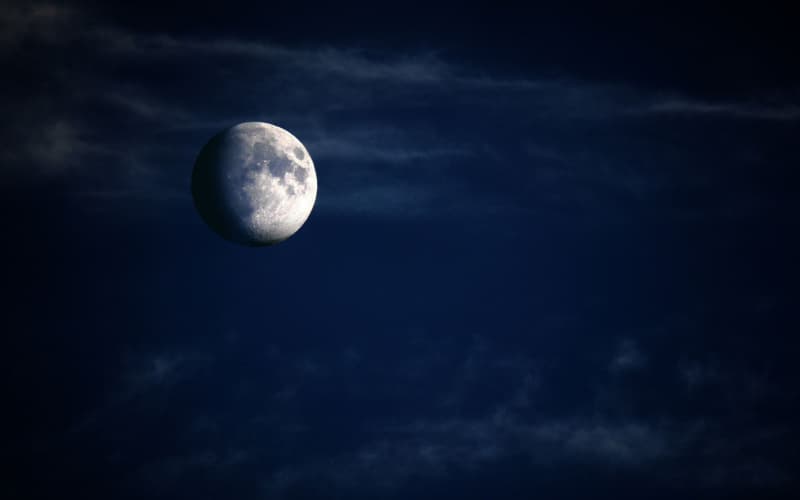
The formation of the Moon changed the fate of early Earth.
The most mainstream theory regarding the formation of the Moon is the "Giant Impact Hypothesis," which states that approximately 4.5 billion years ago, the newly formed Earth collided violently with a Mars-sized celestial body, later named Theia. The enormous energy released by the collision ejected a large amount of rock and material into space. These fragments gradually coalesced due to gravity, forming the Moon we know today.
This impact not only created the Moon but also profoundly altered the Earth itself. Modern scientists believe that the heavier material sank into the Earth's core after the collision, forming a larger iron core. The liquid metal flowing around this core further created a powerful electromagnetic field.
This electromagnetic field is crucial for life on Earth. It blocks high-energy particles and solar wind from the sun, preventing the Earth's atmosphere from being stripped away. Conversely, without a sufficiently strong electromagnetic field, the Earth's surface environment would be extremely harsh, and the oceans and atmosphere would be chronically unstable.
Without the Moon, tides on Earth would be much weaker.
One of the Moon's most obvious influences on Earth is tides. The daily ebb and flow of tides in the Earth's oceans are primarily due to the Moon's gravitational pull on the ocean water. While the Sun's gravity also causes tides, because the Moon is closer to Earth, its gravitational influence on Earth's tides is far greater than that of the Sun.
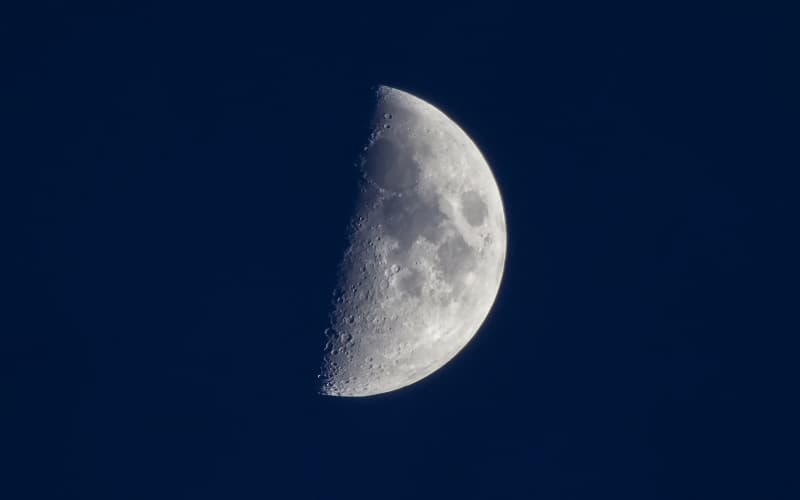
More importantly, billions of years ago, the Moon was much closer to Earth than it is now. Therefore, the Moon's gravitational influence on Earth's tides was far more pronounced, resulting in astonishingly large tides. Many scientists believe that the intense tidal movements in the early oceans may have, to some extent, promoted the mixing and cycling of chemical elements, thus contributing to the formation of complex organic molecules.
Without the Moon, tides would still exist in Earth's oceans, but on a much smaller scale. This would reduce ocean circulation, potentially slowing global ocean currents, reducing the efficiency of nutrient and chemical exchange in the oceans, slowing the rate of life evolution, and possibly even preventing the emergence of complex life altogether.
The Moon is slowly slowing Earth's rotation.
Furthermore, the Moon also affects Earth's rotation speed. Today, an Earth day is approximately 24 hours long, but in ancient times, Earth's rotation speed was much faster. Modern scientific research suggests that an ancient Earth day may have only been 6-10 hours long.
The reason it gradually slowed down is because the Moon's gravity constantly pulls on Earth's oceans, creating tides, and the friction between the seawater and the seabed continuously consumes energy from Earth's rotation. Over billions of years, this has resulted in a significant decrease in Earth's rotation speed compared to ancient times.
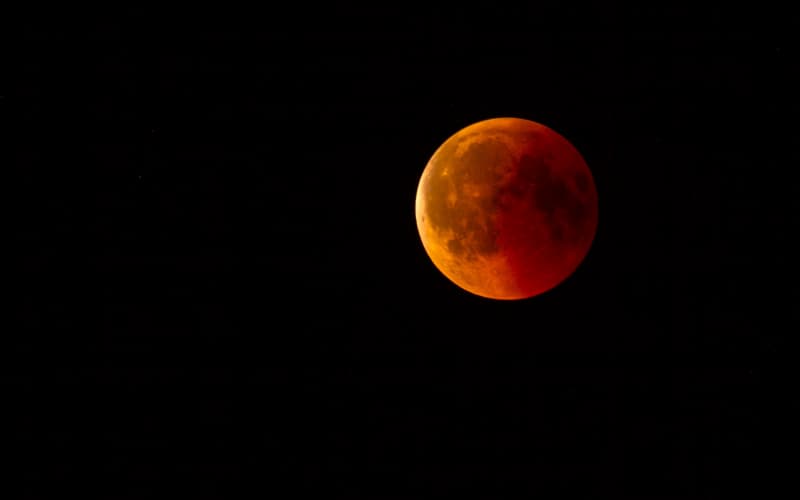
Without the Moon, Earth would likely still be rotating at a high speed today. This would mean:
Shorter days and nights
More intense global air circulation
More pronounced temperature variations
More complex storm systems
A stable day-night cycle is crucial for the evolution of life; plant photosynthesis, biological sleep patterns, and ecological cycles are all closely related to Earth's rotational rhythm.
Without the Moon stabilizing the Earth's axis, Earth's climate might have been out of control for a long time.
Compared to tides and rotation, another crucial role of the Moon is helping Earth maintain a stable axial tilt. Currently, Earth's axial tilt is approximately 23.5°, which is the reason for the four seasons, and the Moon's gravity effectively stabilizes this tilt, preventing drastic axial wobble.
Without the moon, scientists speculate that Earth's axial tilt could fluctuate wildly between 0° and 85°, causing severe damage to the ecosystem.
For example, when the axial tilt is close to 0°, Earth might not experience distinct seasons, while a larger tilt could lead to extreme temperatures in some regions; this would be a massive catastrophe for complex life forms.
A moonless night sky would be darker yet clearer.
Without the moon, the night sky would be much clearer because moonlight causes light pollution, especially when the moon is particularly bright, obscuring many faint stars and details of the Milky Way. Without the moon, the Milky Way, nebulae, and numerous faint stars would be much easier to see with the naked eye.