
When we look up at the night sky, we notice the stars twinkling, sometimes brightening, sometimes dimming, and sometimes even showing slight color changes. But have you ever wondered, "Why do stars twinkle?" Is this phenomenon due to changes in the stars themselves, or is it our imagination?
In simple terms, stars twinkle not because they actually twinkle, but because starlight changes as it passes through Earth's atmosphere. Understanding this makes it easier to grasp the core reason for star twinkling.
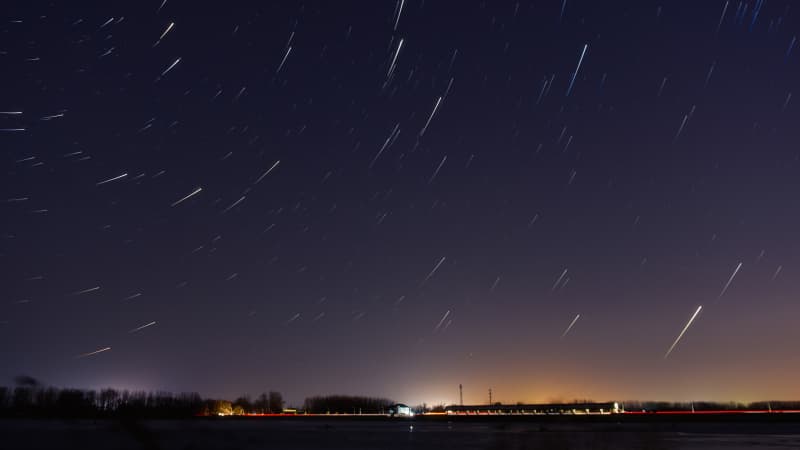
First, let's clarify a misconception: Do stars really twinkle?
Before explaining "why stars twinkle," let's correct a common misconception: Many people believe that since we see stars twinkling, their brightness must be changing. However, the light output of stars is relatively stable and doesn't fluctuate as frequently as we perceive.
In other words, the "twinkling" we see doesn't occur on the stars themselves, but rather after the starlight enters Earth's atmosphere. Starlight travels relatively steadily through the universe; light doesn't attenuate significantly in a vacuum. However, when starlight enters Earth's atmosphere, it undergoes complex environmental influences, creating a twinkling effect. Therefore, essentially, star twinkling is an atmospheric phenomenon, not a change in the celestial bodies themselves.
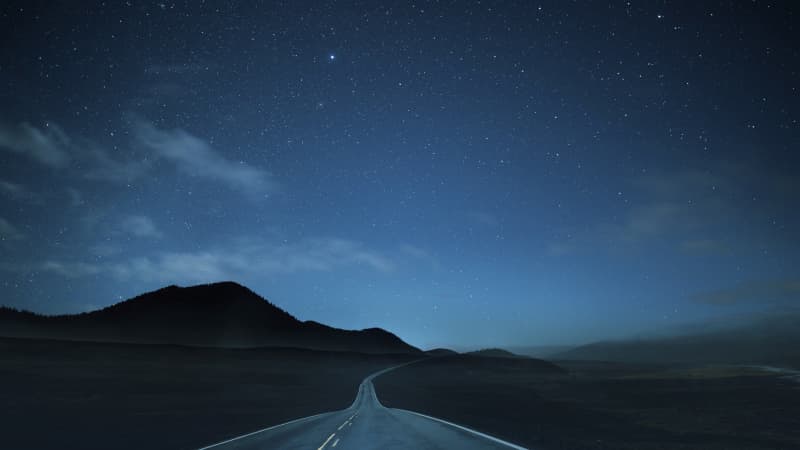
The core reason for star twinkling: Atmospheric disturbances cause light to be constantly deflected.
Earth's atmosphere is not a uniform, static, transparent layer of gas, but rather composed of constantly moving air of varying temperatures and densities. When starlight passes through these unstable layers, the direction of refraction changes continuously. This change results in three direct consequences:
Stars appear to flicker (brightness variations)
Star positions appear to shift slightly
Sometimes, colors flicker.
So why do some stars twinkle in different colors?
When observing the night sky closely, we also discover an interesting phenomenon: stars not only twinkle but also change color, displaying shades of red, blue, and even green.
This change is still related to the atmosphere. Different colors of light (different wavelengths) refract slightly differently when passing through the atmosphere. Therefore, when the atmosphere is unstable, these different colors of light are constantly dispersed and recombined, resulting in a color change effect in a short period.
This phenomenon is particularly noticeable when stars are near the horizon, because at this time, the light passes through a thicker atmosphere and experiences stronger disturbances, thus making the color change more pronounced.
Under what circumstances do stars twinkle more noticeably?
After understanding "why stars twinkle," you can also know under what conditions this phenomenon is more pronounced. Generally, the following conditions enhance the twinkling effect:
Low star position (near the horizon)
Unstable atmosphere (strong winds or air currents)
Large temperature difference (intense mixing of air layers)
Conversely, when the air is relatively stable and the stars are high in the night sky, the twinkling is significantly reduced. This is why professional astronomical observations are usually conducted in environments with stable air, such as high-altitude regions.