
Astronomy enthusiasts may have heard bloggers confidently claim that every celestial object visible to the naked eye belongs to the Milky Way. In reality, this statement is inaccurate; beyond the stars of the Milky Way, we can actually observe several extragalactic galaxies from Earth. Among them, the Andromeda Galaxy, the Large and Small Magellanic Clouds, and the Triangulum Galaxy—visible under excellent conditions—are all sought-after targets for many astronomy enthusiasts.
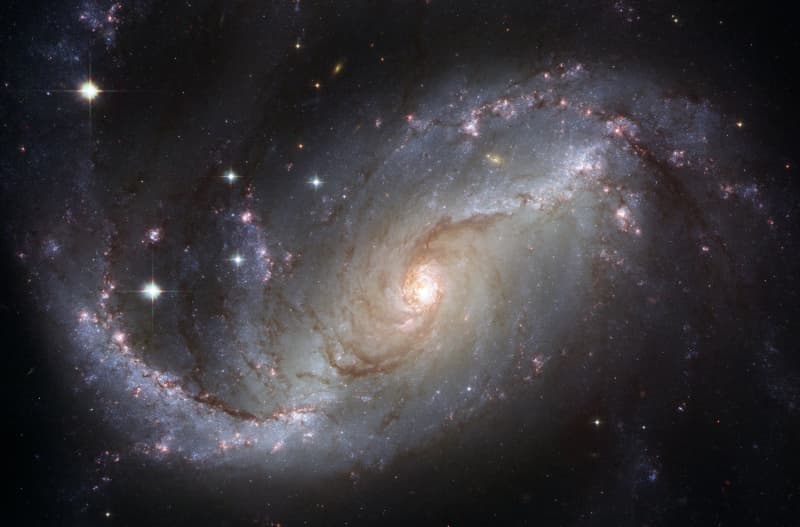
For observers in North America, choosing a location away from urban light pollution and timing the observation correctly offers the chance to see these galaxies—located hundreds of thousands to millions of light-years away—with their own eyes.
Why can we see galaxies beyond the Milky Way with the naked eye?
The universe contains countless galaxies, and the Milky Way is just one very ordinary example. Galaxies are typically separated by vast distances, requiring large telescopes for observation; however, a few relatively bright and nearby galaxies are visible to the naked eye.
It is important to note that while we can see extragalactic objects under certain conditions, we are not observing individual stars within those galaxies. Instead, we see the combined light emitted by hundreds of billions of stars, which appears as a hazy, cloud-like patch.
Additionally, transient events—such as supernova explosions—can cause stars outside the Milky Way to briefly become bright enough to be seen without a telescope. The famous supernova SN 1987A, which occurred in the Large Magellanic Cloud, is one of the most significant supernovae in the history of modern astronomical observation.
No. 1: The Andromeda Galaxy (M31)—The Easiest Extragalactic Galaxy to Spot
The Andromeda Galaxy is undoubtedly the best extragalactic galaxy for beginners to seek out. Located approximately 2.54 million light-years from Earth, it is the nearest large spiral galaxy to the Milky Way and one of the largest members of the Local Group. With an integrated apparent magnitude of about 3.4, it is visible to the naked eye across most of North America in areas free from severe light pollution.
For most observers in the United States and Canada, the best time to view the Andromeda Galaxy is between September and December. As the night progresses, the galaxy rises higher in the sky—reaching a position nearly overhead late in the autumn—making it very easy to locate.
Using a pair of 7×50 or 10×50 binoculars makes the galaxy's vast, elliptical outline much more distinct, and may even reveal faint glimpses of its extended outer structure.
No. 2: The Triangulum Galaxy (M33)—The Farthest Galaxy Theoretically Visible to the Naked Eye
The Triangulum Galaxy is the third-largest spiral galaxy in the Local Group, located approximately 2.73 million light-years from Earth. With an apparent magnitude of about 5.7, it falls within the theoretical range of naked-eye visibility; however, because its brightness is widely diffused, its overall surface brightness is low, making it significantly more difficult to observe than the Andromeda Galaxy.
An average person has a chance of spotting it with the naked eye only when all the following conditions are met:
Bortle Class 2 skies or darker;
Extremely low humidity and high atmospheric transparency;
No interference from moonlight;
The observer possesses good dark adaptation.
For this reason, most astronomical references classify the Triangulum Galaxy as a galaxy that is theoretically visible to the naked eye. For astronomy enthusiasts just starting out, it is much easier to locate using binoculars.
No. 3: The Large Magellanic Cloud—The Southern Hemisphere's Most Spectacular Satellite Galaxy
The Large Magellanic Cloud (LMC) is the Milky Way's largest satellite galaxy. Located approximately 163,000 light-years from Earth, it has an integrated apparent magnitude of about 0.9—making it far brighter than the Andromeda Galaxy—and an apparent diameter of nearly 10 degrees (equivalent to more than twenty full moons lined up side by side), rendering it highly conspicuous in the Southern Hemisphere's night sky.
Unfortunately, due to latitude, the LMC is virtually invisible from mid-to-high northern latitudes; only regions near the equator offer occasional opportunities to glimpse it just above the horizon. If you travel to Australia, New Zealand, Chile, or South Africa, the Large Magellanic Cloud is certainly worth a dedicated look.
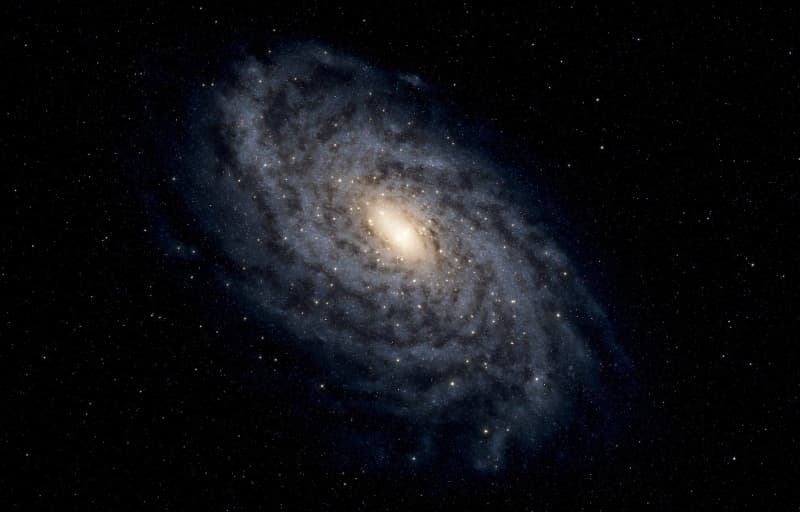
No. 4: The Small Magellanic Cloud—A Key Feature of the Southern Night Sky
The Small Magellanic Cloud is another satellite galaxy of the Milky Way; it lies approximately 200,000 light-years from Earth and has an integrated apparent magnitude of about 2.7. Although its overall area is smaller than that of the Large Magellanic Cloud, it still far exceeds the size of the full moon.
Located about 200,000 light-years away with an integrated apparent magnitude of approximately 2.7, it is also a satellite galaxy of the Milky Way. It frequently appears alongside the Large Magellanic Cloud in the southern night sky and is a favorite subject for astrophotographers.
For observers in North America, the Small Magellanic Cloud is virtually impossible to see; consequently, it is best appreciated through travel or astrophotography.
How can observers in North America increase their chances of spotting galaxies?
If you live in the United States or Canada and wish to see these extragalactic objects with your own eyes, consider the following tips:
First, get away from city lights and choose a location—such as a national park or a mountainous area—with a Bortle scale rating of 3 or lower (a dark-sky site).
Second, avoid observing around the time of a full moon, as moonlight significantly reduces the contrast of the sky background.
It is best to let your eyes adjust to the darkness for 20 to 30 minutes before observing and to avoid frequently looking at your phone screen.
Additionally, a standard pair of binoculars is often better suited than a small astronomical telescope for locating large-scale galaxies, making it easier for beginners to achieve success.
For amateur astronomers in North America, the Andromeda Galaxy is undoubtedly the premier extragalactic target to tackle—and often marks the moment one truly begins to grasp the scale of the cosmos. Those with access to superior observing conditions might also attempt to spot the Triangulum Galaxy. And should you ever travel to the Southern Hemisphere, be sure not to miss the spectacular Large and Small Magellanic Clouds.
It is worth noting that many observers mistakenly believe the Triangulum Galaxy is easily visible to the naked eye. In reality, it lies right at the limit of human visual perception; spotting it from a typical urban environment is nearly impossible, so do not doubt your eyesight if you fail to see it.