
Many novice astronomy enthusiasts have this question when they first start learning astronomy: What can I see in the night sky without a telescope? Do I absolutely need professional equipment to observe the stars? Actually, this is a very common misconception. For most beginners, the naked eye is sufficient to begin a rich and exciting stargazing experience. Given the right environment and methods, you can see far more than you think.
From a scientific perspective, the human eye has a remarkably good ability to perceive light in darkness. In conditions far from light pollution, it can even see the vast Milky Way in the night sky. Therefore, understanding "what can you see in the night sky without a telescope" is not only the first step in learning stargazing but also an important foundation for establishing correct astronomical observation knowledge.
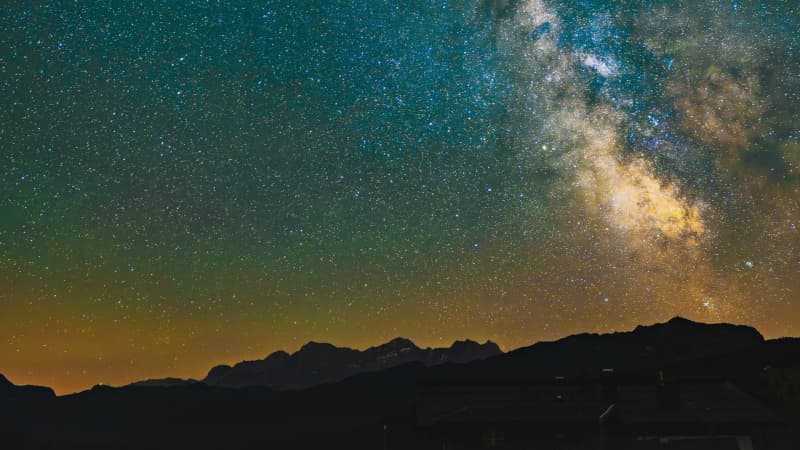
Why Can You See Many Celestial Objects in the Night Sky Without a Telescope?
Before explaining this, it's important to understand that not all celestial objects require professional astronomical observation equipment to see. In fact, because many celestial objects are inherently very bright—such as the Moon, Venus, and some stars—their light at night is sufficient to be observed directly with the naked eye. Furthermore, after the human eye adapts to darkness (usually taking 15 to 20 minutes), its sensitivity to faint light sources increases significantly. This is why you see more stars in complete darkness. In other words, the key to effective stargazing isn't equipment, but rather the environment and adaptability.
Therefore, for a novice astronomy enthusiast, instead of worrying about what equipment to use initially, it's better to first learn the basic conditions for stargazing and what celestial objects are visible in the night sky under natural conditions.
What celestial objects can be seen without a telescope?
First is the Moon. This is the brightest object visible in the night sky from Earth and the most suitable observation target for beginners. Even without any equipment, you can clearly see the changes in the Moon's brightness (lunar phases) and the distribution of shadows on its surface. These lunar phases are not only intuitive but also have a clear periodicity, making them ideal for beginners to establish initial observation habits.
Secondly, there are the planets in our solar system. Although planets aren't as conspicuous as the moon, some of the brighter ones (such as Venus, Jupiter, and Mars) can still be seen with the naked eye under suitable conditions. They differ from ordinary stars in that their brightness is stable, they don't flicker noticeably, and they sometimes exhibit different colors. For example, Mars often has a reddish tint, a variation that is discernible to the naked eye under good night sky observation conditions.
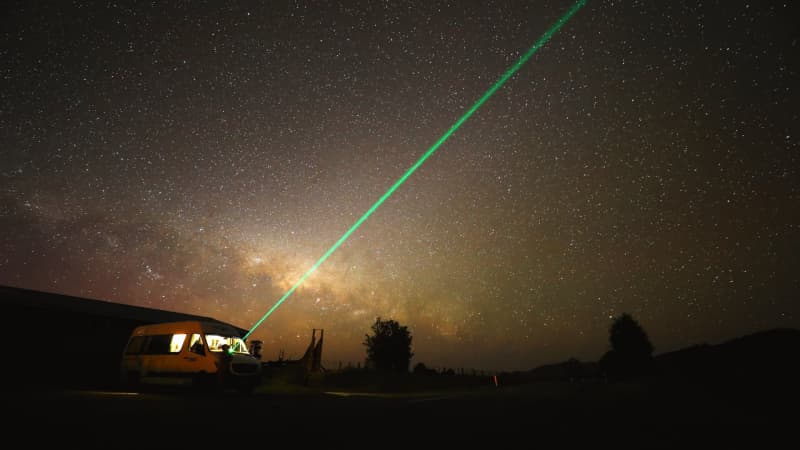
Next are stars and constellations. The vast majority of visible stars in the night sky are stars, while constellations are patterns formed by these stars. For novice astronomy enthusiasts, learning how to identify constellations is one of the core aspects of stargazing; for example, the Big Dipper and Orion are relatively easy constellations to recognize.
Under ideal observation conditions, you can even see the vast Milky Way. The Milky Way appears to the naked eye as a pale white band across the night sky. This is actually the overall structure composed of countless stars in the Milky Way galaxy. However, it's important to note that the Milky Way has relatively high requirements for the observation environment; it can only be seen in conditions far from light pollution and free from moonlight interference.
In addition, there are some brief but highly spectacular celestial phenomena, such as meteors and comets. When meteors enter the Earth's atmosphere, the intense friction creates bright light trails that can be clearly seen even without a telescope. This phenomenon is more frequent during meteor showers.
How to see more and clearer without a telescope:
First, choose a suitable time and location, ideally away from city lights in the suburbs or mountains.
Second, allow your eyes to fully acclimatize to darkness. Once you're in observation mode, avoid frequently checking your phone or being exposed to strong light, as this will reduce your eye's sensitivity. Additionally, you can use common constellations (such as the Big Dipper and Orion) to develop a sense of direction, making it easier to locate other celestial objects.
Finally, you can use auxiliary tools, such as star charts or stargazing apps, to help beginners identify constellations and planetary positions. While these tools are not essential for astronomical observation, they can significantly reduce the learning curve for beginners.