
The five major planets in our solar system have long been favorite targets for astronomy enthusiasts. Unlike stars, which remain fixed in position over time, these planets move slowly along the ecliptic—hence the name "wandering stars" (or simply "planets"). To this day, Venus, Jupiter, Mercury, Mars, and Saturn remain the most popular targets for those just starting out in astronomical observation.
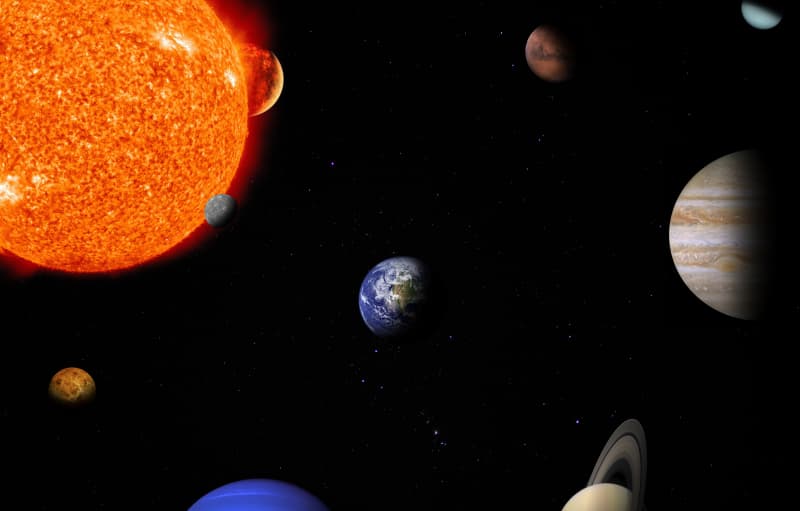
Why can only five planets be seen with the naked eye?
There are eight planets in the solar system; however, under normal circumstances, only Mercury, Venus, Mars, Jupiter, and Saturn—commonly referred to as the "five visible planets"—can be directly observed with the naked eye. Uranus and Neptune, on the other hand, are too distant from Earth and have relatively low brightness, making them generally invisible to the naked eye and observable only with the aid of an astronomical telescope.
Among these five visible planets, Mercury is the most difficult to observe due to its proximity to the Sun, whereas Venus and Mars are the easiest to spot.
Mercury: The Hardest Naked-Eye Planet to Observe
Because Mercury orbits very close to the Sun, it typically sets shortly after the Sun or rises just before it. It is visible above the horizon for only a brief window—often just a few tens of minutes—and stays at a low altitude, making it easily obscured by the glow of twilight or dawn and by structures on the horizon.
Consequently, even in clear weather, there are few opportunities throughout the year truly suitable for observing Mercury. For observers in North America, the best times to spot the planet are during its "greatest eastern elongation" and "greatest western elongation."
What are the distinctive characteristics of Venus, Mars, Jupiter, and Saturn?
Apart from Mercury, the other four planets are visible for much of the year, and each possesses distinct characteristics:
Venus is the brightest object in the night sky—far outshining any star. It typically appears in the eastern sky before sunrise or the western sky after sunset, earning it names such as the "Morning Star" or "Evening Star." Its slightly golden-yellow hue, combined with its intense brightness, makes it highly conspicuous in the night sky.
Mars has a reddish appearance caused by the reflection of sunlight off the abundant iron oxide on its surface, creating a unique red glow. During opposition—when it is closest to Earth—it becomes exceptionally bright, making it the most easily recognizable red celestial object in the night sky.
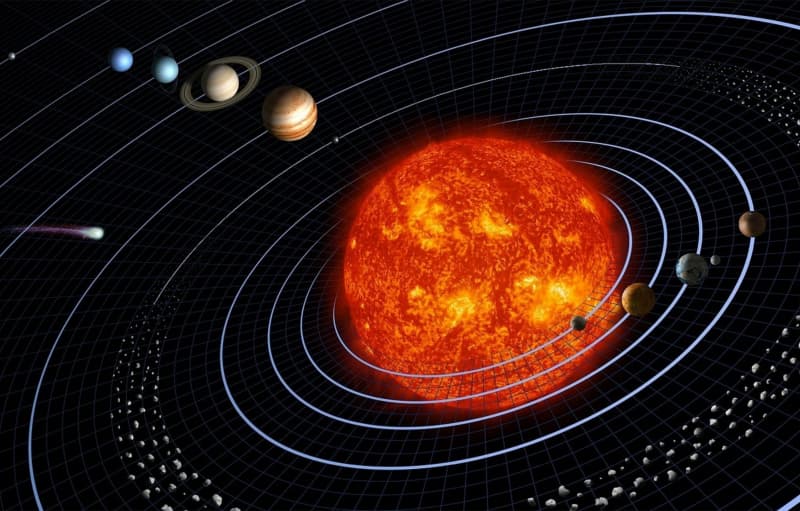
Jupiter is the second-brightest object in the night sky after Venus, shining with a steady, brilliant yellow-white light. Even with standard binoculars, one can often observe features such as Jupiter's equatorial cloud belts, the famous Great Red Spot, and its four Galilean moons.
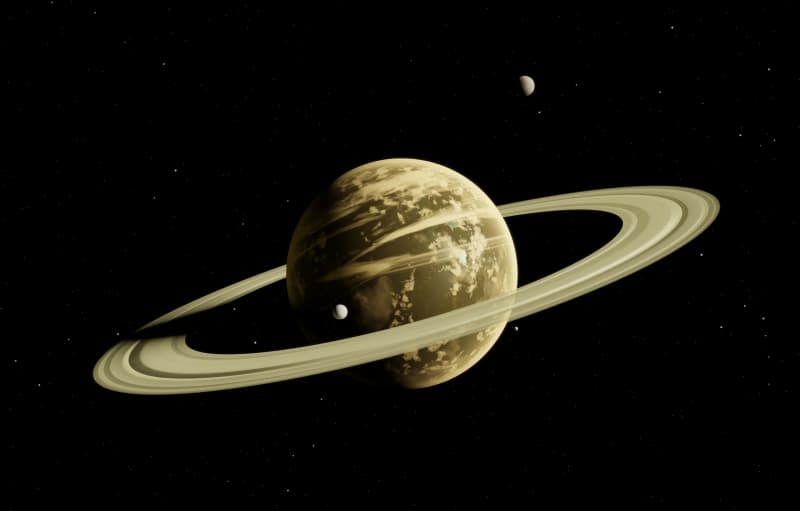
Saturn is slightly less bright than Jupiter and has a pale yellow hue. While visible to the naked eye, its beautiful rings cannot be seen without aid; a small telescope is usually required to appreciate its famous ring structure. It is also one of the most anticipated targets for beginners using a telescope for the first time.
Three Tips for Quickly Identifying the Five Major Planets
For beginners looking to quickly identify the five major planets, mastering the following three methods is key.
First, observe the position. The five major planets are always found near the ecliptic—the path the Sun traces across the sky over the course of a year.
Second, observe brightness and color. Venus is the brightest object in the night sky, typically appearing before sunrise or after sunset; Mars appears red; Jupiter is bright with a yellowish-white hue; Saturn is somewhat dimmer; and Mercury, usually found close to the horizon, is the most difficult to observe.
Third, observe whether the object twinkles. Stars are extremely distant from Earth, so atmospheric turbulence causes them to twinkle noticeably; planets, however, have a larger apparent diameter in the sky, resulting in steadier light that barely twinkles at all. This is one of the simplest ways to distinguish between stars and planets. By combining these three characteristics, you can significantly increase your success rate in identifying them, even without any auxiliary equipment.
Learning to Recognize Zodiac Constellations Makes Finding Planets Easier
In addition to identifying the five major planets by their brightness and color—as previously mentioned—you can also pinpoint their locations by recognizing the constellations of the zodiac.
Since all planets in the solar system orbit the Sun, they appear to move along or near the ecliptic when viewed from Earth. Therefore, for beginners new to stargazing, memorizing a few easily recognizable zodiac constellations is a valuable step in learning to observe the planets.
Constellations such as Taurus, Gemini, Leo, Scorpius, and Sagittarius are prominent features of the Northern Hemisphere's night sky. If you spot a particularly bright, non-twinkling "star" near one of these constellations, it is very likely to be Venus, Jupiter, Mars, or Saturn.
Tips for Observing the Five Major Planets in North America
North America offers many excellent natural settings for stargazing; simply avoiding urban light pollution is usually enough to ensure a rewarding viewing experience. Ideally, choose a clear night with good atmospheric transparency and head to the suburbs, a park, or a mountainous area. While stargazing apps can quickly pinpoint the location of planets, beginners will find it more beneficial to develop genuine observational skills by learning to identify the five major planets based on their brightness, color, position along the ecliptic, and whether or not they twinkle.
If conditions permit, using a pair of binoculars or an entry-level astronomical telescope will not only make it easier to locate these planets but also allow you to observe fascinating details such as Jupiter’s moons and Saturn’s rings.