
Venus is the brightest celestial object in the night sky—surpassed only by the Sun and the Moon—and one of the easiest planets to spot. Yet, despite its visibility, many astronomy beginners remain unsure of how to observe it for the best experience. In fact, Venus is far more than just a bright "star"; it exhibits distinct phases, possesses a unique atmospheric structure, and offers a wealth of observational interest. Whether using the naked eye, binoculars, or a telescope, employing the right techniques allows for a deeper understanding of this neighboring planet—known historically as the "Morning Star" and the "Evening Star."
Why Is Venus So Bright?
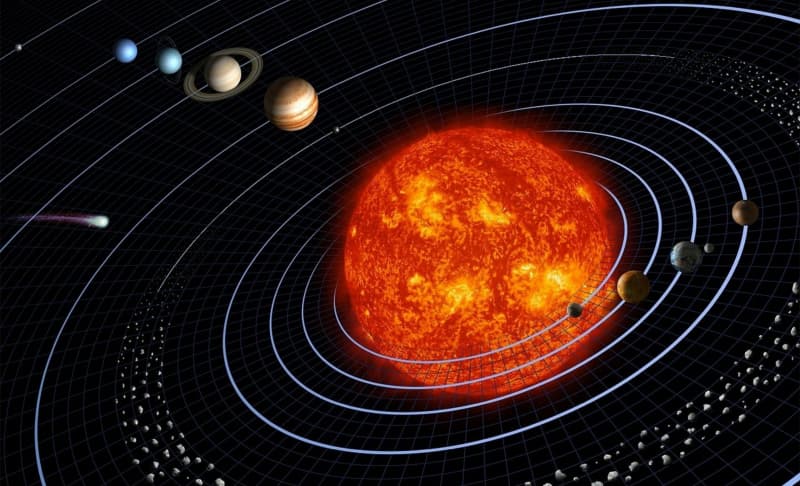
To understand how to observe Venus, one must first grasp why it appears so striking in the night sky. Located at an average distance of about 108 million kilometers from the Sun, Venus is one of the planets closest to Earth in the solar system. It is shrouded in cloud layers tens of kilometers thick—composed primarily of sulfuric acid droplets—that reflect more than 70% of incident sunlight, giving it an albedo far higher than that of Earth or Mars.
Under optimal conditions, Venus can reach an apparent magnitude of approximately -4.9, making it bright enough to be visible to the naked eye even during the day. When looking toward the western sky after sunset, many observers in North America often mistake Venus for an airplane or a distant light. In reality, this exceptionally brilliant appearance is one of the planet's most distinctive characteristics.
Because Venus orbits closer to the Sun than Earth does, it never appears in the sky at midnight; instead, it is always found in the vicinity of the Sun. This is why Venus can typically only be observed before dawn or after dusk.、
How to Locate Venus
For beginners, the most important challenge is often not how to observe Venus, but how to quickly locate it.
As an inferior planet, Venus goes through phases where it appears as either a "Morning Star" or an "Evening Star." When positioned to the west of the Sun, it appears in the eastern sky before sunrise and is known as the "Morning Star"; when positioned to the east of the Sun, it appears in the western sky after sunset and is known as the "Evening Star."
In North America, the easiest way to locate Venus is to consult a local astronomical almanac or astronomy software. Common tools for locating the planet include:
SkySafari
Stellarium
Sky Guide
These tools can automatically display the real-time position of Venus based on your observation location.
Venus typically appears near the ecliptic. If you have already located the Moon or other planets, you can use the ecliptic as a reference line to help find it. Due to its exceptional brightness, it is quite easy to spot, even in urban areas with light pollution.
What to Keep in Mind When Observing Venus with the Naked Eye
Many people believe that a telescope is required to observe planets, but in reality, basic observations of Venus can be made with the naked eye.
In cities with heavy light pollution, many faint stars are obscured by the background glow, yet Venus generally remains clearly visible. Consequently, observing Venus is relatively easy, whether you are in a major Canadian city or a metropolitan area along the U.S. East or West Coast.
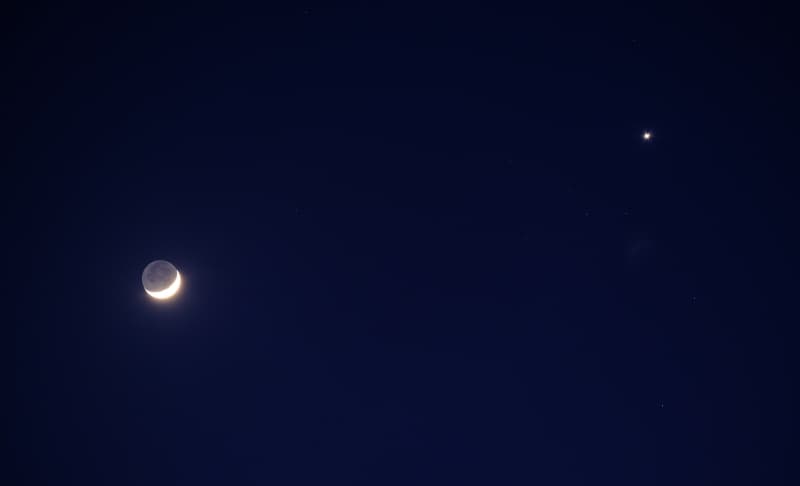
However, there are a few points to consider when observing with the naked eye:
First, avoid observing Venus when it is close to the horizon. Because the line of sight passes through a thicker layer of the atmosphere, low-altitude objects are prone to atmospheric turbulence, which can cause flickering and color shifts.
Second, try to choose a time when atmospheric clarity is high. High humidity, smog, or smoke from forest fires can degrade visibility.
Additionally, when Venus is near its greatest eastern or western elongation, its angular separation from the Sun is at its maximum; this results in the longest viewing window and makes it the ideal time for beginners to observe the planet.
Observing Venus with Binoculars and Telescopes
Telescopes become essential tools as observers begin to learn more advanced techniques for viewing Venus.
While binoculars may not reveal intricate details, models with specifications such as 10×50 or 15×70 allow observers to see that Venus has a distinct, non-point-like appearance. For beginners, this marks a significant step from naked-eye observation to more in-depth study.
Using a refracting telescope with an aperture of 60mm to 100mm reveals Venus's most famous characteristic: its changing phases. Much like the Moon, Venus exhibits a cycle of waxing and waning.
This occurs because the angle of Venus's sunlit side relative to Earth constantly shifts as the planet orbits the Sun. When Venus approaches Earth, its apparent diameter increases, but it appears as a slender crescent; conversely, when it is on the far side of the Sun, it appears nearly full.
Many astronomy clubs in North America include observing the phases of Venus as a key part of introductory planetary observation courses, as it is one of the easiest ways to verify the mechanics of planetary motion using a small telescope.
The Role of Filters in Observing Venus
Many observers feel disappointed when viewing Venus through a telescope for the first time, as they see nothing more than a brilliant white disk.
This is because Venus is shrouded in thick clouds, rendering surface details almost invisible in ordinary visible light.
To improve the view, various types of filters can be employed.
Blue and violet filters enhance cloud contrast, making certain upper-atmosphere structures more distinct. For observers with large-aperture equipment, ultraviolet filters can even reveal dark band structures within the cloud layers.
In the realm of professional astrophotography, enthusiasts often use ultraviolet wavelengths to capture the movement of Venus's atmosphere. This explains why high-end planetary images can display complex textures, whereas standard visual observation reveals only a white disk.
Nevertheless, for the majority of amateur observers, tracking the changing phases of Venus remains the most rewarding goal.
The Impact of Light Pollution and Weather on Venus Observations
Compared to observing deep-sky objects, Venus is less affected by light pollution.
For instance, while observing the Andromeda Galaxy (M31) or the Orion Nebula (M42) requires getting away from city lights, Venus remains easily visible even within urban areas.
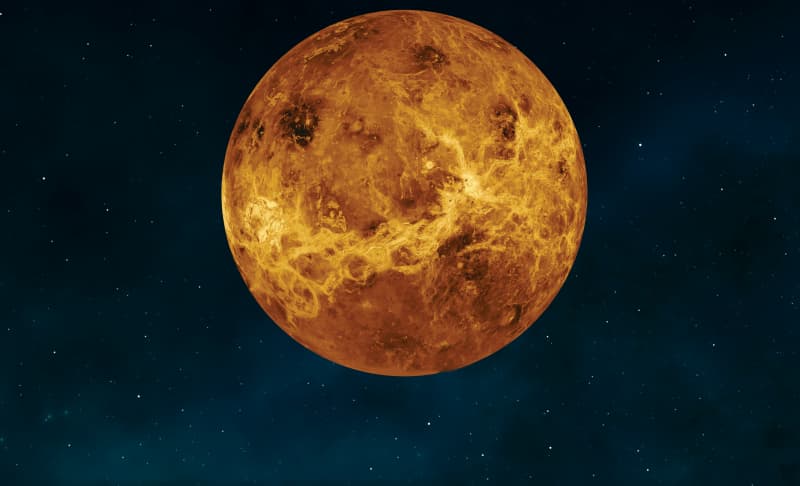
The factor that truly affects observation quality is often atmospheric seeing.
When high-altitude air currents are turbulent, the edges of Venus appear to shimmer constantly, blurring the details of its phase. Regions in the southwestern United States—such as Arizona and New Mexico—are long considered excellent locations for planetary observation due to their dry air and atmospheric stability.
For the best viewing results, it is recommended to choose conditions where:
Venus is at an altitude of more than 20°
Sky transparency is good
There are no strong winds
The telescope has reached thermal equilibrium before observation
These factors are often more important than simply increasing the telescope's aperture.
Summary
For astronomy enthusiasts wishing to venture into planetary observation, Venus is undoubtedly one of the best starting points. Mastering the techniques for observing Venus—whether spotting it as the Morning or Evening Star with the naked eye or tracking its changing phases through a telescope—offers a rich and intuitive astronomical experience. Thanks to its exceptional brightness, distinct phases, and unique atmospheric structure, Venus has long been a key target for amateur astronomers. For observers in North America, selecting the right timing, stable atmospheric conditions, and appropriate equipment makes it possible to continuously track the changes of this brilliant planet while gaining a deeper practical understanding of the workings of the solar system and the science of planetary astronomy.