
For those new to stargazing, the question of "how to find Mars" is one that arises almost every year. Although Mars is one of the most easily recognizable planets in the solar system, it does not always hang high in the night sky, nor does it remain fixed in one spot like the North Star. Because Mars orbits the Sun, its position in the sky shifts constantly with the seasons; therefore, knowing how to locate it is far more important than simply memorizing a specific direction.
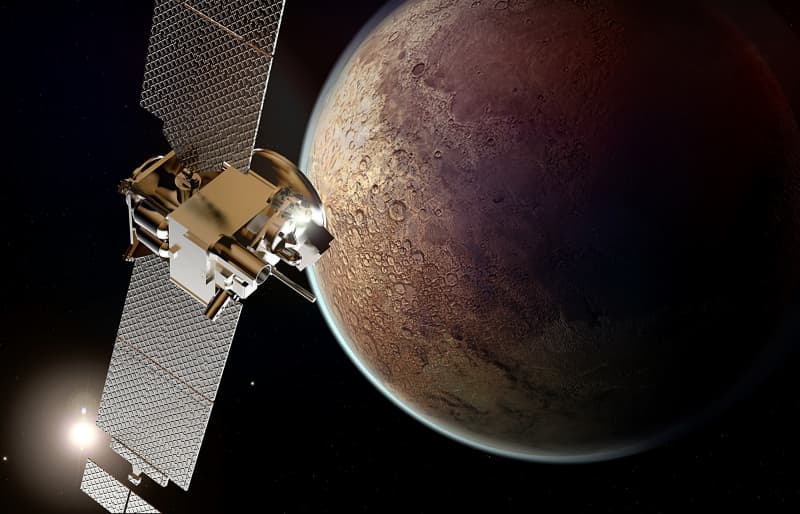
Why does Mars's position change every day?
Many people wonder, when looking for Mars for the first time, why it might be visible one day but completely impossible to find a few months later. The reason is that Mars is not a star, but a planet orbiting the Sun.
When observed from Earth, Mars always moves along a path near the ecliptic—the trajectory the Sun follows across the sky over the course of a year. Consequently, it typically appears near the constellations of the zodiac—such as Gemini, Leo, Taurus, or Virgo—rather than appearing at random locations in the sky.
Because Earth travels faster than Mars, it overtakes the Red Planet approximately every 26 months—an event known as "opposition." Around the time of opposition, Mars is closest to Earth; it shines at its brightest and remains visible for most of the night, making it the ideal time to learn how to locate the planet.
Conversely, when Mars approaches the direction of the Sun, it enters the "conjunction" phase; during this time, the planet is obscured by the Sun's glare, making it difficult to observe even with large telescopes.
How to Quickly Identify Mars by Its Color
If asked to name the most distinctive feature of Mars in the night sky, most stargazers would answer: its color.
Mars possesses a distinct orange-red glow; this is because its surface is rich in iron oxide (rust), which reflects sunlight in warm red tones—earning it the nickname "the Red Planet."
However, color alone is not enough to definitively identify the object, as there are several reddish stars in the North American night sky, such as:
Antares
Aldebaran
Arcturus
They can all be mistaken for Mars.
There are a few key characteristics to help identify it:
First, Mars rarely twinkles noticeably like a star.
Stars are extremely distant and act as point sources of light; atmospheric turbulence causes them to twinkle visibly. Mars, however, has a discernible apparent diameter, making its light steadier and its appearance softer.
Second, the brightness of Mars varies significantly.
As the distance between Earth and Mars changes, the planet can shift from being very bright to appearing like an ordinary bright star; therefore, if a red celestial object undergoes a dramatic change in brightness over the course of a few months, it is likely Mars.
Third, Mars moves slowly.
Observations made over several consecutive days reveal that Mars changes its position relative to the background stars, whereas the positions of the stars themselves remain essentially unchanged.
When is the best time to spot Mars in North America?
Generally, you can follow these guidelines:
The months surrounding opposition: Mars is at its brightest and visible for most of the night.
9:00 PM to midnight: This is the best viewing window for most years.
Autumn and winter nights: The air is more stable, and atmospheric seeing is usually better than during the hot summer months.
Away from the full moon: Moonlight reduces sky contrast, making Mars less conspicuous when it is fainter.
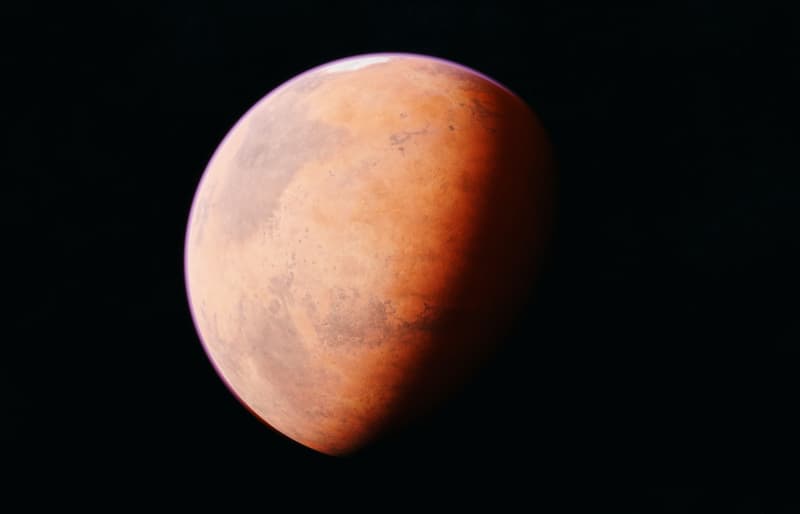
North America lies roughly between latitudes 25° and 50°, offering favorable conditions for observing Mars across most of the region. Areas such as southern Canada, the U.S. Midwest, the western highlands, and desert regions—characterized by high atmospheric transparency—are particularly well-suited for high-magnification observation.
If you live in a city, you should try to travel to a dark-sky location with a lower Bortle rating. Although Mars is bright enough not to be completely overwhelmed by light pollution, a darker sky enhances the overall viewing experience and makes it easier to locate nearby reference stars.
Using star charts and astronomy apps is the most efficient way to locate Mars.
Currently, mainstream astronomy software can display the real-time position of Mars, including:
Sky Guide
SkySafari
Stellarium
Star Walk 2
Sky Map (Android)
These apps combine GPS and electronic compass data; simply pointing your phone at the sky allows you to see exactly where Mars is located.
For observers using telescopes equipped with equatorial mounts, the "GoTo" automatic tracking system offers another option: simply input "Mars" to have the telescope automatically locate the planet, significantly saving time spent searching.
Of course, even when using an app, it is advisable to familiarize yourself with a few bright stars as reference points first. For instance, start by identifying prominent constellations like Orion, Taurus, or Leo before using the app to locate Mars; this approach helps you gradually build genuine stargazing skills rather than relying entirely on electronic devices.
What is the difference between observing Mars with binoculars and with an astronomical telescope?
Locating Mars is merely the first step; the real interest lies in observing its details. When using 7×50 or 10×50 binoculars, Mars appears as a small, bright red dot, though its color is more distinct than what is visible to the naked eye.
However, if you use a refracting telescope with an aperture of 80mm or larger, or a reflecting telescope of around 150mm, you can see a clearly defined disk—rather than just a point of light—when Mars is relatively close to Earth.
At magnifications of 150x to 250x and under good seeing conditions, it is also possible to observe:
The north polar ice cap
Dark basaltic plains (albedo features)
Brightness variations caused by dust storms
Color variations across the Martian disk
Using an orange (#21), red (#23A), or light blue filter can further enhance the contrast of surface features and improve the visibility of details. However, the effectiveness of filters depends heavily on telescope aperture, weather conditions, and observational experience; for beginners, waiting for stable atmospheric conditions is more important than simply increasing magnification.
How Light Pollution and Atmospheric Conditions Affect Observing Mars
Many people assume that because Mars is bright, weather conditions have little impact on viewing it; however, this is not the case. Several factors significantly influence the quality of the observation:
First is atmospheric transparency. If the air contains significant amounts of water vapor, dust, smoke, or thin clouds, Mars's color and brightness will be noticeably diminished, even if the planet remains visible.
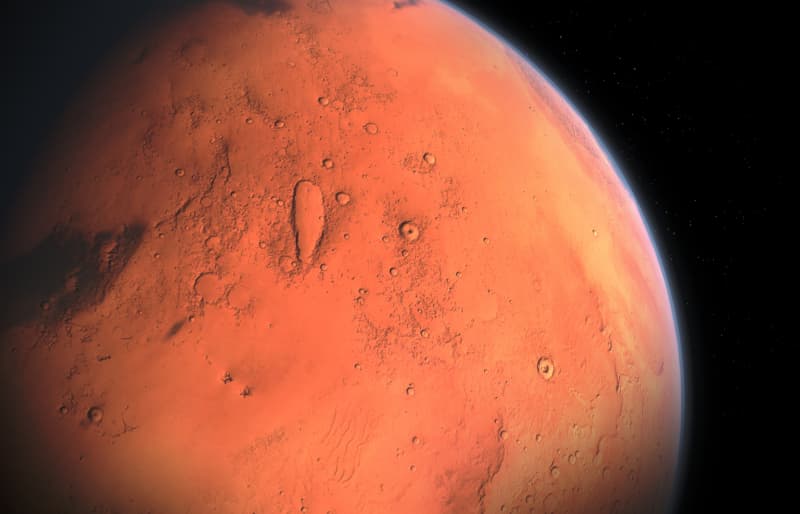
Second is "seeing." Seeing conditions determine the clarity of the image through the telescope. If there is intense turbulence in the upper atmosphere, even a large-aperture 300mm telescope will reveal nothing more than a constantly shimmering or wavering disk.
Additionally, the higher Mars is above the horizon, the less atmosphere the light must pass through, resulting in a more stable image. Therefore, it is best to wait until Mars has risen to an altitude of at least 30°—or ideally 45°—before attempting high-magnification observation.
Understanding the patterns makes finding Mars easier than simply memorizing its position.
The key to locating Mars lies not in memorizing which star it happens to be near on a given night, but in understanding the fundamental patterns of its movement along the ecliptic, its cyclical changes in brightness, and the optimal times for observation. For astronomy enthusiasts in North America, quickly spotting this striking red planet is easily achievable by using star-charting software, recognizing a few key stars, and choosing a night with clear skies and good seeing conditions.