
For many astronomy enthusiasts just starting out, the first step is often to explore our solar system. The solar system is home to eight planets, each with its own unique characteristics and appeal. Naturally, one might wonder which planet is the easiest to observe; some are bright enough to be spotted easily even amidst urban light pollution, while others require a telescope—or even more specialized equipment—to be identified.
For astronomy enthusiasts in North America, understanding the brightness, orbital positions, seasonal variations, and observational conditions of the various planets not only increases the likelihood of successfully locating them but also helps build a comprehensive understanding of the solar system's structure.

Key Factors Determining the Ease of Observing Planets
Before discussing which planet is the easiest to observe, it is essential to understand the key factors that influence observability:
First is apparent magnitude. The lower the apparent magnitude, the brighter the celestial object appears; for instance, an object with a magnitude of -4 is far easier to spot than one with a magnitude of +2. Since a planet's brightness fluctuates based on its distance from Earth, the same planet may offer different viewing conditions across different years and seasons.
Next is the angular distance from the Sun (elongation). Since planets do not emit their own light but rather reflect sunlight, a planet with a small angular separation from the Sun may be obscured by the glow of dawn or dusk, making it difficult to observe.
Third is the planet's altitude in the sky. The higher a planet rises, the less atmosphere the light must pass through, resulting in better viewing conditions. Low-altitude targets are more susceptible to atmospheric turbulence, haze, and light pollution.
Finally, there is the duration of visibility. Some planets are visible only briefly before dawn, while others remain in the sky throughout the night; generally, the longer a planet is visible, the easier it is to observe.
Venus—Widely Recognized as the Easiest Planet to Observe
If one had to choose the easiest planet to observe in the solar system, it would undoubtedly be Venus.
Known as the "Morning Star" or "Evening Star"—and referred to in China as the *Qimingxing* (Herald of Dawn)—Venus can reach a peak brightness of approximately magnitude -4.9, making it one of the brightest natural objects in the night sky, surpassed only by the Moon. Even in the centers of major North American cities, where light pollution is severe, Venus remains easily visible to the naked eye.
From an astronomical perspective, Venus possesses a very high albedo due to its thick atmosphere—reflecting more than 70% of incident sunlight—which makes it appear exceptionally bright.
Its disk is clearly visible through binoculars, and with an astronomical telescope having an aperture of 80mm or larger, one can observe "phases" of Venus similar to the changing phases of the Moon.
However, Venus has a limitation: because its orbit lies inside Earth's, it never appears in the sky at midnight, showing itself only before sunrise or after sunset.
Jupiter—the largest planet in the Solar System and the best planet for telescopic observation
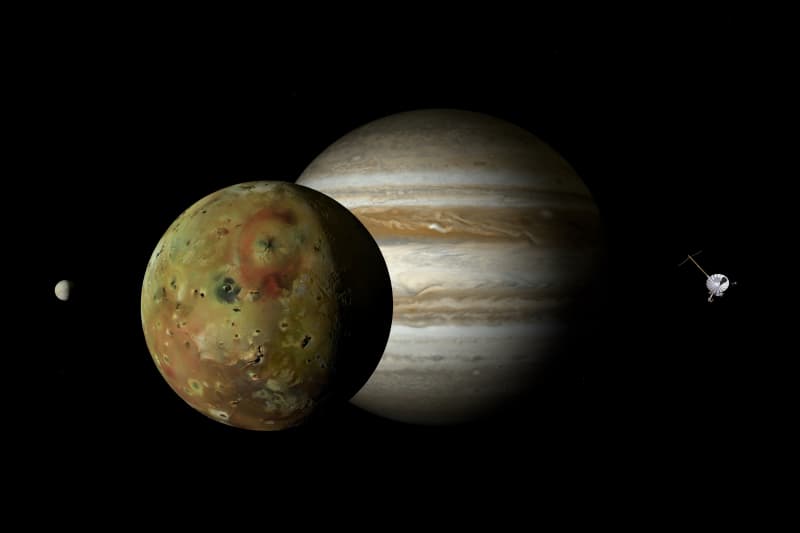
In terms of observable detail and visual appeal, Jupiter is arguably the best choice. With a magnitude typically ranging from -1.5 to -2.9, it is second only to Venus in brightness; while it often appears as the brightest "star-like object" in the night sky, it is not actually a star.
Jupiter's greatest advantage lies in the wealth of observable detail it offers. Even with a standard pair of binoculars, one can see its four famous Galilean moons:
Discovered by Galileo Galilei
Io
Europa
Ganymede
Callisto
When using a telescope with an aperture of 100 mm or larger, observers can also see:
Equatorial cloud belts
Polar features
The Great Red Spot
Satellite occultations and eclipses
During opposition, which occurs approximately every 13 months, Jupiter is visible all night long, with its brightness and apparent diameter reaching their peak.
Saturn is the most awe-inspiring object to observe.
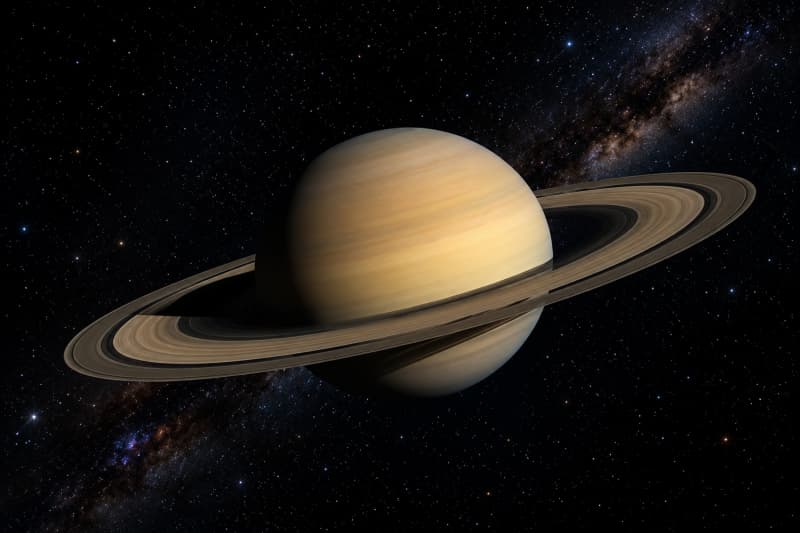
Although Saturn is far less bright than Venus or Jupiter, its unique rings deliver a powerful visual impact to astronomy enthusiasts seeing it for the first time; even a small, entry-level telescope allows one to distinguish the ring structure.
For urban observers, Saturn's greatest advantage is:
It does not require an extremely dark environment;
It can be observed with small- to medium-aperture telescopes;
Its ring system is highly distinctive;
It remains visible for extended periods.
Therefore, although strictly speaking Saturn is not the easiest planet to locate, it is one of the most captivating.
Why Mars, Mercury, and Other Planets Are More Difficult to Observe
Many people assume that Mars is easy to observe because of its bright red color. In reality, however, observing conditions for Mars vary significantly. The planet only appears notably bright during opposition; at other times, it may look like nothing more than an inconspicuous red dot in the night sky.
Observations of Mars are also frequently hampered by dust storms on its surface. Even with a large-aperture telescope, one is not guaranteed a clear view of surface details.
By comparison, observing Mercury is even more challenging.
Mercury is the closest planet to the Sun, so from Earth, it always appears close to the horizon. The observation windows are typically limited to:
about 30 minutes before sunrise;
about 30 minutes after sunset.
This means observers need an unobstructed view of the horizon and favorable weather conditions.
As for Uranus and Neptune, they generally lie beyond the range of naked-eye observation.
Uranus is barely visible to the naked eye under optimal conditions;
Neptune requires a telescope to be identified.
For beginners, these two ice giants are typically not among the initial targets for observation.
Practical Tips for Planet Spotting in North America
For observers in North America, the success of planetary observation often depends on the approach taken.
First, it is recommended to use planetarium apps such as:
Stellarium Mobile
SkySafari
Sky Guide
These tools allow you to track the positions of planets in real time.
Second, pay attention to key astronomical events like opposition and greatest eastern elongation. During these times, planets often reach peak brightness and offer the best viewing opportunities.
Additionally, try to get away from urban light pollution. While Venus and Jupiter remain visible within cities, fainter planets like Saturn and Mars reveal more detail under dark-sky conditions.
Observers in North America can also take advantage of the superior atmospheric clarity typical of autumn and winter to enhance the quality of their planetary observations.
Summary: Which planet is the easiest to observe?
Returning to the initial question—which planet is the easiest to observe?
If we consider only naked-eye visibility and ease of locating the object, the answer is Venus. It is exceptionally bright and can be easily spotted even in urban environments with heavy light pollution.
However, if we take into account the level of observable detail and long-term viewing value, Jupiter is a more ideal target. Not only is it bright, but through a telescope, one can observe its cloud bands, the Great Red Spot, and several of its moons.
Saturn, meanwhile, is one of the most popular targets among astronomy enthusiasts, thanks to its spectacular ring system.
For those new to astronomy, the best sequence for observation and learning is generally: Venus → Jupiter → Saturn → Mars. Once you have mastered the observation of these planets, tackling Mercury, Uranus, and Neptune will be a much easier and more efficient process.