
For new astronomy enthusiasts just starting out, the most common question is: Which planets can be seen with a small telescope? What are the actual results like? Is it suitable for beginners?
The planetary images we see online are mostly taken with professional equipment and heavily processed. These clear images raise high expectations for real-world observation, leading to a significant disappointment after the first observation with a small telescope.
In reality, while small telescopes can't reproduce the details of those online photos, they can still allow us to clearly identify the basic structures of planets, such as Jupiter's cloud bands, Saturn's rings, and Venus's phase changes. This level of observation can provide a sufficiently immersive experience for beginners.
Therefore, when considering whether planets can be seen with a small telescope, it's crucial to establish a correct understanding: the core of observation lies in identification and understanding, not in pursuing ultimate clarity.
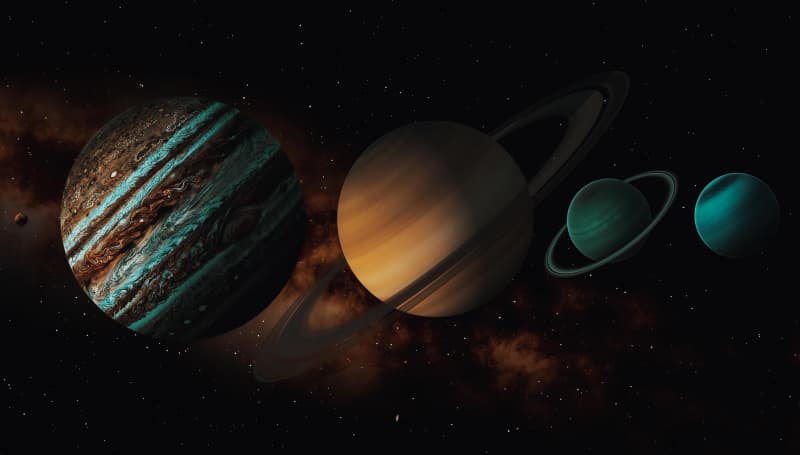
What qualifies as a "small astronomical telescope"? How Capable is it for Observation?
Before formally discussing how to observe planets with a small telescope, it's necessary to clarify the definition of a "small telescope": Generally speaking, telescopes with an aperture between 60mm and 130mm are considered entry-level or small telescopes. These devices possess basic light-gathering capabilities and magnification, meeting the observation needs of most beginners.
While small telescopes are far inferior to professional astronomical observation equipment in terms of specifications, their performance is sufficient for observing major planets in practical use. It's particularly important to note that the telescope's performance depends not only on the equipment itself but also on atmospheric stability, the observation environment, and the operating method. Under good observation conditions, small telescopes can perform better than expected, which is why it's recommended that beginners in astronomy don't rush to upgrade their equipment.
Which Planets Can Be Observed with a Small Telescope?
Now that we understand the definition of the equipment, let's analyze in detail "which planets can be observed with a small telescope, and what the actual observation results for each planet are like."
First is Venus, one of the brightest planets in the night sky and one of the easiest targets to observe with a telescope for its changing shape. With a small telescope, we can often see Venus exhibiting a phase similar to the moon's, gradually changing from a crescent shape to a near-full circle. Although Venus's surface is covered by an extremely thick atmosphere, obscuring specific details, this change in shape itself is highly valuable for observation.
Second is Saturn, another planet ideal for beginners. With a small telescope, you can clearly see Jupiter's two main cloud bands and its four bright moons orbiting it. The positions of these moons change over time, making each observation different, and this dynamic change is a major part of the fun of observing Jupiter.
Saturn is considered by astronomers to be one of the most visually striking planets. Even with a small telescope, Saturn's ring structure can often be seen, including its famous Cassini Division. This unique shape makes Saturn one of the most unforgettable targets for many astronomy enthusiasts' first observation.
Observing Mars is more challenging. Due to its small size and varying distance from Earth, details are only easier to see when it's close to Earth. Under normal circumstances, we're more likely to see only a small, slightly reddish dot, with only faint glimpses of surface variations possible under favorable conditions.
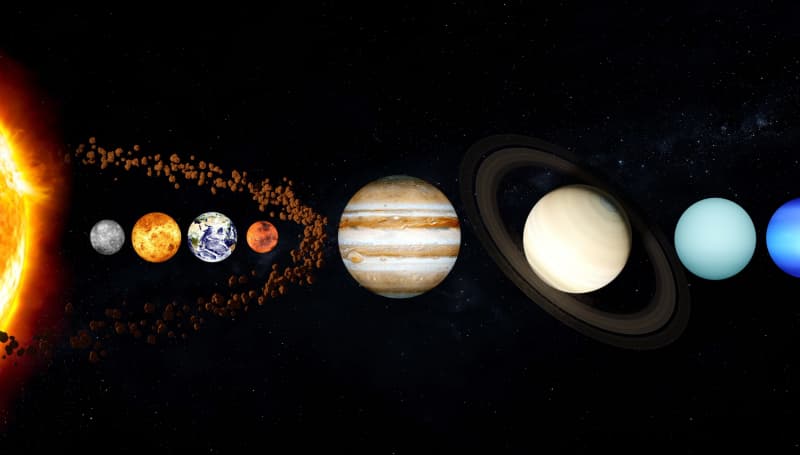
Furthermore, Mercury, Uranus, and Neptune are also difficult to observe. Small telescopes typically only help confirm their existence. For example, Mercury can be seen as a tiny bright spot or disk, but its proximity to the Sun severely limits the observation window. Uranus and Neptune, due to their greater distance, are usually observed as faint points of light, with almost no discernible details. Therefore, these planets are better suited for "target location" rather than as primary subjects for detailed observation.
Why are planets not as clear as in pictures when observed through a telescope?
Newcomers to the field often have this question after their first observation: Why are planets so much less clear in a telescope than in pictures? The core of this issue lies in understanding the difference between "real-time observation" and "astrophotography." Planetary images online are primarily the result of multiple exposures and post-processing, achieved through large telescopes. Amateur astronomers, on the other hand, see a live image through a telescope, which is limited by atmospheric turbulence, optical systems, and the resolution of the human eye. Therefore, the observed image is usually small and has limited detail; these phenomena are normal.
Furthermore, atmospheric stability (seeing) has a significant impact on the actual observation results. If air currents are strong, even with a good telescope, the image will show noticeable jitter. Therefore, for beginners, the quality of the observation experience depends on both equipment and environmental conditions.
Important Techniques for Clear Planetary Observation with a Small Telescope
After understanding which planets can be observed with a small telescope, it's necessary to learn some practical techniques to improve the observation experience.
First, choose the appropriate time to observe. Try to choose when the planet is high in the sky, as the light passes through a thinner atmosphere, resulting in a more stable and clearer image.
Secondly, proper magnification control is crucial. Many novice astronomers believe that the higher the magnification of their telescope, the better. However, excessively high magnification can lead to a darker and more unstable image. A more effective approach is to start with a low magnification and gradually adjust to an optimal balance between clarity and brightness.
Furthermore, focusing accuracy is extremely important. Even slight focusing errors can result in a blurry image, affecting the observation results. Therefore, novice observers must be patient and make adjustments gradually during observation.
Ideally, choose to observe on a windless night with stable air. To avoid urban light pollution, it's best to go to the suburbs or other remote locations. These techniques often provide a more significant improvement than the type of telescope chosen.