
In the clear night sky, the most eye-catching objects are often the exceptionally bright ones. While many people assume that the brightest celestial bodies are limited to the Sun, the Moon, and a few well-known planets, a comparison based on astronomical apparent magnitude reveals a different picture: the ten brightest natural objects in the solar system include not only familiar planets but also certain moons and asteroids that are visible to the naked eye—albeit barely so.
Understanding the brightness variations of these celestial bodies not only helps stargazing enthusiasts quickly identify objects in the night sky but also fosters a deeper understanding of key astronomical concepts such as apparent magnitude, albedo, and opposition.
Why the Sun Remains the Brightest Natural Object in the Solar System
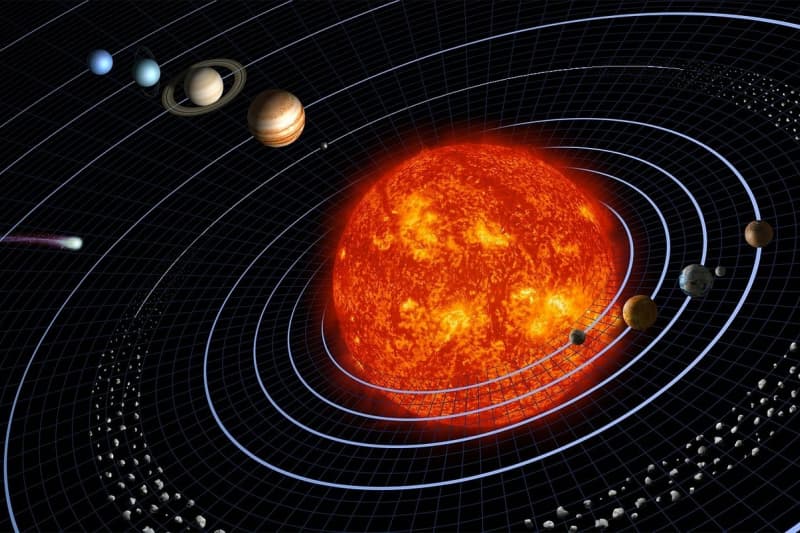
The Sun is indisputably the brightest natural object in the solar system, boasting an apparent magnitude of approximately -26.74—a level of brightness that far exceeds that of any other celestial body in the night sky. Its brilliance is not merely due to its proximity to Earth; more importantly, it is a star that continuously generates immense energy through nuclear fusion in its core. Every second, the Sun converts millions of tons of hydrogen into helium, releasing vast amounts of light and heat. Consequently, it is a self-luminous body, unlike planets, which shine by reflecting sunlight.
The Sun's brightness remains virtually unaffected by seasonal changes on Earth. However, Earth's orbit around the Sun causes variations in daylight duration across different latitudes in North America; for instance, northern Canada experiences longer hours of sunlight during the summer, while the Sun maintains a relatively high angle of elevation during winter in the southern United States.
These changes affect the Sun's position in the sky rather than its intrinsic brightness. When observing the Sun, specialized solar filters are essential; one must never view it directly through a telescope with the naked eye, as doing so can easily cause permanent vision damage.
Why the Moon Firmly Holds Second Place and Why Its Brightness Constantly Changes
Following the Sun, the Moon ranks next in brightness; at full moon, its apparent magnitude reaches approximately -12.7, making it the most dazzling natural object in the night sky. However, unlike the Sun, the Moon does not emit its own light—it merely reflects sunlight—so its brightness constantly fluctuates in tandem with its phases.
For astronomy enthusiasts interested in deep-sky photography, the full moon—while beautiful—is not the ideal time for observation. Bright moonlight significantly reduces the contrast of the sky background, making it difficult to discern fainter celestial objects such as the Milky Way, nebulae, and galaxies. Consequently, most astronomical societies in North America recommend scheduling deep-sky observation sessions for the week surrounding the new moon.
Why Venus Is the Brightest Planet in the Night Sky
Venus ranks third among the ten brightest natural celestial bodies in the solar system. At its brightest, it reaches an apparent magnitude of -4.9; under favorable conditions, it can even be seen with the naked eye during the day.
Some people mistakenly believe that Venus appears so bright because it is the closest planet to Earth. In reality, the true reason lies in its thick atmosphere, which is completely shrouded in clouds of sulfuric acid. These clouds possess a very high albedo—reflecting approximately 75% of the sunlight that strikes them—so despite not being the largest planet, Venus shines with great brilliance.
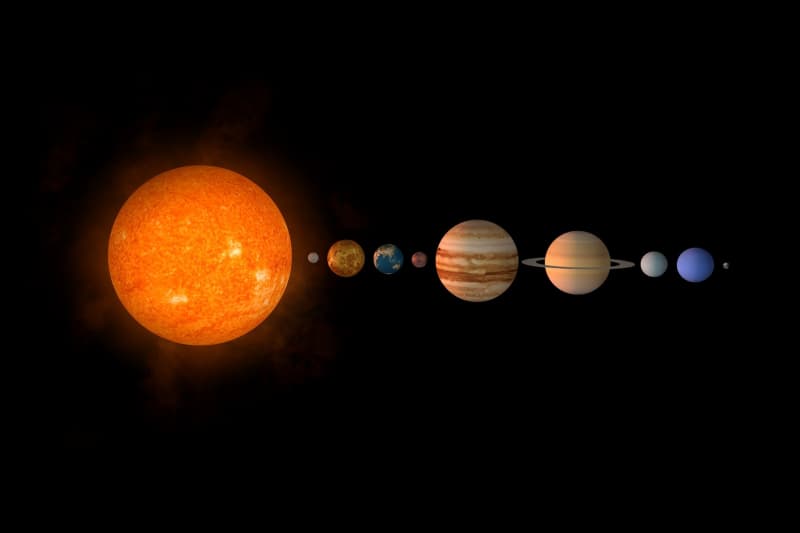
Venus typically appears before sunrise or after sunset, earning it the names "Morning Star" and "Evening Star," respectively. Because it always orbits close to the Sun, it does not remain visible throughout the night like Mars or Jupiter. For observers in North America, there are several opportunities each year to witness its greatest western or eastern elongation—periods when the angular separation between Venus and the Sun is at its maximum, making the planet easiest to observe. Even with ordinary binoculars, one can see it displaying phases similar to the Moon, such as a crescent or a waxing gibbous.
Why Mars Can Briefly Surpass Jupiter to Claim Fourth Place
Although Jupiter is generally brighter, Mars can slightly exceed Jupiter in peak brightness. This is because Mars is the outer planet closest to Earth, reaching "opposition" approximately every 26 months. During this period, Earth passes between the Sun and Mars, minimizing the distance between the two; Mars's apparent diameter expands rapidly, and its brightness surges to an apparent magnitude of about -2.94. At this time, the planet not only displays a vivid color, but its polar caps and certain dark surface features also become visible through a telescope.
In contrast, Jupiter is much farther from Earth; despite its immense size, its peak brightness hovers around an apparent magnitude of -2.94, making the difference between the two planets negligible. Over the long term, Jupiter remains one of the most easily recognizable bright objects in the night sky throughout the year, whereas Mars only exhibits such spectacular brightness for a few months surrounding opposition. Consequently, for astronomy enthusiasts in North America, the opposition of Mars is often the most anticipated observation event of the year.
What are the characteristics of Mercury, Saturn, and objects at the limit of naked-eye visibility?
Next on the list is Mercury; at its brightest, it reaches an apparent magnitude of approximately -1.9. Although theoretically brighter than Saturn, it is far more challenging to observe than other planets. Because Mercury always stays close to the Sun, it appears only low in the sky at dawn or dusk, making it highly susceptible to obstruction by horizon haze, atmospheric extinction, and buildings. Consequently, many stargazers have never successfully spotted Mercury, even after years of trying.
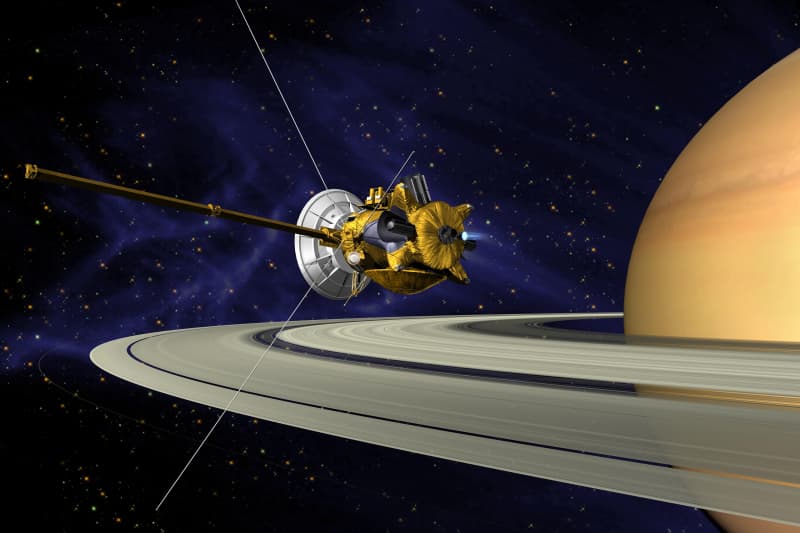
Following that is Saturn, with a peak brightness of around magnitude -0.5. Despite this, its spectacular ring system makes it one of the most popular targets for telescopic observation. Even an 80mm aperture refracting telescope can resolve the gap between Saturn's rings and the planet itself—the famous "Cassini Division."
The final three objects on the list—Ganymede, Io, and Vesta—represent the absolute limits of naked-eye observation. Ganymede has a theoretical magnitude of about 4.6; while only a few highly experienced observers might resolve it under exceptionally dark conditions, the task is extremely difficult, as one must avoid the dazzling glare of Jupiter itself.
As a large asteroid, Vesta can approach magnitude 5 around the time of opposition. For experienced observers in high-altitude, low-light-pollution regions of North America, it occasionally serves as a challenging target.
How to Easily Observe the 10 Brightest Natural Objects in the Solar System
To fully observe the ten brightest natural objects in the solar system, the first step is to choose a location with minimal light pollution. According to the internationally recognized Bortle Dark-Sky Scale, skies rated Class 2 through Class 4 are ideal for naked-eye and binocular observation. National parks in the western United States and certain dark-sky preserves in Canada offer excellent viewing conditions.
Regarding equipment, the Sun, the Moon, and most planets can be identified with the naked eye; a pair of 7×50 or 10×50 binoculars allows for a closer look at Jupiter's moons (such as Ganymede and Io) and lunar details; and using an astronomical telescope with an aperture of 100mm or larger reveals richer structures, such as Saturn's rings, Jupiter's cloud belts, and Mars's polar caps. Additionally, using modern astronomy software to check planetary positions, dates of opposition, and lunar phases in advance can significantly enhance observation efficiency.
Finally, proper eye protection is essential when observing the Sun; never look directly at the Sun, as doing so can cause permanent eye damage.
Summary
From the Sun, Moon, Venus, Mars, and Jupiter to Ganymede and Vesta, the ten brightest natural celestial bodies in the solar system not only create the most striking sights in the night sky but also help us understand key astronomical concepts such as apparent magnitude, albedo, opposition, and lunar phases. For astronomy enthusiasts in North America, simply choosing the right observing season, avoiding severe light pollution, and using binoculars or a small telescope allows one to personally appreciate the unique characteristics of these brilliant celestial objects.