
In the summer night sky, Cygnus X-1 is not an easily recognizable bright star with the naked eye, but it is a deep-sky object of great significance in the history of astronomy. Located near the constellation Cygnus, it is a high-mass X-ray binary system consisting of a blue supergiant and a black hole. Astronomers discovered this mysterious object in 1964 using X-ray detection, and after long-term optical, radio, and X-ray observations, the existence of a stellar-mass black hole was finally confirmed. NASA calls Cygnus X-1 the first object to be confirmed as a black hole through dynamical observations.
Where is Cygnus X-1 located?
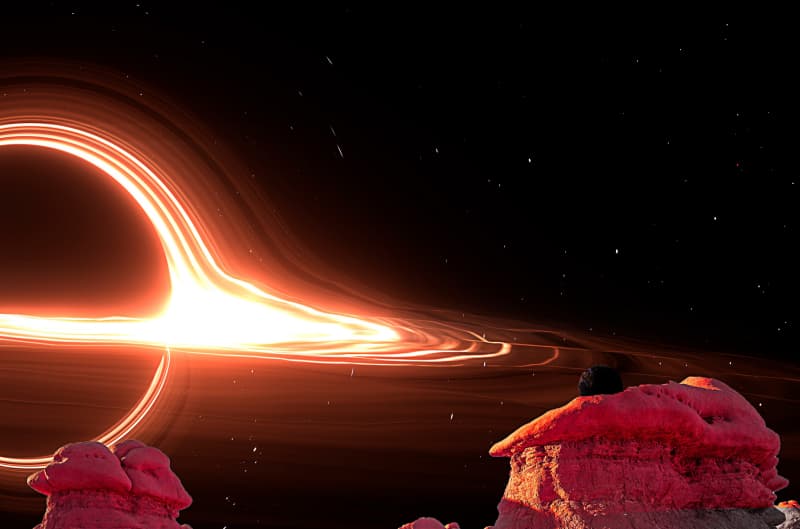
Cygnus X-1 is located in the constellation Cygnus, near the Summer Triangle, a very prominent constellation in the Northern Hemisphere during summer. On summer nights, after Vega, Altair, and Deneb rise into the sky, Cygnus gradually becomes one of the most easily recognizable constellations in the Milky Way. The star alignment near Deneb also forms the famous Northern Cross.
According to current data, Cygnus X-1 is approximately 6070 light-years from Earth. This distance comes from precise measurements in radio astronomy. It's important to note that earlier data often used values of approximately 7000 or 7500 light-years; therefore, seeing different numbers does not necessarily mean one is incorrect, but rather that the measurement precision varied across different eras. NASA later determined the distance to be approximately 6070 light-years using the Very Long Baseline Array (VLBA).
Why is Cygnus X-1 considered a black hole?
Black holes don't emit visible light like ordinary stars, so astronomers can't directly confirm their existence by "seeing" them. Cygnus X-1 is so important because the motion of its companion star reveals an invisible but massive compact object.
Cygnus X-1 is actually a binary system, containing a very bright blue supergiant visible in the visible light spectrum, named HDE 226868. It orbits the unseen compact object with an orbital period of approximately 5.6 days. By measuring the periodic variations in the companion star's spectral lines over a long period, astronomers can calculate the mass of the hidden object. If this object's mass exceeds the range where a neutron star can stably exist, and no normal star can explain such observations, then a black hole is the most plausible explanation. This is a very typical method in astronomy: "finding invisible objects through gravitational influence."
Why do black holes emit intense X-rays?
Strictly speaking, the black hole itself is not a source of X-rays. The real source of intense X-rays is the extremely hot matter surrounding the black hole.
Due to the black hole's extremely strong gravity, some of the gas in the outer layers of its companion star is gradually drawn towards it. This matter doesn't simply fall into the black hole in a straight line; instead, it rotates at high speed around the black hole, forming accretion structures. During this motion, friction, and compression, the gas is heated to millions of degrees, ultimately releasing intense X-rays. NASA points out that Cygnus X-1 is one of the brightest X-ray sources in the Milky Way, and the high-temperature matter surrounding the black hole is a significant source of this high-energy radiation.
Therefore, if the human eye could directly see X-rays, the region containing Cygnus X-1 would be very conspicuous. However, our eyes can only see visible light, so ordinary stargazers only see the companion star and its surrounding stars, not the black hole itself.
How big and heavy is Cygnus X-1?
The black hole in Cygnus X-1 is a stellar-mass black hole, meaning it's formed from the evolution and collapse of a massive star. Modern NASA data gives the black hole's mass as approximately 21 times the mass of the Sun, and its companion star's mass as approximately 41 times the mass of the Sun.
It's important to correct a figure that often appears in older data: the mass of the black hole in Cygnus X-1 was previously estimated to be about 7, 10, or even 15 times the mass of the Sun, so data from different studies can vary significantly. With increasingly precise measurements of parameters such as distance, orbital inclination, and stellar mass, modern research gives a mass significantly higher than earlier estimates.
Although the black hole possesses tens of times the mass of the Sun, its event horizon is extremely small. In other words, enormous mass does not necessarily mean a large appearance. This is one of the most counterintuitive aspects of black holes.
How was Cygnus X-1 discovered?
The story of Cygnus X-1 begins in 1964. Scientists using sounding rockets equipped with X-ray detectors searched for X-ray sources in the universe and discovered a powerful X-ray source emanating from the constellation Cygnus, hence its name.
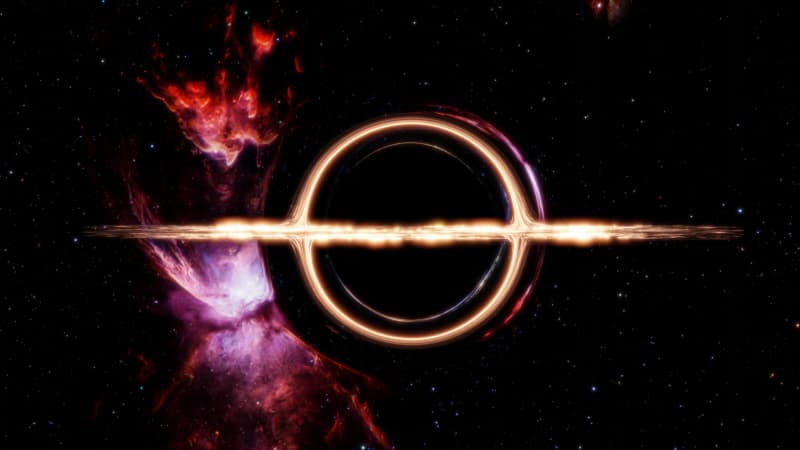
Subsequently, astronomers began searching for the corresponding celestial object in the visible light spectrum. They eventually discovered a close relationship between Cygnus X-1 and a bright blue supergiant star. By studying the orbital motion of this companion star, scientists gradually determined the mass of the hidden object and ruled out other possibilities such as white dwarfs and neutron stars.
Therefore, the importance of Cygnus X-1 lies not only in "discovering a black hole," but also in demonstrating how modern astronomy can utilize multi-wavelength observations and orbital dynamics to study celestial objects invisible to the naked eye.
Can North American stargazers see Cygnus X-1?
They can try to locate its region of the sky, but don't expect to see the black hole directly with a regular telescope.
Cygnus X-1's optical counterpart, HDE 226868, has an apparent magnitude of approximately 9, so theoretically, a telescope is required to see it. Furthermore, it's very close to its surrounding stars, making it difficult to locate. More importantly, even if a telescope captures this blue supergiant star, the black hole won't be directly visible. The existence of a black hole needs to be determined through evidence such as the motion of its companion star and X-rays.
Why is Cygnus X-1 said to have changed humanity's understanding of black holes?
Before Cygnus X-1, black holes were primarily theoretical objects predicted by general relativity. Cygnus X-1 provided a very strong observational case study, allowing scientists to investigate an invisible, compact object through its companion star's orbit and high-energy radiation.
Today, astronomers have discovered numerous black hole candidates and study them using various methods, including X-ray binaries, stellar motion, and gravitational waves. Cygnus X-1 remains one of the most classic examples. NASA data even indicates that it was the first confirmed black hole and a crucial subject for studying black hole accretion processes.