
The night sky in late July ushers in one of the most anticipated observing periods of the year. For amateur astronomers in North America, the week of July 24–31, 2026, offers a variety of celestial events suitable for both naked-eye and telescopic viewing. Highlights include the bright July full moon, a close approach between the Moon and Antares, Saturn entering its prime viewing season, and the much-anticipated peak of the **Southern Delta Aquariids meteor shower**.
Although bright moonlight may impact the observation of certain deep-sky objects and meteors, there remains a wealth of targets to observe this week. From easily spotted celestial bodies like the Moon and planets to asteroids and deep-sky objects requiring a telescope, there is something for stargazers of all skill levels to explore. If you are looking for a July stargazing guide, a plan for observing the North American night sky, or a list of celestial events worth seeing this week, this guide will help you schedule your best viewing times.
Five Celestial Events to Watch This Week
1. Southern Delta Aquariids Meteor Shower Peaks
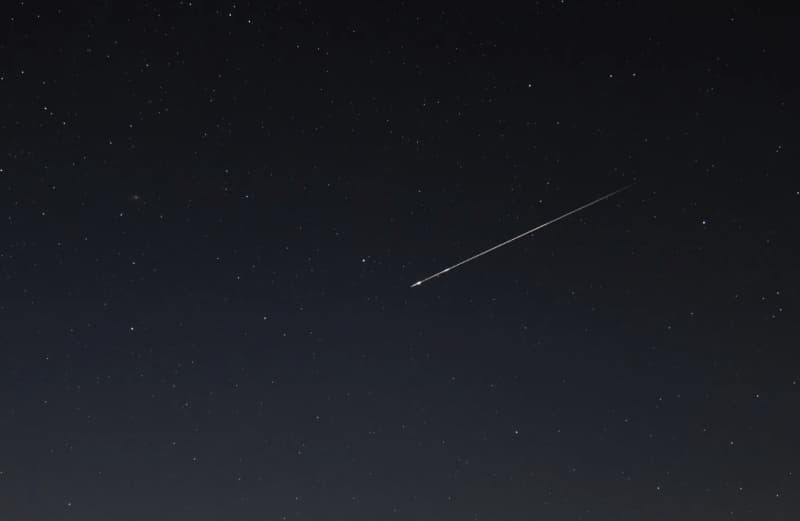
One of the week's major highlights is the annual Southern Delta Aquariids meteor shower.
The Southern Delta Aquariids typically peak in late July; this year, the best viewing is expected around July 30. Under ideal conditions, observers might see upwards of 20 meteors per hour.
However, viewing conditions this year will be affected by the moon, which is approaching its full phase. Bright moonlight will reduce the visibility of fainter meteors, so the actual number of meteors seen may be lower than theoretical estimates.
For observers in North America, the best times to watch are:
After midnight;
Between 2:00 AM and sunrise;
While avoiding the direction of direct moonlight.
No telescope is needed to view the meteor shower; the naked eye is actually better suited for the task. It is recommended to choose a location away from city lights and allow your eyes to adjust to the darkness.
July Full Moon: The "Buck Moon" Illuminates the Summer Night Sky
July 29 marks this year's July full moon, also known as the "Buck Moon."
Once the full moon rises, the night sky is bathed in its soft glow. While many consider the full moon the best time for lunar observation, the sunlight actually strikes the lunar surface almost head-on during this phase; this reduces the shadows within craters, making surface details less distinct than they are during other phases of the lunar cycle.
Nevertheless, the full moon remains one of the easiest celestial objects for beginners to observe.
With the naked eye, you can see:
the dark regions formed by lunar maria (seas);
the overall outline of the Moon;
the bright highland regions in the south.
If using a telescope, it is recommended to use a lunar filter to reduce brightness and make viewing more comfortable.
Of particular interest is the famous Tycho crater in the southern region; under the right conditions, the bright rays of ejecta radiating from it can still be observed.
Saturn Enters Prime Viewing Period
For astronomy enthusiasts who enjoy observing planets, Saturn is the highlight of the week.
On July 27, Saturn reaches a stationary point and begins its retrograde phase.
Currently located near the constellation Pisces, the best time to observe the planet is:
From the early morning hours until just before sunrise.
Around 3:00 AM, Saturn rises high in the southeastern sky, appearing as a prominent, bright point of light.
With a small telescope, you can view:
Saturn's iconic rings;
Titan;
Other fainter moons.
Titan is Saturn's largest moon and the easiest to spot. Observing Saturn over several consecutive days allows you to see the moons shifting positions—a fascinating way for beginners to experience the dynamics of the solar system.
The Moon Approaches Antares: A Red Supergiant Alongside the Moon
On July 24, the Moon will pass near Antares—the brightest star in the constellation Scorpius—bringing the two into very close proximity.
Antares is a famous red supergiant; due to its reddish hue, it is often referred to as a "rival to Mars."
On that evening, observers can see:
The bright Moon;
The orange-red Antares;
Parts of the constellation Scorpius.
This celestial pairing offers an excellent opportunity for photography.
Even in an urban setting, this Moon-star duo can be easily spotted, provided there is an unobstructed view of the southern sky.
Mercury Appears at Dawn: A Challenge for Low-Altitude Observation
Towards the end of July, Mercury gradually becomes visible in the eastern sky before dawn.
Around July 31, the planet brightens further, making it a worthwhile target to spot in the early morning.
However, because Mercury is close to the Sun, the observation window is very brief:
Approximately 30 to 60 minutes before sunrise;
An unobstructed view of the eastern horizon is ideal.
Recommendations:
First, try to spot it with the naked eye;
Then, use binoculars to confirm the sighting;
Stop using the telescope/binoculars before sunrise.
This is crucial because, once the Sun rises, accidentally pointing the instrument toward the Sun could pose a serious danger.
Deep-sky targets suitable for beginners this week
Beyond the Moon and planets, you can also try spotting some deep-sky targets this week.
Asteroid 3 Juno
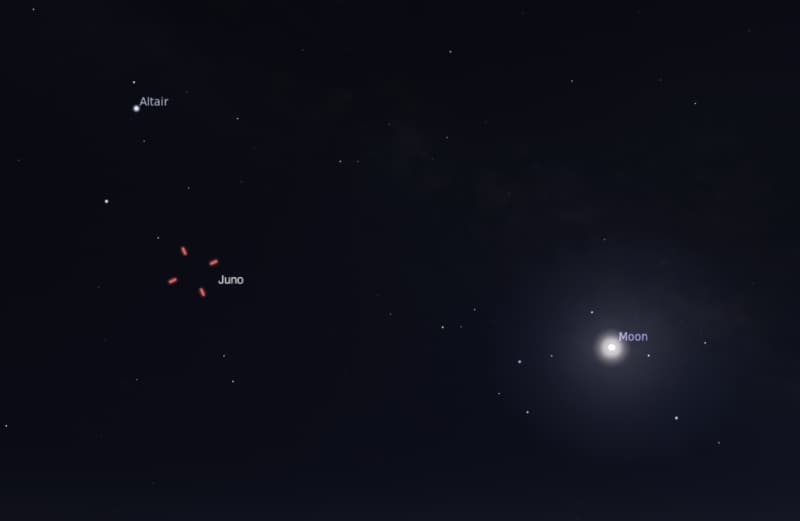
On July 26, the asteroid Juno reaches opposition, making it visible throughout the night.
Although its magnitude is around 9—meaning it is invisible to the naked eye—it is a great target to attempt with a small telescope.
The greatest joy of observing asteroids lies in the fact that:
Unlike stars, which remain fixed in place, asteroids gradually shift their positions over the course of days or even weeks.
Stargazing Tips for North America: How to Get the Best Viewing Experience
For beginner astronomy enthusiasts, it is recommended to select targets based on difficulty this week:
Visible to the naked eye:
July full moon;
The Moon near Antares;
Southern Delta Aquariid meteor shower;
Position of Saturn.
Recommended for binoculars:
Meteor showers;
Constellation patterns;
Spotting Mercury.
Recommended for telescopes:
Saturn's rings;
Titan;
Asteroid Juno.
Additional recommendations:
Avoid urban light pollution;
Check the weather forecast in advance;
Allow at least 20 minutes for your eyes to adjust to the dark;
Use a stargazing app to help locate objects.
Summary: Celestial Highlights Not to Miss (July 24–31, 2026)
Overall, the celestial events occurring from July 24 to 31, 2026, are ideal for novice stargazers in North America.
Although the full moon may hinder the observation of fainter celestial objects and meteors, there are still several spectacular targets worth your attention:
First, the peak of the Southern Delta Aquariid meteor shower—experience the sight of summer meteors streaking across the night sky;
Second, the optimal viewing period for Saturn—admire its rings and the changing positions of its moons;
Third, a close pairing of the Moon and Antares—enjoy the allure of summer astrophotography.
Whether you are looking for information on July's celestial events, a weekly stargazing guide, North American stargazing activities, or targets suitable for beginners, the night sky this week offers a wealth of opportunities for exploration.