
As the largest planet in the solar system, Jupiter is exceptionally bright and stands out prominently in the night sky, making it an ideal target for astronomy beginners to observe. Consequently, knowing how to locate Jupiter is the first challenge a novice faces.
Although Jupiter shines brightly, beginners with limited observational experience may still feel overwhelmed by the vast, star-filled sky, unsure of where to begin their search. By understanding the planet's orbital patterns, brightness characteristics, optimal viewing seasons, and locating techniques, one can easily pinpoint this massive gas giant—even in urban areas with significant light pollution.
Why Jupiter Is Easy to Spot
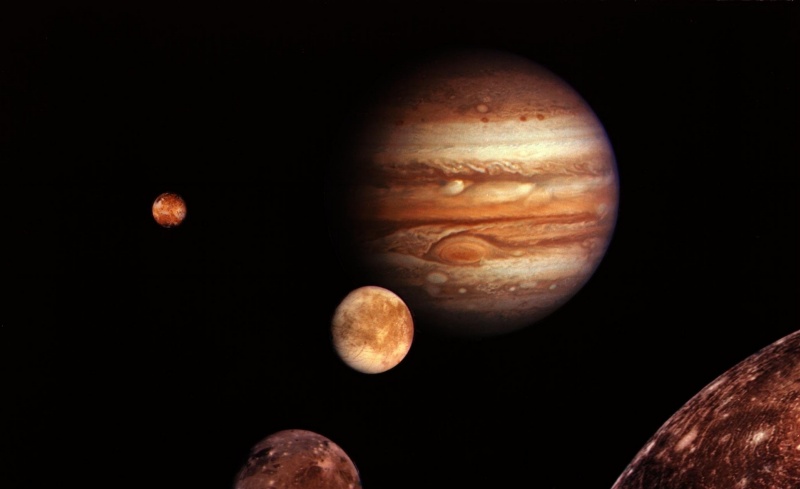
Jupiter is located approximately 778 million kilometers from the Sun, making it an outer planet of the solar system. Although it is quite far from Earth, its diameter—reaching 143,000 kilometers (more than 11 times that of Earth)—allows it to reflect a significant amount of sunlight. Jupiter’s apparent magnitude typically ranges from -1.5 to -2.9, meaning it is often brighter than the vast majority of stars in the night sky.
For stargazers in North America, Jupiter is visible all night long during opposition—the period when it reaches its peak brightness for the year. During this time, the planet rises after sunset and sets before dawn, making it the ideal window for observation.
Another key characteristic is that Jupiter does not twinkle noticeably like stars do. Because stars are extremely distant, their light tends to scintillate (twinkle) as it passes through the atmosphere; in contrast, Jupiter—as a planet with a larger apparent diameter—appears as a relatively steady point of light. Furthermore, Jupiter is much closer to Earth than the stars are. Therefore, if you spot a very bright "star" with steady light that does not noticeably twinkle, it is highly likely to be Jupiter.
Locating Jupiter Using the Ecliptic
The major planets of the solar system orbit the Sun in roughly the same plane; consequently, when viewed from Earth, they appear to move along a path close to the ecliptic. The ecliptic is the path the Sun traces across the celestial sphere over the course of a year and marks the region where the twelve constellations of the zodiac are distributed.
To locate Jupiter, you can first identify the position of the ecliptic in the sky; other bright solar system bodies—such as the Moon, Venus, Mars, and Saturn—also typically appear in this zone. In other words, if you spot an exceptionally bright object near the ecliptic, it is highly likely to be a planet within our solar system rather than an ordinary star.
Observers in North America can use star-charting software or astronomy apps to determine the position of the ecliptic on any given day. Since Jupiter moves relatively slowly across the sky—often remaining in the same region of stars for weeks or even months—subsequent observations become quite easy once you have identified the constellation it occupies.
Identifying Jupiter by Brightness and Color
Jupiter typically displays a soft, yellowish-white glow in the night sky, distinct from the silvery-white luster of Venus. In contrast, Mars exhibits a noticeable orange-red hue, while famous red stars like Betelgeuse or Antares show a deeper reddish-orange color.
Jupiter’s most notable characteristic is its high, steady brightness; it easily cuts through the urban skyglow even in areas with moderate light pollution. For observers in major North American cities, Jupiter is often one of the easiest celestial objects to identify—second only to the Moon.
If you spot an exceptionally bright, yellowish-white "star" in the sky that barely twinkles, you can be fairly certain that the object is Jupiter.
Identifying Jupiter with Binoculars
Binoculars are among the most practical tools for learning how to observe Jupiter. Even standard astronomical binoculars—such as 7×50 or 10×50 models—allow you to see one of Jupiter's most famous features: the Galilean moons.
In 1610, Galileo Galilei discovered Jupiter's four large moons:
Io
Europa
Ganymede
Callisto
Through binoculars, they typically appear as small points of light arranged on either side of Jupiter. Because these moons are constantly in motion, their arrangement changes with each observation.
If you see a bright star accompanied by several faint points of light, you can be almost certain that you are looking at Jupiter.
Observing Jupiter's Details with a Telescope
Once observers have successfully located Jupiter in the night sky, many will want to examine its surface features more closely. For amateur astronomers in North America, a refracting telescope with an aperture of 80mm or larger, or a reflecting telescope of around 150mm, is sufficient to reveal a wealth of detail on the planet.
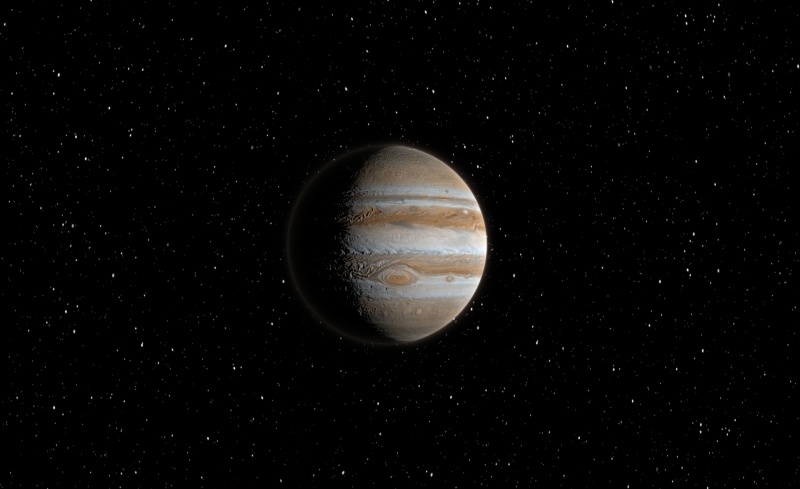
At magnifications of 100x to 200x, the following can be observed:
Jupiter's equatorial cloud belts
The North Equatorial Belt and South Equatorial Belt
Color variations in the polar regions
Satellite transits
Satellite shadow projections
The famous Great Red Spot
The Great Red Spot is a massive storm system that has persisted for centuries; at one time, its diameter exceeded that of Earth. Using light blue or green filters during observation can sometimes enhance the contrast of cloud belts and storm structures.
Atmospheric seeing has a profound impact on Jupiter observations. Even with a large telescope, details become blurred if atmospheric turbulence is severe. Therefore, it is crucial to choose a night with stable air and good transparency.
How to Find Jupiter in Light-Polluted Environments
Jupiter is one of the few celestial objects in the night sky that remains clearly visible despite mild to moderate light pollution; it can be easily spotted even under urban skies rated Bortle 7 or 8.
When observing from an urban area, consider the following strategies:
First, choose an unobstructed viewing location, such as a park, a high-rise terrace, or an open area in the suburbs. Second, avoid spots directly illuminated by streetlights and allow your eyes time to adjust to the darkness. Third, use mobile stargazing apps to assist with locating the planet; modern astronomy apps utilize GPS and gyroscope functions, allowing you to quickly identify Jupiter simply by pointing your phone at the sky. For beginners, this digital method of finding stars is often more efficient than using traditional star charts.
Best Season and Time for Observing Jupiter
Jupiter takes approximately 11.86 years to complete one orbit around the Sun; consequently, it appears in a different constellation region of the celestial sphere each year.
Generally speaking, when Jupiter is near opposition:
Reaches peak brightness for the year;
Apparent diameter reaches its maximum;
Visible throughout the night;
Ideally suited for photography and observation.
Regarding observation timing, the best results are obtained when Jupiter is more than 30 degrees above the horizon; observing at lower altitudes subjects the view to a thicker layer of the atmosphere, resulting in increased image jitter and chromatic dispersion.
Observers in North America can generally find favorable conditions for viewing Jupiter from autumn through winter, though the specific timing depends on the planet's orbital position, which changes from year to year.
Summary
For astronomy enthusiasts new to stargazing, mastering the techniques for observing Jupiter is not difficult; thanks to its exceptional brightness, steady light, and position near the ecliptic, it is one of the easiest planets to identify. By familiarizing themselves with the ecliptic's path across the sky and the planet's yellowish-white appearance—and by using binoculars to spot the Galilean moons alongside modern star-charting software for navigation—even beginners can quickly locate Jupiter. When using a more powerful telescope, observers can also appreciate intricate details such as the planet's cloud bands, the Great Red Spot, and the motion of its moons.