
The vast starry sky above us has always attracted numerous astronomy enthusiasts. However, many beginners often don't know where to start. With the right basic stargazing knowledge, even without purchasing professional stargazing equipment, one can appreciate the vast universe with the naked eye.
North America, in particular, is recognized globally as one of the best regions for stargazing. Especially in the western highlands and deserts of the United States, or in rural areas far from cities in Canada, astronomy enthusiasts who master the correct stargazing techniques can better appreciate the wonders of planets, constellations, meteor showers, deep-sky objects, and other celestial phenomena.
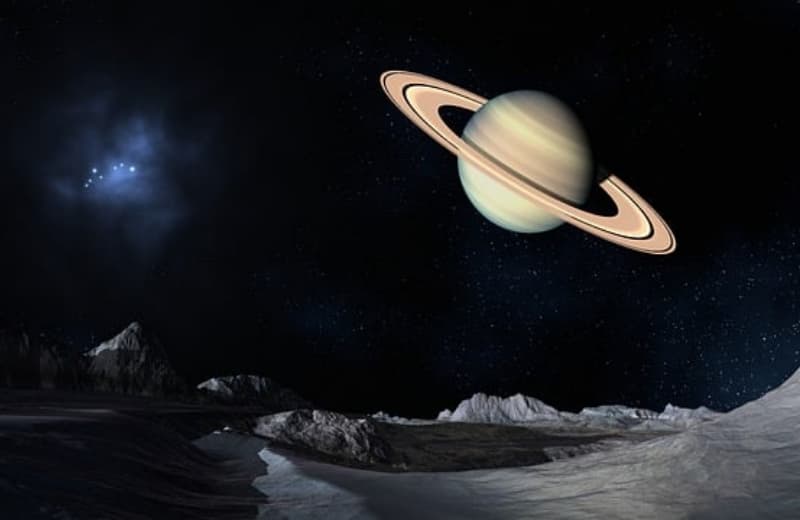
Step 1: Understanding Basic Celestial Bodies in the Night Sky
First, before stargazing, it's essential to have a basic understanding of the structure of the night sky, and most importantly, learn to identify the main objects in the night sky.
The Difference Between Stars and Planets
Many novice astronomers easily mistake bright stars in the night sky for stars. In reality, the two appear significantly different in the night sky;
Firstly, they emit light in different ways. Stars emit their own light, such as Sirius, Vega, and Betelgeuse, while planets rely on reflecting sunlight, such as Venus, Jupiter, and Saturn.
The simplest way to distinguish them is by observing their twinkling. Due to atmospheric turbulence, stars usually exhibit noticeable twinkling, while planets, with their larger apparent diameters, appear to emit more stable light and exhibit less twinkling.
Important Navigation Stars in the Northern Hemisphere
For observers in North America, the following targets are important starting points for learning star navigation:
Polaris
The Big Dipper
Cassiopeia
Orion
Summer Triangle
Winter Hexagon
Learning to use these famous star clusters for "star hopping" can help you quickly find more deep-sky targets.
Step Two: Choosing a Suitable Time for Observation
Learning to correctly grasp the actual observation process is also a crucial step for beginners in stargazing.
The Impact of Lunar Phases on Observation
The moon is one of the brightest objects in the night sky. When the moon is near its full phase, its light significantly reduces the contrast between the sky and the background, greatly affecting the observation of galaxies, nebulae, and star clusters. Therefore, the following principles should be considered when choosing the time for observation:
Observing deep-sky objects: Ideally, choose around the time of the new moon.
Observing the lunar surface: Choose near the first or last quarter moon.
Observing planets: The impact of lunar phases is relatively small.
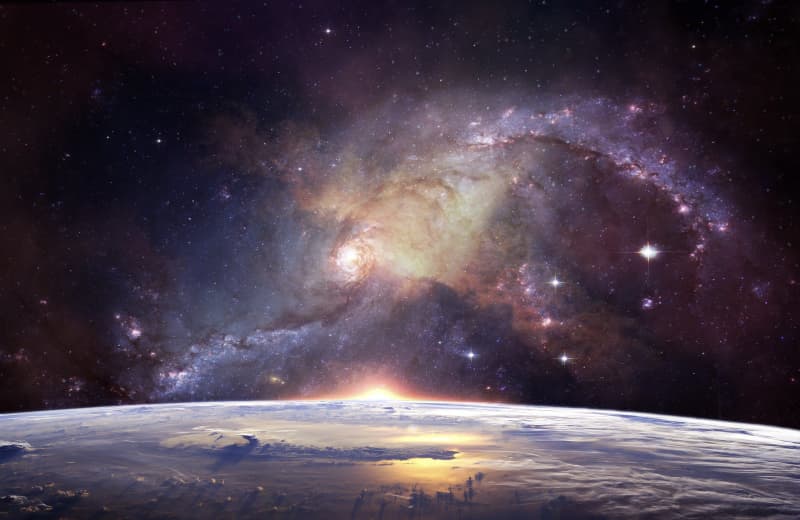
The Importance of Seasonal Changes
North America, located in the mid-to-high latitudes of the Northern Hemisphere, experiences four distinct seasons, each offering entirely different views of the night sky. For example, spring is ideal for observing the Leo and Coma Berenices galaxy groups; summer is the golden period for Milky Way observation, offering views of the Cygnus, Lyra, and Sagittarius regions; autumn is suitable for observing the Andromeda Galaxy; and winter is the best season for observing the Orion Nebula. Understanding the seasonal patterns of night sky changes can significantly enhance the observation experience.
Step 3: Stay away from light pollution areas
Many beginners buy binoculars but still can't see the desired effect. The main reason is often not a problem with the equipment, but light pollution.
What is light pollution?
Light pollution refers to the background brightness caused by artificial lighting scattering across the sky. Streetlights, billboards, and building lighting in cities all contribute to brightening the sky, obscuring faint celestial objects. In the heart of large metropolitan areas like New York, Los Angeles, and Toronto, even with large telescopes, it is difficult to see many deep-sky objects.
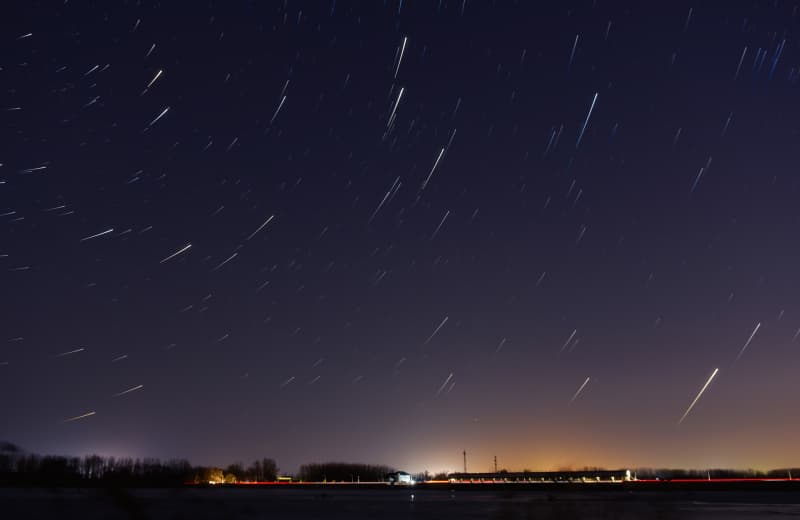
How to Find Dark Sky Observation Locations
North America boasts abundant dark sky resources. Ideal observation locations should possess the following characteristics:
More than 30 kilometers from a city
High altitude
Good air transparency
Wide horizon
Dark Sky Parks certified by the International Dark-Sky Association are typically excellent choices.
Master the beginner's stargazing steps and embark on a journey to explore the universe
For astronomy enthusiasts, mastering the scientific steps of stargazing is the most effective way to enter the world of astronomy. From recognizing constellations and planets, to learning about light pollution, choosing suitable equipment, and then trying deep-sky object observation and astrophotography, each step can help you gradually build a complete stargazing system.