
As one of the most captivating planets in our solar system, Saturn is renowned for its magnificent ring system. For novice astronomy enthusiasts in North America, witnessing those dazzling rings suspended in the night sky is often a milestone on the path to deeper observation. "How to see Saturn's rings" is one of the most pressing questions for many beginners. Unlike the bright Moon, Jupiter, and Venus in the night sky, Saturn's most alluring feature isn't the planet itself, but rather the spectacular ring system that encircles its equatorial region.
For stargazing enthusiasts, with the right observation time, appropriate equipment, and knowledge of star-finding techniques, even in the darkest night conditions in a rural backyard, it's possible to witness this solar system wonder firsthand.
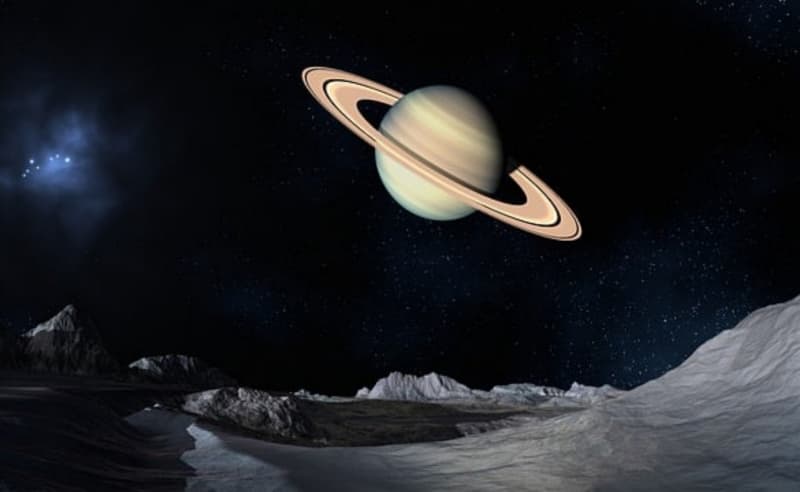
What exactly are Saturn's rings?
Saturn's rings are not a single solid structure. They are actually composed of billions of ice, rock fragments, and dust particles, ranging in size from micrometers to several meters, orbiting the planet under Saturn's gravitational pull.
Saturn is known to have multiple rings, the brightest being the A, B, and C rings. When observed with a small-aperture telescope, a single, unified ring structure is usually visible, making it difficult to distinguish individual rings. However, with a high-powered telescope, the gaps between the rings, such as the famous Cassini Division, can be clearly discerned. Furthermore, because Saturn's rings are primarily composed of water ice, they have a high reflectivity, a key reason why they are clearly visible from Earth.
Understanding these basics helps explain why the appearance of Saturn's rings varies so significantly depending on the season and the equipment used.
When is it best to see Saturn's rings?
To understand how to observe Saturn's rings, the first step is choosing the right time to observe. Saturn takes approximately 29.5 years to orbit the Sun, so the tilt of Saturn's rings relative to Earth changes constantly with the relative positions of the two planets.
The best viewing experience is when Saturn's rings are at a large angle towards Earth, appearing wide and prominent. When the edge of the rings is facing Earth, they become very narrow and even difficult to distinguish. In recent years, Saturn's rings have been undergoing a new tilt change cycle, so viewing conditions will gradually improve in the coming years, entering a new period suitable for observation.
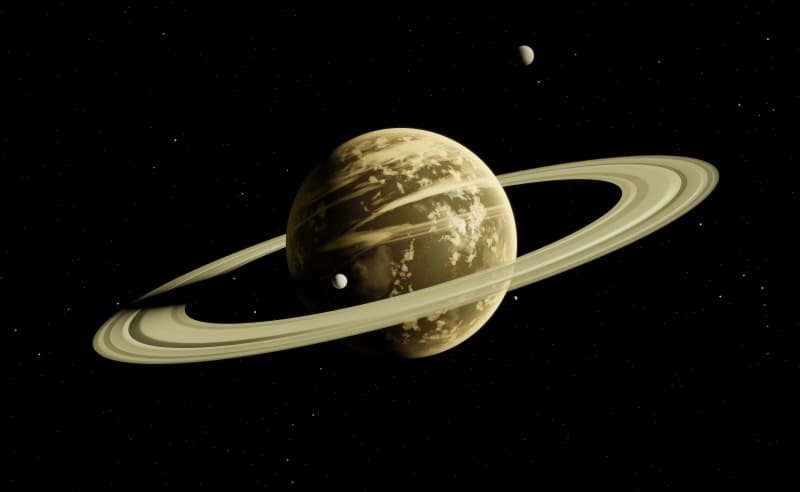
For astronomical observers, the period around Saturn's opposition each year is the best observation window. At this time, Saturn and the Sun are opposite each other in the sky, visible all night, and at their brightest point of the year. Late summer to autumn is also the golden period for observing Saturn's rings in North America. Observations should ideally be made after Saturn has risen above 30 degrees above the horizon to minimize the impact of atmospheric disturbances.
What kind of telescope do you need to see Saturn's rings?
Some beginners believe that because Saturn is so far away, only very expensive equipment can be used to see its rings. This is not the case. The key to seeing Saturn's rings lies in the proper combination of the telescope's aperture and magnification.
Generally, a refracting telescope with an aperture of 60 mm or larger is sufficient for observers to see that Saturn is not a simple point of light, but rather a structure with distinct "ear" shapes. Telescopes with apertures of 80 mm to 100 mm can clearly distinguish the separation between the planet itself and the rings.
For an even better viewing experience of Saturn's rings, a reflecting telescope or a MacAvoy telescope with an aperture of 130 mm to 200 mm is ideal. On a clear night, these devices can not only see the complete rings of Saturn, but may also reveal the Cassini Division and Saturn's largest moon, Titan.
Regarding the magnification of astronomical telescopes, 100x to 200x is usually the optimal range for observing Saturn's rings. If the magnification is too low, the details of Saturn's rings will not be visible, while if the magnification is too high, the images will be more easily affected by atmospheric seeing, resulting in blurred images and increasing the difficulty of observation.
Will Light Pollution Affect Saturn Ring Observations?
Compared to deep-sky objects, Saturn is one of the brighter objects in the solar system in the night sky, so the impact of light pollution on Saturn observation is relatively limited.
In many suburban areas of North America, Saturn's rings can be successfully observed as long as the sky is clear. However, light pollution reduces the contrast of the background sky, making it easy to lose some details. Therefore, if conditions permit, it is still recommended to go to dark sky regions with lower Bortle scales for observation.
Furthermore, the real factor affecting the quality of Saturn observation is not light pollution, but atmospheric stability. When there are significant thermal currents, strong winds, or upper-level disturbances in the sky, even with a large telescope, Saturn's rings will constantly shake and distort. Therefore, amateur astronomers usually pay attention to Jet Stream forecasts and seeing indices to choose the best night for observation.
How to Quickly Locate Saturn
Mastering star-finding techniques is also a crucial step in learning how to see Saturn's rings. Although Saturn is brighter than most stars, it can still be difficult for beginners to spot. The easiest way to observe it nowadays is using a mobile star chart app, such as one that displays real-time star positions. Simply point your phone at the sky to quickly locate Saturn.
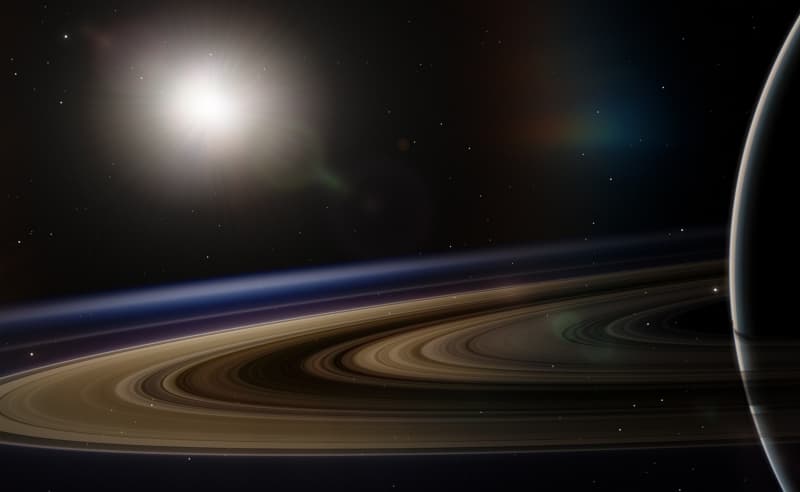
If using traditional star-finding methods, you need to recognize important constellations near the ecliptic. Since Saturn always orbits near the ecliptic, it usually appears within the area of the twelve zodiac constellations. When observing, you can first locate the bright planet Jupiter, and then use a star chart to determine Saturn's position.
Compared to stars, Saturn's most significant characteristic is that it does not twinkle. Starlight tends to twinkle as it passes through Earth's atmosphere, while Saturn, as a planet with a fixed apparent diameter, has relatively stable brightness. Therefore, when you see a steadily shining, slightly golden "star," it is very likely Saturn.
Practical Tips for Improving Saturn's Ring Observation Results
After successfully locating Saturn, several techniques are needed to further enhance the quality of your observations. First, allow your telescope to acclimatize to outdoor temperatures. Equipment recently moved from indoors or a car often experiences temperature differences, causing airflow inside the telescope tube to affect image quality.
Second, choose a high-quality eyepiece. A superior eyepiece improves image sharpness and contrast, making the ring edges clearer. During observation, you can also use the "waiting for good seeing" method, observing continuously for several minutes. During the brief moment of atmospheric stability, many details suddenly become exceptionally clear.
For enthusiasts with planetary photography equipment, high-speed image stacking techniques can be used to obtain details far exceeding those observed with the naked eye. This is one of the most common methods for recording observations of Saturn's rings in modern amateur astronomy.
For most North American astronomy enthusiasts, learning how to see Saturn's rings isn't difficult. By choosing the right season and time, using a telescope with an aperture of 60mm or larger, and mastering basic star-finding techniques, one can witness one of the most spectacular sights in the solar system. Understanding the composition of Saturn's rings, their tilt variations, and the impact of seeing on observation not only increases the success rate but also makes each observation more scientifically significant. As Saturn slowly rises in the night sky, those bright rings encircling the planet serve as a crucial starting point for countless astronomy enthusiasts on their journey to deep space exploration.