
For amateur astronomers in the Northern Hemisphere, the Pinwheel Galaxy (M101) is one of the most representative deep-sky objects in the spring and early summer night sky. It not only has a beautiful spiral structure, but is also an important target for amateur astrophotography and deep-sky observation. The Pinwheel Galaxy, also known as M101 or NGC 5457, is located in the constellation Ursa Major, about 21 million light-years from Earth. Because it faces Earth directly, we can observe the spiral structure of the Pinwheel Galaxy relatively completely. Therefore, it is not only one of the most popular targets for amateur astronomers, but also an important celestial object for studying star formation, galaxy evolution and spiral structure.
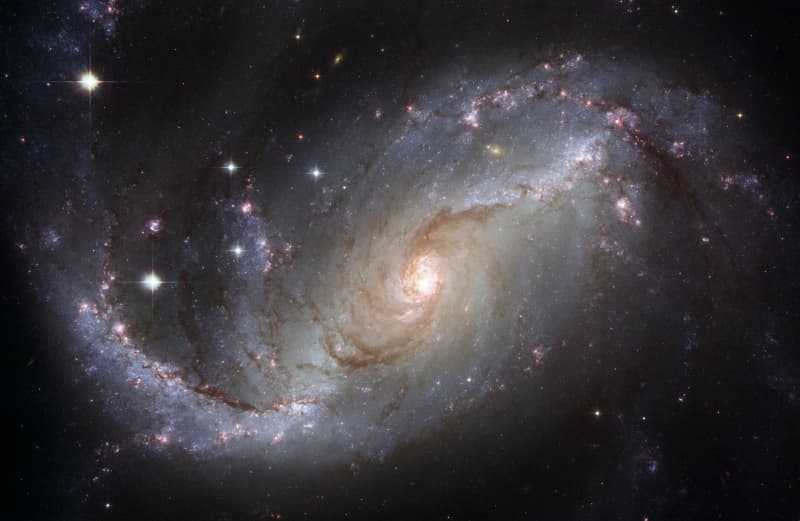
What is the Pinwheel Galaxy M101?
The Pinwheel Galaxy, officially designated Messier 101 in astronomy, is a large spiral galaxy. From Earth, its disk faces almost entirely towards us, revealing an exceptionally clear spiral arm structure, a key reason for its descriptive name, "Pinwheel Galaxy."
In modern galaxy classification, the Pinwheel Galaxy belongs to the Sc-type spiral galaxy. These galaxies typically possess loosely arranged spiral arms and active star-forming regions. Astronomers, using large telescopes, have discovered numerous young, blue star clusters and emission nebulae within the Pinwheel Galaxy—regions of peak star formation.
Compared to the Milky Way, the Pinwheel Galaxy has a diameter of approximately 170,000 light-years, making it larger. Scientists estimate it contains over one trillion stars, making it one of the easier large spiral galaxies to study outside the Local Group. Furthermore, due to its well-preserved and detailed structure, the Pinwheel Galaxy has long been an important case study for understanding the mechanisms of spiral arm formation in galaxies.
How to Find and Observe the Pinwheel Galaxy in the Night Sky
Finding the Pinwheel Galaxy in the night sky isn't difficult. Simply locate the famous Big Dipper constellation in the Northern Hemisphere; its position will guide you to the Pinwheel Galaxy. For observers living in mid-to-high latitude regions of the Northern Hemisphere, Ursa Major is positioned high in the sky for most of the year, making it an ideal star-finding reference.
The Pinwheel Galaxy is located near the end of the handle of the Big Dipper. First, locate Mizar and Alkaid within the Big Dipper, then extend your search outwards from them. The Pinwheel Galaxy lies against a background of faint stars in this region.
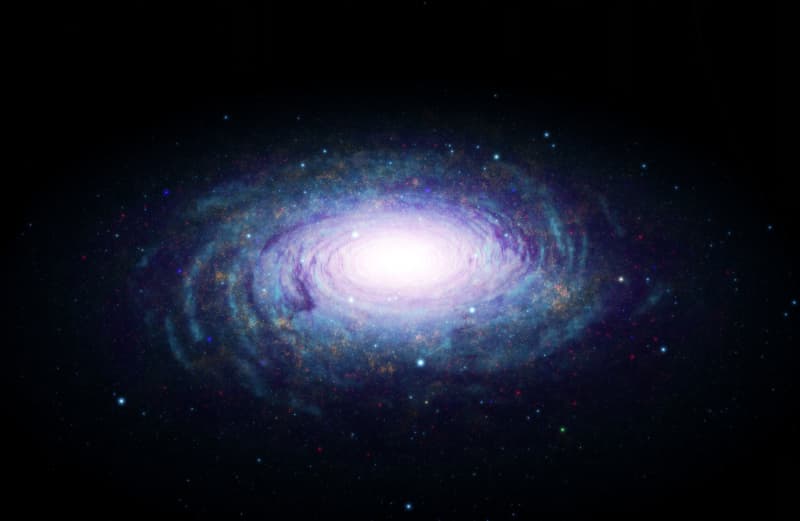
M101 has an apparent magnitude of approximately 7.9, which isn't particularly dim theoretically. However, many observers fail on their first attempt, mainly because the Pinwheel Galaxy is a typical low-brightness object. Its light is distributed over a very large area, resulting in low brightness per unit area. In urban environments, light pollution significantly reduces its visibility, making observation of the Pinwheel Galaxy extremely difficult.
For astronomy enthusiasts in the Northern Hemisphere, April to July is the best time to observe the Pinwheel Galaxy. During this period, Ursa Major is high in the sky, with less atmospheric extinction affecting the observation, resulting in better viewing conditions.
Why does the Pinwheel Galaxy exhibit such a clear spiral arm structure?
The most captivating aspect of the Pinwheel Galaxy is its spectacular and complex spiral structure. Many astronomical photographs reveal its multiple spiral arms extending outwards like windmill blades.
These spiral arms are not static structures of matter, but rather an astrophysical phenomenon known as "density wave theory." Simply put, spiral arms are like traffic jams in a galactic disk. When interstellar gas passes through these high-density regions, it is compressed, triggering a surge in star formation.
Newly formed young stars are massive and extremely hot, thus appearing bright blue-white. The concentration of these young stars on the spiral arms makes their outlines exceptionally clear. Simultaneously, abundant ionized hydrogen regions and emission nebulae further enhance the visibility of the spiral arms.
Images taken with specialized astronomical equipment reveal multiple massive star-forming regions within the Pinwheel Galaxy. Some of these regions are even larger than the famous Orion Nebula in the Milky Way. These active regions continuously produce new stars, adding vibrant life to the Pinwheel Galaxy.
Challenges and Equipment Selection for Observing the Pinwheel Galaxy
Although the Pinwheel Galaxy is a well-known deep-sky object, it is not one of the easiest targets to observe. Its biggest challenge stems from its extremely low surface brightness.
In binoculars, the Pinwheel Galaxy typically appears as a blurry circular patch of light. Using a reflecting telescope with an aperture of 150 mm or larger, in dark environments far from city lights, a larger diffuse structure can be observed, but details of the spiral arms remain difficult to discern.
To see a clear outline of the spiral arms, a large-aperture telescope of 200 mm or larger is usually required, combined with good sky conditions. For amateur photographers, modern digital astrophotography techniques can significantly improve the observation results. Long exposures combined with post-processing stacking can record a wealth of details imperceptible to the naked eye.
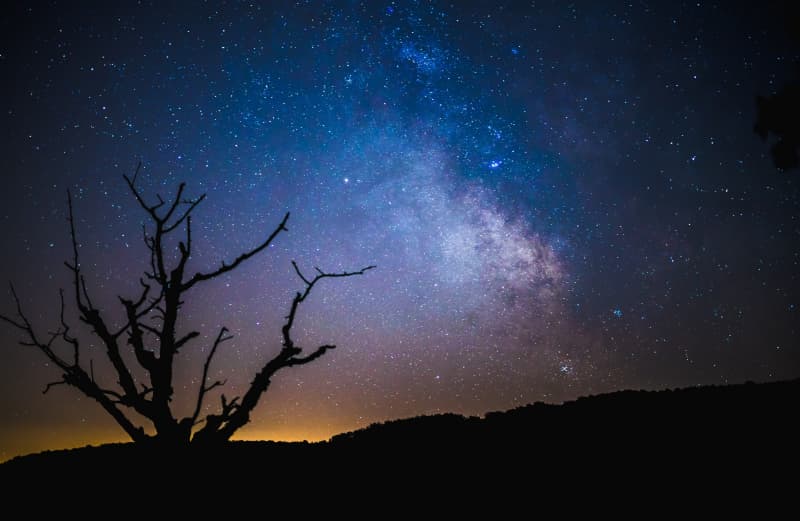
Regarding equipment selection, short focal length refractors and Newtonian reflectors are very suitable for photographing the Pinwheel Galaxy. Due to its large apparent diameter, excessively long focal lengths may not be able to capture the entire galaxy structure. Therefore, deep-sky photography systems with focal lengths of around 500 mm to 1000 mm often achieve ideal results.
The Impact of Light Pollution on Pinwheel Galaxy Observations
Light pollution is a significant factor affecting the observation of the Pinwheel Galaxy. Unlike high-brightness objects such as the Orion Nebula, the Pinwheel Galaxy is a typical low-contrast object, extremely sensitive to the brightness of the background sky.
In many major North American cities, such as New York, Los Angeles, Toronto, and Chicago, city lights significantly increase the brightness of the night sky background, making it difficult to separate the Pinwheel Galaxy from the background. Even with large-aperture telescopes, it may only appear as a blurry bright spot.
According to the Bortle Scale, sky conditions below Bortle 4 are generally more suitable for observing M101. Observational conditions are often more ideal in the western mountains of the United States, the Canadian prairie, and some national parks.
It is worth noting that because the Pinwheel Galaxy is a continuous-spectrum object, common narrowband filters offer limited improvement in observation. Finding truly dark observation locations is more important than filters.