
For astronomy enthusiasts in the Northern Hemisphere, the Andromeda Galaxy is probably the most familiar extragalactic galaxy. However, if you observe the sky from the Southern Hemisphere, such as in Australia, Chile, or New Zealand, you can see an even more stunning extragalactic object—the Large Magellanic Cloud (LMC). This dwarf galaxy, visible to the naked eye, is one of the most important companion galaxies in the vicinity of the Milky Way and a crucial target for astronomical research on star formation, supernova remnants, and galaxy evolution.
In the Southern Hemisphere, under suitable lighting conditions, the LMC appears as a grayish-white cloud floating on the edge of the Milky Way. Its area is much larger than a full moon, and it can be easily identified even without a telescope. For astronomy enthusiasts who enjoy astrophotography, astronomical observation, or deep-sky photography, the LMC is almost always a must-see.
Introduction to the Large Magellanic Cloud
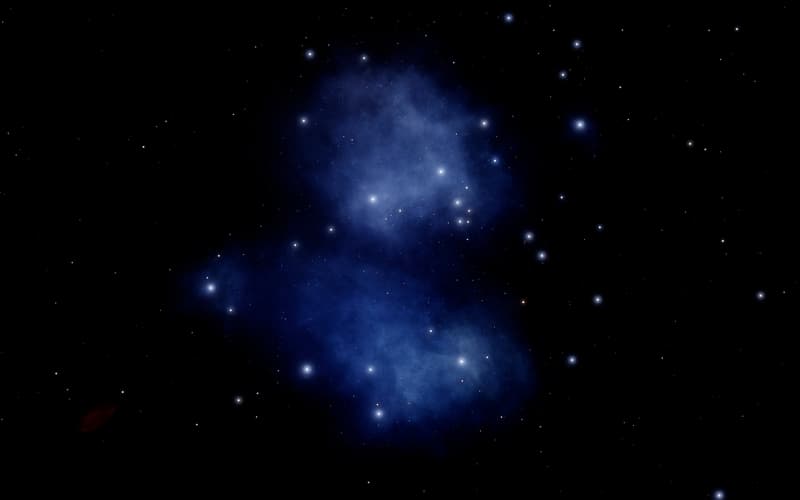
The Large Magellanic Cloud (LMC) is the closest massive satellite galaxy to the Milky Way, located approximately 163,000 light-years from Earth. It is a well-known extragalactic galaxy in the Local Group and is classified as a dwarf galaxy. It is the most massive of the Milky Way's many satellite galaxies, situated at the boundary of the constellations Dorado and Mensa. Although its size is much smaller than the Milky Way, its visual effect in the night sky is stunning.
In modern astronomical classification, the Large Magellanic Cloud is a barred spiral irregular galaxy. Unlike well-defined spiral galaxies, it lacks a complete spiral arm structure and instead exhibits an irregular distribution of stars. Astronomers speculate that this unique structure is related to long-term gravitational interactions with the Milky Way.
Origin of the name Magellanic Cloud
In fact, the Large and Small Magellanic Clouds were observed by ancient human civilizations in the Southern Hemisphere long ago, and indigenous peoples of Australia, South America, and southern Africa considered them important components of the sky.
During the Age of Exploration in the 16th century, when Portuguese navigator Ferdinand Magellan led his fleet on a circumnavigation of the globe and passed through the Southern Hemisphere, European navigators first recorded these two celestial bodies, and the name "Magellan Clouds" gradually became widely used in the European astronomical community.
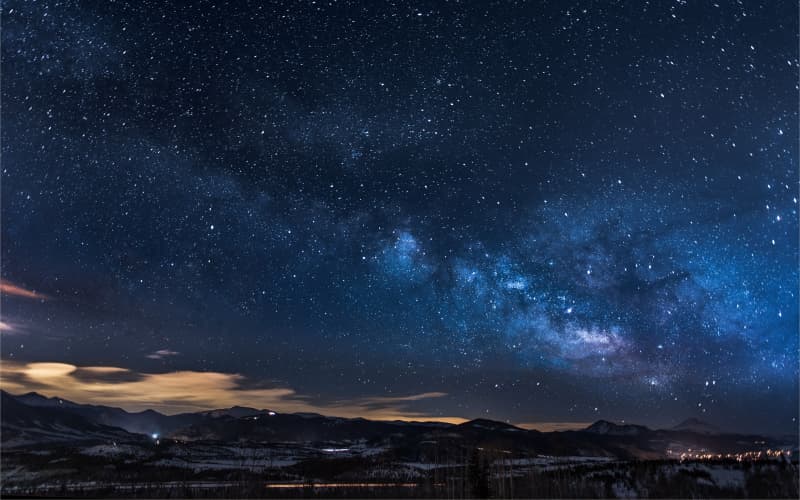
It wasn't until the early 20th century that astronomers confirmed that these cloud-like celestial bodies were not nebulae within the Milky Way galaxy, but rather extragalactic galaxies independent of the Milky Way.
Why is the Large Magellanic Cloud so important?
The Large Magellanic Cloud (LMC) is of immense value in modern astronomical research for several reasons:
1. Proximity Facilitates Study
Large Magellanic Cloud is only 163,000 light-years from Earth, making it the closest exogalaxy to the Milky Way. Scientists can resolve a large number of stellar structures within it. This makes the Large Magellanic Cloud a natural laboratory for studying stellar evolution.
Astronomical researchers can utilize large telescopes to conduct high-resolution observations of star clusters, supernova remnants, and star-forming regions within the galaxy.
2. Exceptionally Active Star Formation
Unlike some relatively calm regions of the Milky Way, the Large Magellanic Cloud continues to form a large number of new stars. Its abundant hydrogen gas and interstellar dust provide ideal conditions for star birth.
The presence of numerous young blue giants, supergiants, and hot stars makes it a crucial region for studying stellar life cycles. Especially near the Tarantula Nebula, the star formation rate is far higher than in typical regions of the Milky Way.
Tarantula Nebula: The most active star factory in the Local Group
The Tarantula Nebula is one of the most famous deep-sky objects in the Large Magellanic Cloud and one of the most active star-forming regions in the Local Group.
It is approximately 160,000 light-years from Earth, but even at this distance, its brightness is sufficient for easy observation with medium to large amateur telescopes. For deep-sky photographers, the Tarantula Nebula is also one of the most popular subjects in the Southern Hemisphere.
At the core of the Tarantula Nebula lies a supermassive star cluster called R136. This cluster contains a large number of supermassive stars with masses dozens of times greater than the Sun. Some of these stars even approach the theoretical upper limit of stellar mass. Their intense ultraviolet radiation constantly excites the surrounding gas clouds, creating the spectacular H II region structure of the Tarantula Nebula.
SN1987A: One of the Most Important Supernova Events in Modern Astronomy
In 1987, a bright supernova explosion—SN1987A—was observed in the Large Magellanic Cloud.
This was the first close-range supernova event that humans had been able to study in detail since the Kepler supernova. Due to its relatively close proximity, astronomers worldwide were able to record the evolutionary process of the supernova in real time after the explosion.
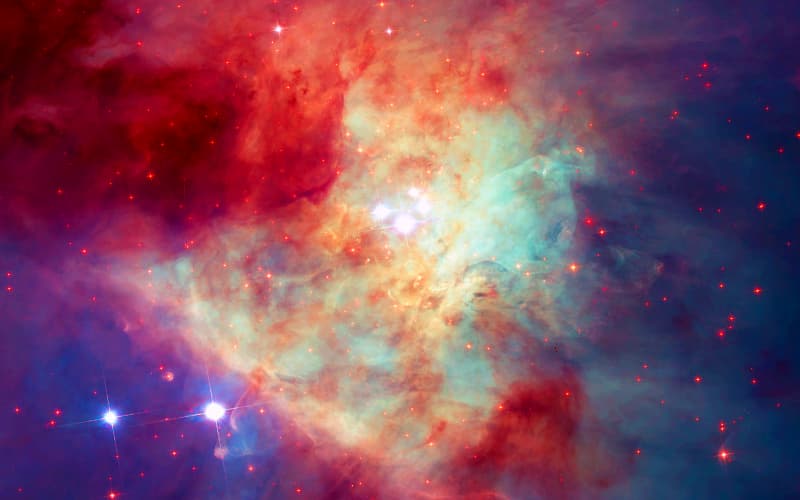
SN1987A had a profound impact on modern stellar evolution theory, helping scientists verify:
Mechanisms of death of massive stars
Neutrino release theory
Evolution of supernova shock waves
Stellar element synthesis process
To this day, the Hubble Space Telescope and the James Webb Space Telescope continue to observe this region.
How to Observe the Large Magellanic Cloud?
For North American observers, the biggest challenge in observing the Large Magellanic Cloud is not equipment, but geographical location.
Best Observation Locations
The following regions are best suited for observation:
Australia
New Zealand
Atacama Desert, Chile
South Africa
Southern Argentina
These regions offer low latitudes and excellent dark-sky conditions.
Best viewing season
The best viewing conditions are generally found in the Southern Hemisphere from summer to autumn, especially:
November
December
January
February
During this time, the Large Magellanic Cloud will appear at a higher position in the sky.
Is it visible to the naked eye?
In the dark sky conditions of Bortle 2 or Bortle 3, the Large Magellanic Cloud is clearly visible to the naked eye. It appears as a giant, luminous cloud, more concentrated than the background of the Milky Way.
Using binoculars, bright areas and irregular structures within it can be seen more clearly.
With a telescope of 6 inches or larger, star clusters, emission nebulae, and localized regions of dense stellar activity can be resolved.