
For astronomy enthusiasts who have lived in North America for a long time, the Big Dipper, Polaris, and Orion are almost household names and essential topics for beginners in stargazing. However, when we turn our attention to the Southern Hemisphere, the sky changes dramatically. Many constellations and celestial bodies familiar to the Northern Hemisphere gradually disappear below the horizon, replaced by a new group of distinctive iconic objects from the Southern Hemisphere.
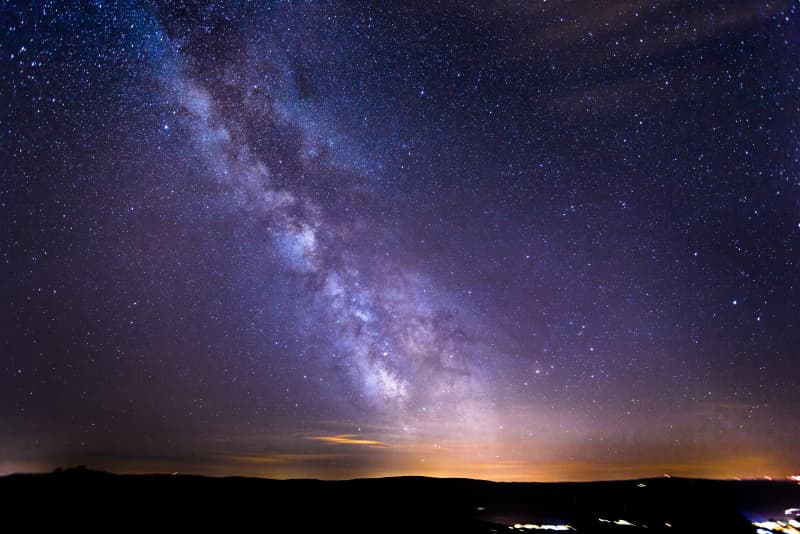
Why is the Southern Hemisphere's night sky so different from the Northern Hemisphere's?
The Earth is an oblate spheroid. The visible sky varies depending on the observer's latitude. North America, mostly located between 25° and 60° North latitude, sees many southern stars and nebulae that never rise above the horizon. In contrast, in the Southern Hemisphere, including Australia, New Zealand, Chile, and South Africa, observers can see the entire Southern Milky Way and numerous deep-sky objects that are difficult to observe in the Northern Hemisphere.
One of the most significant characteristics of the Southern Hemisphere is that the central region of the Milky Way maintains a relatively high altitude above the horizon. The brightest and most abundant star-forming regions of the Milky Way are concentrated in the constellations Sagittarius and Carina, thus providing Southern Hemisphere observers with a more spectacular Milky Way viewing experience than those in the Northern Hemisphere. Especially in moonless, low-light-pollution conditions, the sight of the Milky Way stretching across the sky is often breathtaking.
Magellanic Clouds: Extragalactic Galaxy Visible to the Naked Eye
One of the most well-known celestial objects in the Southern Hemisphere is the Large and Small Magellanic Clouds. These two seemingly fuzzy cloud-like objects are not located within the Milky Way, but are among the closest companion galaxies to it.
The Large Magellanic Cloud is approximately 160,000 light-years from Earth, and the Small Magellanic Cloud is approximately 200,000 light-years away. Both are dwarf irregular galaxies, their unique structures shaped by the gravitational influence of the Milky Way. Compared to the famous Andromeda Galaxy, the Magellanic Clouds, though smaller, are much closer, thus appearing as a larger area in the night sky.
In the low light pollution of the Southern Hemisphere, observers can spot these two faint patches of light in the night sky without a telescope. Using binoculars, the rich star clusters and emission nebulae within the nebulae can be further observed. The Tarantula Nebula, located within the Large Magellanic Cloud, is one of the most active star-forming regions in the Local Group.
Southern Cross: The Most Famous Constellation Symbol in the Southern Hemisphere
If astronomical observation in the Northern Hemisphere cannot bypass the Big Dipper, then stargazing in the Southern Hemisphere is inextricably linked to the Southern Cross.
The Southern Cross is one of the smallest of the 88 official constellations, but it is highly recognizable. Its four main stars form a distinct cross shape, making it very easy to identify. Due to its unique shape, the Southern Cross is even featured on the flags of several Southern Hemisphere countries, becoming an important symbol of the southern sky.
Another significant aspect of the Southern Cross is its navigational function. Since there are no bright, prominent stars like Polaris near the South Celestial Pole, people in the Southern Hemisphere in ancient times used the Southern Cross to determine direction. Extending the long axis of the cross southward by about four to five times its length would roughly locate the South Pole. While this method is not absolutely accurate, it is sufficient for naked-eye observation and basic astronomical navigation. In field stargazing, the Southern Cross is frequently used as an important reference point for finding south.
The Alpha Centauri Binary: An Important Tool for Finding the Celestial South Pole
Near the Southern Cross, there are two very prominent bright stars, known as the Alpha Centauri Binary. One of them, the relatively cooler Alpha Centauri, is part of the famous Alpha Centauri system. It is only about 4.37 light-years from Earth, making it one of the closest star systems to the Sun. The system contains three stars, the most famous of which is Proxima Centauri—the closest star to the Sun.
The other bright star is Alpha Centauri. These two stars form a striking binary combination in the night sky, often referred to as "polar pointers."
To observe this system, one can align the Alpha Centauri Binary with a straight line and then draw its perpendicular bisector; simultaneously, extend the long axis of the Southern Cross southward. The area where these two imaginary lines intersect is close to the celestial south pole. This classic method of finding the pole has long played a vital role in the history of navigation and field observation.
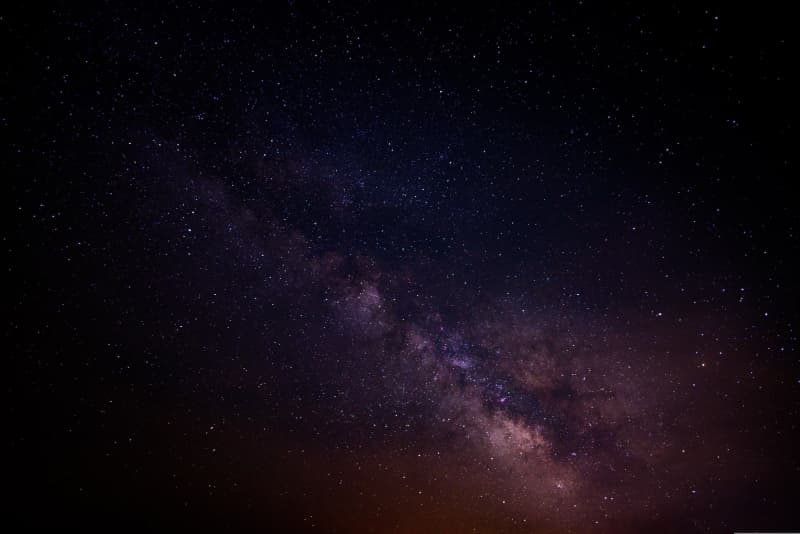
For photography enthusiasts, the Southern Cross and the Alpha Centauri Binary together are a highly representative subject in the southern sky, frequently appearing in Milky Way photographs.
The Carina Nebula: The Most Spectacular Star-Born Region in the Southern Sky
The Carina Nebula is considered one of the most observable emission nebulae in the Southern Hemisphere. Located approximately 7,500 light-years from Earth, this nebula is far larger than the well-known Orion Nebula in the Northern Hemisphere. Moreover, due to its extreme luminosity, it can even be observed directly with the naked eye under excellent weather conditions.
The Carina Nebula contains numerous young stars and star-forming regions, the most famous of which is Eta Carinae. This extremely massive star is millions of times brighter than the Sun and is considered one of the most unique stars in the Milky Way.
When observed with a medium-aperture telescope using a UHC or OIII filter, the dark band structures, gas clouds, and bright spots within the nebula become more apparent. For astrophotography enthusiasts, the Carina Nebula is also one of the most representative deep-sky photography targets in the Southern Hemisphere.
The Coal Bag Nebula: A Giant Dark Nebula in the Milky Way
Located near the Southern Cross, the Coal Bag Nebula is one of the most easily identifiable dark nebulae in the sky. It's called a dark nebula not because it emits its own light, but because its dense internal dust obscures the light of background stars and the Milky Way, creating a distinct dark region.
To the naked eye, the Coal Bag Nebula appears as a giant black hole in the Milky Way. In reality, this dark region is a crucial site for star formation. Large amounts of molecular gas and dust gradually collapse under gravity, potentially forming new star systems.
Observing the area around the Coal Bag Nebula with binoculars provides a clearer view of the stark contrast between the bright bands of the Milky Way and the dark nebula, offering an important observational example for understanding the structure of the interstellar medium.
Canopus: The Second Brightest Star in the Night Sky
Canopus, also known as Alpha Carinae, has a visual magnitude of approximately -0.74, second only to Sirius, the brightest star in the sky. Due to its extreme brightness, it remains highly visible even in urban light pollution environments.

From a stellar classification perspective, Canopus is an F-type supergiant, with a mass and volume far exceeding that of the Sun. Astronomers can gain a deeper understanding of the life cycle of massive stars by studying Canopus's spectral characteristics and evolutionary state.
For many observers in northern latitudes, Canopus is often difficult to observe or only appears close to the horizon. Therefore, seeing Canopus high in the night sky in the Southern Hemisphere often provides a completely different stargazing experience compared to the northern sky.
Identifying iconic objects in the Southern Hemisphere's night sky is a crucial step in understanding the overall structure of the celestial sphere. From the naked-eye Magellanic Clouds to the navigational Southern Cross and the Alpha Centauri; from the spectacular Carina Nebula to the enigmatic Coal Sack Nebula and the dazzling Canopus star, these targets collectively constitute the most representative observable landscapes of the Southern Hemisphere. For North American astronomy enthusiasts, even if a trip to the Southern Hemisphere is not currently possible, they can gain a deeper understanding of these classic Southern Hemisphere objects through star charting software, astrophotography, and data from remote observatories. When the opportunity to stargaze in the Southern Hemisphere arises in the future, this knowledge will help you more quickly immerse yourself in that vastly different and magnificent night sky.