
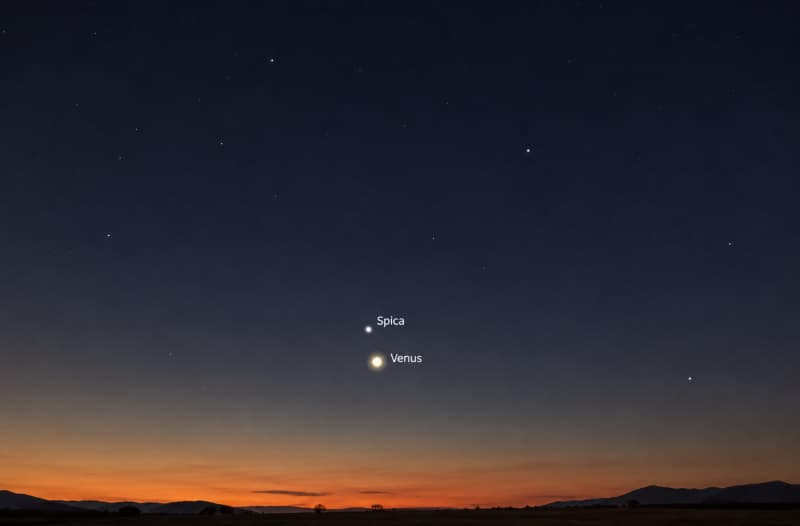
As August draws to a close, North American night skies present one of the most compelling celestial line-ups of the month. The marquee highlight for the week of August 21–28, 2026, is a deep partial lunar eclipse unfolding from late evening on August 27 into the early morning of August 28. During this event, roughly 96% of the Moon's surface will pass through Earth's umbral shadow, giving the lunar disk a distinct orange-red hue that is spectacular for naked-eye viewing. Alongside the eclipse, stargazers this week can also enjoy observing Saturn and its moons, the Moon's close approach to Antares, Barnard's Star, the M73 asterism, and several asteroids.
Top 5 Celestial Events Worth Watching This Week
1. Deep Partial Lunar Eclipse: The Highlight of the Week
The partial lunar eclipse on August 27–28 is undoubtedly the absolute highlight of the week. The Moon will gradually pass into Earth's shadow from local late evening through the middle of the night, with eastern regions perfectly positioned to observe the entire main phase of the event. Data shows the eclipse sequence begins around 9:23 PM EDT, with the Moon entering the umbra—marking the start of the partial phase—at approximately 10:33 PM EDT. At maximum eclipse, roughly 96% of the lunar surface will be covered by Earth's umbral shadow.
Because lunar eclipses do not require special eye protection like solar eclipses do, they are ideal for beginners. As the Moon moves deeper into Earth's shadow, its bright surface will progressively darken and likely take on an orange, red, or reddish-brown hue. Choosing an observation spot with an open view toward the eastern sky and tracking the entire progression starting right after moonrise is highly recommended.
If your viewing time is limited, focus on the window right around maximum eclipse, when the shaded portion of the Moon reaches its maximum extent and delivers the most striking visual effect.
2. Sturgeon Moon: August Full Moon Coincides with the Eclipse
The August 28 full moon is traditionally known as the Sturgeon Moon—a name rooted in Native American lore, referencing the peak abundance of sturgeon fish in North American lakes around this time of year.
This year's Sturgeon Moon takes on exceptional observing value because it coincides directly with the deep partial lunar eclipse. Near maximum eclipse, most of the lunar surface will sit immersed within Earth's umbral shadow, leaving only a sliver of the moon bright, while its colors shift dynamically as it slides into and back out of the shadow.
3. Saturn and Its Moons: Target Titan, Tethys, and Iapetus
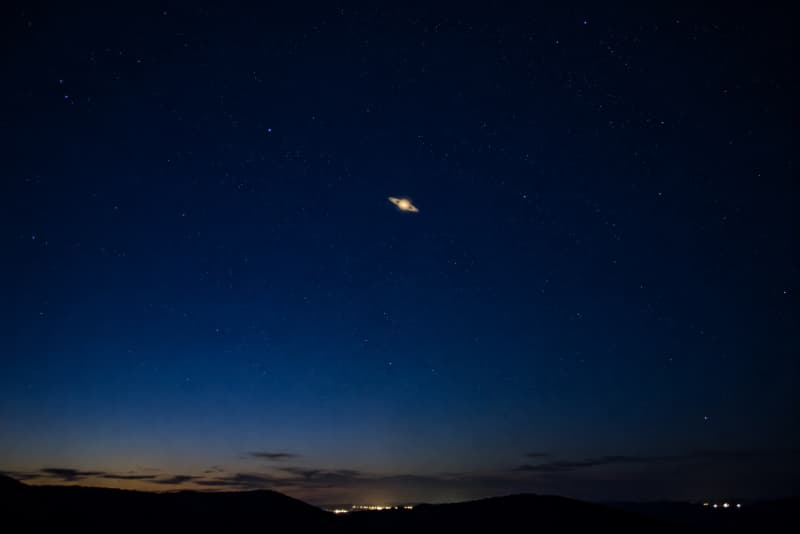
Saturn in the pre-dawn hours of this week is equally deserving of your attention. Around 4:00 AM on August 22, Saturn sits high in the southern sky, serving as an outstanding target for telescope observation.
While Saturn's ring system is undeniably its most captivating feature, this week also offers a great opportunity to track down several of its moons. Titan shines at roughly magnitude 8, making it by far the easiest moon to locate. Tethys, Rhea, and Enceladus linger around magnitude 10 and can be picked out under solid observing conditions.
For observers with larger-aperture telescopes, Iapetus presents a rewarding challenge. On August 24, Iapetus reaches greatest eastern elongation, lying roughly 9.4 arcminutes from Saturn. However, because its darker hemisphere faces Earth at this point in its orbit, its brightness drops to around magnitude 12, making it noticeably more challenging to spot.
4. Moon Near Antares: Red Supergiant Beside the Moon
In the early morning hours of August 21, the Moon passes approximately 0.6° south of Antares, the brightest star in the constellation Scorpius. By that evening, the Moon and Antares will have separated to over 10° apart, yet both remain easy to locate together high in the southern sky.
Antares itself is a strikingly prominent red supergiant. The stark contrast between the bright white light of the Moon and the distinctly reddish hue of Antares makes for a wonderful visual sight with the naked eye and a captivating photo target for nightscape photography.
On the same night, you can also attempt to track down the nearby globular cluster M62. Situated near the border of Ophiuchus and Scorpius, M62 shines at a magnitude of around 6.5 and spans about 15 arcminutes across. Because glare from the nearby Moon can wash out fainter stars, it is best to hold off on deep-sky viewing until after the Moon has set.
5. Barnard's Star and M73: Prime Targets for Telescope Challenges
On August 25 and 26, shift your observing focus toward a pair of unique deep-sky targets.
Located in Aquarius, M73 holds a unique distinction within the Messier catalog. Rather than a true physical cluster, it is actually a chance alignment of four stars that lie close together along our line of sight. A small telescope easily resolves its distinct triangular arrangement.
Another rewarding challenge is Barnard's Star. Positioned in Ophiuchus at roughly magnitude 9.5, it remains invisible to the naked eye and requires binoculars or a small telescope to spot. Its true claim to fame is not its brightness, but its remarkably high proper motion, traversing approximately 10.3 arcseconds across the background sky each year.
For beginners, Barnard's Star serves as an extraordinary real-world proof that stars are actively moving through space. Recording its location relative to background stars over several consecutive years reveals a clear, measurable shift in its position across the sky.
What Asteroids Can Be Observed This Week?
On August 27, the asteroid 2 Pallas reaches its stationary point, after which it begins moving westward relative to the background stars, entering retrograde motion.
On August 28, 9 Metis reaches opposition, making it visible throughout the entire night. However, due to strong moonlight during the full moon and lunar eclipse, tracking an asteroid at around magnitude 9 will be relatively challenging.
On the same day, 4 Vesta also reaches a stationary point. Compared to Metis, Vesta is brighter and located further from the Moon, making it a much more suitable target for beginner asteroid observers.