
As we enter the second week of August 2026, the night sky in the Northern Hemisphere offers several noteworthy astronomical events. For amateur astronomers in North America, the celestial lineup from August 7 to 14 includes not only the highly anticipated Perseid meteor shower but also a significant total solar eclipse, a conjunction of the Moon and Mars, opportunities to view Mercury in the morning sky, and various deep-sky objects perfect for telescope observation.
Rather than simply tracking day-to-day events, it is best to plan this week’s activities around specific observation targets. Whether you wish to enjoy meteors streaking across the night sky with the naked eye or observe planets, nebulae, and star clusters through a telescope, there is something for everyone. If you are looking for an August stargazing guide, information on the North American summer sky, or the best astronomical targets for the week, this guide will help you organize a comprehensive stargazing itinerary.
Five Celestial Events to Watch This Week
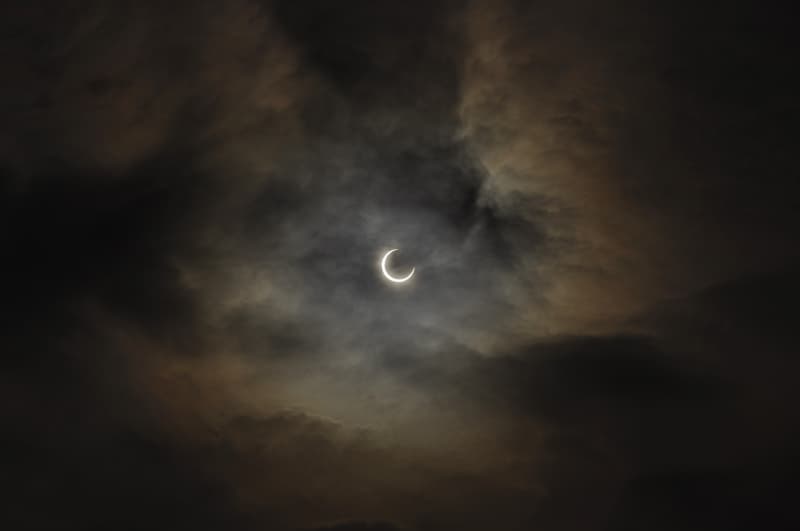
Total Solar Eclipse: The Most Significant Astronomical Event of August
One of the week's major highlights is the total solar eclipse occurring on August 8.
A total solar eclipse is a rare celestial event in which the Moon passes between the Earth and the Sun, completely obscuring the Sun's disk. Because they occur less frequently than ordinary solar eclipses, total solar eclipses always attract the attention of astronomy enthusiasts worldwide.
Observers in North America should check in advance whether their location falls within the path of totality. Even if your area only experiences a partial solar eclipse, you can still witness the spectacular sight of the Moon obscuring the Sun.
Safety is paramount when viewing a solar eclipse:
You must use certified solar viewing glasses;
Ordinary sunglasses do not provide adequate eye protection;
Do not look directly at the Sun through a telescope;
A professional solar filter must be attached when using a telescope.
For novice observers, a total solar eclipse offers not only a unique astronomical experience but also an excellent opportunity to understand the orbital relationships between the Sun, the Moon, and the Earth.
Perseid Meteor Shower Enters Peak Activity: One of Summer's Most Popular Meteor Showers
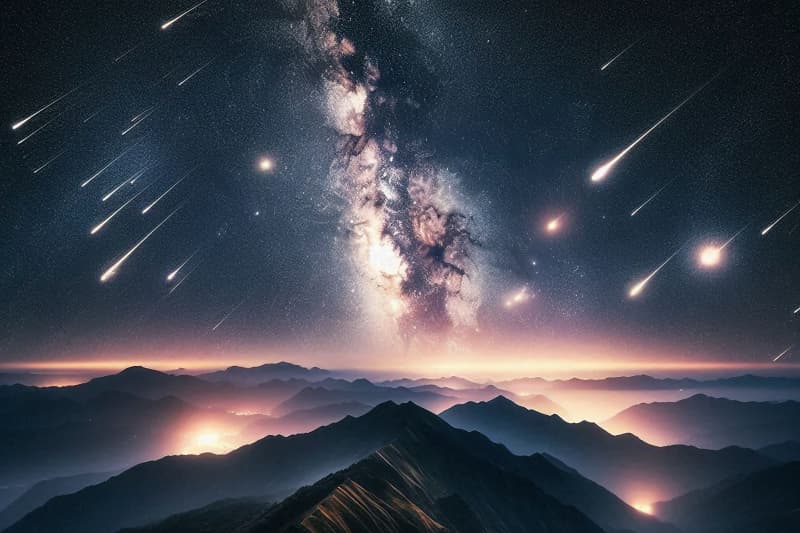
Mid-August is typically one of the best times of the year to watch meteor showers, and the **Perseid Meteor Shower** is among the most spectacular ones visible from the Northern Hemisphere.
The Perseids originate from dust particles left behind by Comet Swift-Tuttle. As Earth passes through this debris field, the tiny particles enter the atmosphere at high speeds, creating bright meteors through friction with the air.
For observers in North America, the best viewing times are generally:
After midnight;
Between 2:00 AM and sunrise;
In areas away from city lights.
You do not need a telescope to watch the meteor shower; in fact, a telescope's narrow field of view might cause you to miss many meteors. The best gear includes:
A comfortable reclining chair;
Warm clothing;
Stargazing apps;
Just your naked eyes.
With favorable weather conditions, you can see more meteors from a location free of light pollution.
The Moon Meets Mars: A Prime Opportunity to Spot the Red Planet
This week, the Moon will pass near Mars, creating a celestial pairing that is easily visible to the naked eye.
Mars is known as the "Red Planet" due to the iron oxide on its surface, which gives it a reddish hue. When the bright Moon draws near Mars, the striking contrast in brightness and color makes the pair an excellent subject for both naked-eye viewing and photography.
For beginners, here is the easiest way to spot Mars:
1. Locate the Moon first;
2. Look for a bright, reddish point of light nearby;
3. Use binoculars to confirm the sighting.
While small telescopes may not reveal intricate surface details, under good viewing conditions, you can observe the planet's disk and variations in its brightness.
Venusian Phases: Observing Changes in the Brightest Planet
Another noteworthy target this week is Venus.
As the brightest natural object in the night sky—surpassed only by the Sun and the Moon—Venus is an excellent target for beginners to locate.
Throughout August, Venus undergoes noticeable changes in its phase. When viewed through a telescope, the planet displays changing shapes similar to the lunar phases.
For many novices, this is also a target that offers a great sense of accomplishment when viewed through a telescope for the first time.
Tips for observing Venus:
Choose a short viewing window just after sunset;
Avoid atmospheric turbulence that occurs when the planet is close to the horizon;
Use moderate magnification to observe changes in its disk.
Recommended Summer Deep-Sky Objects: Exploring the "Little Gem" Nebula and Star Clusters
Beyond objects within our solar system, this week is also a great time for deep-sky observation.
NGC 6818: The "Little Gem" Nebula
Located near the constellation Sagittarius, NGC 6818 is a well-known planetary nebula.
It is nicknamed the "Little Gem" Nebula due to its small, bright appearance. Through a medium-aperture telescope, one can see a distinct blue-green patch of light.
For enthusiasts just beginning to explore deep-sky objects, it is easier to observe than distant galaxies.
M30 Globular Cluster
Located in the constellation Capricornus, M30 is one of the globular clusters best suited for observation during the Northern Hemisphere summer.
Using a small telescope, one can see a spherical structure composed of densely packed stars. While individual stars cannot be resolved, the overall visual impact is stunning.
Recommended Observation Schedule for This Week
For the best viewing experience, consider the following times:
After dusk
Suitable for:
Observing Venus;
Viewing the Moon alongside Mars;
Planetary photography.
After midnight
Suitable for:
Perseid meteor shower;
Summer Milky Way;
Deep-sky objects.
Early morning (pre-dawn)
Suitable for:
Mercury;
Certain low-altitude planetary targets.
It is recommended to check the local weather forecast in advance and choose a location that offers:
Low light pollution;
An expansive field of view;
An unobstructed view (free from buildings).
Stargazing Equipment Recommendations for Beginners
Most of this week's celestial events do not require expensive equipment.
Visible to the naked eye:
Solar eclipse (using a safe solar filter);
Perseid meteor shower;
Moon near Mars;
Venus.
Recommended for binoculars:
Star clusters;
Regions of the Milky Way;
The sky near Mars.
Recommended for telescopes:
Phases of Venus;
Planetary details;
Planetary nebulae;
Globular clusters.
For novice observers, a good viewing environment is often more important than having a larger telescope.
Summary: Celestial Highlights Not to Be Missed (August 7–14, 2026)
Overall, the celestial events occurring from August 7 to 14, 2026, offer a wealth of observing opportunities for astronomy enthusiasts in North America.
The three most noteworthy highlights of the week are:
First, the total solar eclipse—witnessing the spectacular sight created by the precise alignment of the Sun, Moon, and Earth;
Second, the Perseid meteor shower—enjoying one of the most popular meteor displays in the summer night sky;
Third, observing the Moon alongside Mars and Venus—exploring our neighbors in the solar system with the naked eye or a telescope.
Whether you are a novice just starting to learn about stargazing or an enthusiast who already owns a telescope, the night sky this week offers abundant opportunities for exploration. By planning your viewing sessions effectively, you can gain deeper insight into this week's celestial events, the August night sky, stargazing in North America, and practical tips for beginner astronomers.