
Have you ever looked up at night and noticed a star-like pinpoint of light moving slowly across the sky? It doesn't flicker noticeably, nor does it streak past in an instant like a meteor; instead, it glides quietly from one direction to another, sometimes even dimming and disappearing mid-transit. For newcomers to stargazing, seeing a moving light in the night sky naturally raises questions: Is it an airplane, a shooting star, or some kind of UFO? In reality, if the light moves steadily without pronounced flashing and takes several minutes to cross a patch of sky, you are likely looking at a visible satellite—or even the brightly glowing International Space Station.
What Is the Star-Like Light Moving Across the Night Sky?
True stars do not show any noticeable change in position relative to their neighbors over short timeframes of a few minutes. Thus, when you see a "star" steadily crossing the sky, your first conclusion should be that it is not an ordinary star.
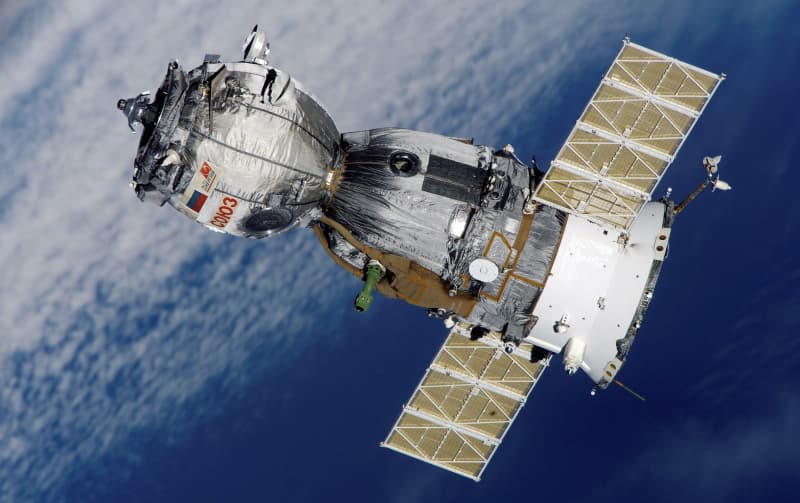
For most casual stargazers, the most common possibilities include artificial satellites, the International Space Station, airplanes, and meteors.
Among these, artificial satellites match the description of a "slow-moving star" remarkably well. Under the right conditions, they appear as a simple point of white or slightly tinted light gliding across the starry background at a steady pace. The entire transit can last anywhere from several dozen seconds to a few minutes before the point of light gradually dims or fades away completely.
This looks quite different from what many people picture when thinking of a satellite—the naked eye cannot discern the physical structure of the satellite itself; you are seeing only the sunlight reflected off it.
Do Artificial Satellites Emit Their Own Light?
Most artificial satellites visible to the naked eye do not emit strong light on their own; rather, they reflect sunlight.
Even after night has fallen at your location on the ground, satellites orbiting hundreds of kilometers above are often still illuminated by the sun. Sunlight bounces off the satellite's body, solar panels, or structural materials toward the Earth, making it appear as a moving pinpoint of light to observers below.
This explains why the period shortly after sunset and just before sunrise is usually the most favorable time for satellite spotting.
During these hours, the sky on the ground is dark enough to provide contrast, while high-altitude satellites remain in direct sunlight.
Once a satellite moves into Earth's shadow, it loses direct sunlight and its brightness drops rapidly. This leads to a fascinating visual effect: a "star" that was moving steadily across the sky suddenly fades out and disappears completely.The satellite hasn't vanished—it has simply stepped into Earth's shadow.
Can You Really See Satellites with the Naked Eye?
Absolutely.
Under ideal, pitch-black conditions, the human eye can theoretically detect stars down to about 6th magnitude. In practice, however, your observing limit depends on factors such as light pollution, moonlight, eye health, and atmospheric transparency. In cities, the number of visible stars is far lower than in truly dark rural areas.
The brightness of artificial satellites varies widely.
Some satellites are far too faint to notice with the naked eye, while others—given favorable angles of solar illumination—can reach remarkable brightness levels that are easily spotted. The International Space Station (ISS), in particular, becomes one of the most brilliant moving objects in the night sky during ideal overhead passes.
Therefore, the idea that "satellites are too small to be seen with the naked eye" is a common myth.
While we cannot resolve the physical shape of a satellite without heavy optics, we can easily see the sunlight it reflects—just as we can see distant stars without being able to resolve their surfaces.
How Can You Tell the Difference Between a Satellite and an Airplane?
This is one of the questions beginners ask most often.
When distinguishing a satellite from an airplane, you should focus on the lights and the pattern of movement.
Airplanes carry navigation and anti-collision lights, making them easily identifiable at night by red, green, or white lights, some of which flash at regular intervals. If the aircraft is flying relatively low or nearby, you may also hear engine noise.
Satellites operate quite differently.
They appear as a steady point of light without the rhythmic, continuous flashing of an aircraft's stroboscopic anti-collision lights, and their path across the sky is remarkably smooth. A satellite typically enters view from one part of the sky and moves steadily toward another in a single, predictable arc.
However, "flashing" is not an absolute rule. Varying distances, viewing angles, and atmospheric conditions can alter how an object looks. Therefore, the most reliable method is to combine light patterns, flight path, duration, and satellite tracking data to make a confident identification.
How Can You Tell the Difference Between a Satellite and a Meteor?
The difference between a meteor and an artificial satellite is usually even more pronounced.
Meteors enter Earth's atmosphere at extreme speeds, appearing as a sudden streak of light across the sky. Most typical meteors last for just a fraction of a second or a few seconds before rapidly disappearing.
Satellites, by contrast, move much more deliberately.
If a point of light—comparable in size to an ordinary star—moves at a steady speed across the sky for dozens of seconds or even several minutes, it is far more likely to be a satellite than a meteor.
To put it simply: A flash or quick streak of light is usually a meteor; a steady star-like point moving smoothly for minutes is usually a satellite.
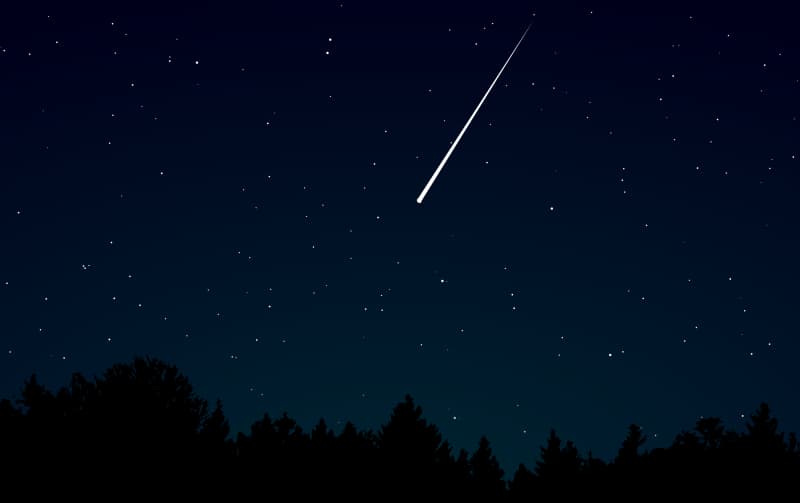
This is one of the easiest rules of thumb for beginners to master without needing any equipment.
Why Do Moving Satellites Suddenly Disappear?
If you have ever tracked a satellite across the night sky, you might have experienced a puzzling moment: while moving steadily, it suddenly dims and vanishes entirely.
The most common reason for this phenomenon is that the satellite has passed into Earth's shadow.
For a satellite to be visible, a precise geometric alignment is required between the Sun, the satellite, and the observer. Once the satellite enters the cone of shadow Earth casts into space, direct sunlight can no longer reach it, causing the light reflected toward the ground to drop off rapidly.
In addition, changes in a satellite's brightness can occur due to its orbital attitude and changing reflective angles relative to your vantage point.
Therefore, when a "moving star" fades away well before reaching the horizon, it does not mean it has veered off course or come to a sudden halt—it simply means it is no longer reflecting enough sunlight in your direction.
What Does the International Space Station Look Like in the Night Sky?
If you want to try naked-eye satellite viewing for the first time, the International Space Station is one of the best targets for beginners.
During a favorable pass, the ISS typically appears as a brilliant, brilliant white point of light. Rather than flashing past in an instant like a meteor, it glides steadily across large swathes of the sky in a crossing that can last several minutes.
Even with the naked eye, you can watch the entire sequence as it rises near the horizon, grows brighter, crosses the sky, and then loses altitude or slips into Earth's shadow.
For anyone starting out in amateur astronomy, this is a fascinating experience: you are not looking at a star hundreds or thousands of light-years away, but a human-made spacecraft traveling at high speed in low Earth orbit.
When Is the Best Time to See Satellites?
If you want to actively look for night sky satellites, your best bet is to observe during the hours shortly after sunset or just before sunrise.
Beyond timing, sky conditions also play a crucial role.
Aim for clear, transparent nights with minimal cloud cover, and try to position yourself away from direct glares like bright streetlights. Heading out to suburban or rural areas with lower light pollution makes it much easier to spot fainter satellites while revealing a far greater number of stars at the same time.
Moonlight is another factor to consider. Around a full moon, the bright sky background washes out dimmer satellites, making them harder to spot.
Additionally, satellites do not pass over the exact same spot in your sky every night. For planned observations, you can use satellite tracking websites or apps to look up satellite passes, directions, elevation angles, and predicted brightness customized to your precise location.
You Can Start Satellite Spotting Without a Telescope
One of the biggest advantages of observing artificial satellites is that there is virtually no equipment barrier to entry.
In fact, using a high-magnification astronomical telescope for your first satellite observation is not recommended. Because satellites move relatively quickly across the sky and telescopes have a narrow field of view, beginners often find it difficult to keep a target centered and tracked.
Your naked eyes are the simplest tool for satellite viewing.
All you need to do is find a location with an unobstructed view of the sky, let your eyes adapt to the darkness, and observe the night sky patiently. Checking the pass times for the International Space Station or brighter satellites in advance will greatly increase your chances of a successful sighting.
As you gain experience, you will come to realize that the night sky is far less "static" than it appears on the surface.
Next Time You See a Moving "Star," Try Identifying It Yourself
The next time you spot a slowly moving light in the night sky, take a moment to observe its speed, brightness, and flashing pattern.
If it streaks across the sky in a flash, leaving a momentary trail, it is likely a meteor; if you see red, green, or white lights flashing at regular intervals, it is more likely an airplane; if it glides quietly like a steady star for dozens of seconds or several minutes, it is very likely a visible satellite. If that point of light happens to be exceptionally brilliant, you may even be watching the International Space Station pass overhead.
For beginner astronomy enthusiasts, learning how to tell satellites, airplanes, and meteors apart is one of the easiest introductory night sky exercises. It requires no expensive telescopes—just looking up and observing. Once you understand these moving lights, you will realize that alongside the stars, the Moon, and the planets, human-made spacecraft have become a fascinating part of our modern night sky.