
As June draws to a close, the Northern Hemisphere officially enters the most spectacular stargazing season of the year. For astronomy enthusiasts in North America, the coming weeks offer a prime opportunity to observe the Milky Way, globular clusters, and planets. This week’s night sky features not only striking pairings of the Moon with bright stars but also highlights such as the famous Hercules Globular Cluster (M13), the binary star Albireo in Cygnus, and Saturn, which is rapidly approaching its optimal viewing period.
With ideal weather conditions and a location away from urban light pollution, it may even be possible to admire the Summer Milky Way stretching across the night sky with the naked eye.

June 27: The Moon and Spica Dance in the Night Sky
In the early evening, a bright waxing gibbous moon appears in the southern sky, accompanied nearby by Spica, the brightest star in the constellation Virgo.
Located approximately 250 light-years from Earth, Spica is a blue-white giant star that is far more luminous than the Sun. It is consistently one of the most easily recognizable bright stars in the night sky during the late spring and early summer in the Northern Hemisphere.
For astrophotography enthusiasts, the Moon and Spica sharing the same frame create a visually stunning scene. This view can be easily captured using a telephoto lens with a focal length of 200mm or greater.
At the same time, the craters along the lunar terminator—the line separating the illuminated and dark sides of the Moon—are in prime condition for observation. Through binoculars or a small telescope, one can see numerous craters casting distinct shadows in the sunlight, creating a striking three-dimensional effect.
June 28: Seeking M13, the Great Globular Cluster in Hercules
As night falls, turn your gaze toward the high eastern sky.
M13—hailed as one of the most spectacular globular clusters in the Northern Hemisphere—has risen to an ideal altitude for observation.
Located in the constellation Hercules, M13 lies approximately 22,000 light-years from Earth and contains over 300,000 stars. Spanning more than 140 light-years in diameter, it is one of the most famous deep-sky objects in the Milky Way.
In areas with minimal light pollution, binoculars reveal it as a faint, fuzzy, circular patch of light.
When viewed through a telescope with an aperture of 150mm or larger, individual stars along its periphery begin to resolve, appearing like countless diamonds set against the black canvas of the sky.
For those new to deep-sky observing, M13 is often one of the very first globular clusters successfully spotted.
June 29: Prime Time for Observing the Galactic Center
One of the most anticipated celestial sights this week is the view of the Milky Way's central region.
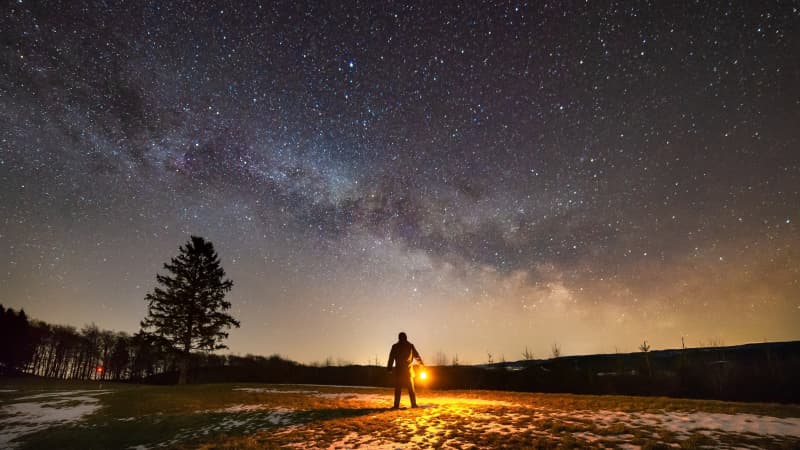
Around midnight, the brightest part of the Milky Way rises high in the southern sky. Packed with a vast array of stars, nebulae, and star clusters, this is the most spectacular section of the entire galaxy.
The constellation Scorpius is the first to catch the eye.
Its central star, Antares, is a famous red supergiant; its distinct reddish hue makes it very easy to identify.
Using binoculars, you can easily spot several famous deep-sky objects near Antares:
M6 (Butterfly Cluster)
M7 (Ptolemy Cluster)
M8 (Lagoon Nebula)
M20 (Trifid Nebula)
These targets are all located near the densest star fields of the Milky Way.
If you are in a dark-sky location—such as the mountainous western United States, the Canadian Prairies, or a national park—you may even be able to see the Milky Way stretching across the night sky like a glowing river.
June 30: Observing the Lunar Surface on the Eve of the Full Moon
The Moon is approaching its full phase this week.
While the intense moonlight may hinder deep-sky observations, it offers a perfect opportunity for lunar photography and observing surface details.
At high magnification, focus your attention on:
Tycho Crater
Copernicus Crater
Plato Crater
Mare Imbrium (Sea of Rains)
The ray system extending outward from Tycho Crater, in particular, appears especially spectacular as the Moon nears fullness.
Nowadays, many smartphones can be used with a telescope adapter to take photos of the lunar surface, making it an accessible activity for beginners.
July 1: Saturn Enters Peak Observing Season
After 2:00 AM, Saturn is already visible in the southeastern sky.
Although it is still some time before this year's opposition, observing conditions for Saturn are steadily improving.
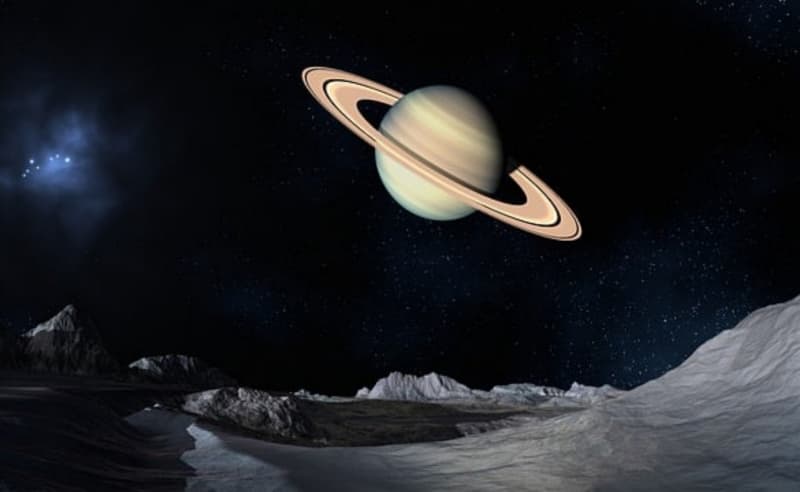
Even with a small telescope—around 80mm in aperture—you can easily view its famous ring system.
When atmospheric conditions are stable, you may even be able to discern subtle details within the rings, such as the Cassini Division.
At the same time, several moons appear around Saturn, including:
Titan
Rhea
Tethys
Dione
These moons are among the most captivating features of the Saturnian system.
For beginners who have just purchased a telescope, Saturn is often the most awe-inspiring object to observe.
July 2: Admire One of the Sky's Most Beautiful Binary Star Systems
Tonight is a great time for observing binary stars.
Albireo, located in the constellation Cygnus, is hailed by many astronomy enthusiasts as the most beautiful binary star system in the sky.
Its most striking feature is the distinct color contrast:
The primary star displays a warm golden-yellow hue, while the companion star exhibits a blue-green tint.
Even with a small refracting telescope—such as one with a 70mm aperture—the two stars can be easily resolved.
This vivid color contrast often leaves a lasting impression on first-time observers.
Meanwhile, as Cygnus rises higher in the sky, the famous Summer Triangle is taking center stage in the night sky.
July 3: Milky Way Photography Season in Full Swing
As the week draws to a close, the moon rises later each night, creating more favorable conditions for photographing the Milky Way.
Around midnight, the galactic core reaches its optimal elevation for the week.
Photography enthusiasts might consider capturing the following:
Panoramic Milky Way arches
Compositions featuring the Milky Way and mountains
Milky Way reflections in lakes
Star trails
Close-ups of the galactic core
Recommended gear:
Fast lens (f/2.8 or wider)
Wide-angle lens (14–24mm)
Sturdy tripod
Equatorial mount (optional)
In North America, "Dark Sky" regions—such as those in Arizona, Utah, Colorado, and Alberta, Canada—are popular destinations for Milky Way photography.
Summary of Key Observations for the Week
The celestial spectacle is intensifying this week, marking the official arrival of the prime season for summer stargazing.
Highlights include:
A close pairing of the Moon and Spica
M13 (the Hercules Globular Cluster) entering its optimal viewing window
The Galactic Center rising to an ideal altitude
Improving viewing conditions for Saturn
The stunning colors of the binary star Albireo in Cygnus
The full onset of the Milky Way photography season
For astronomy enthusiasts in North America, the months of July and August offer the best opportunities to observe the Milky Way and deep-sky objects. If the skies are clear, grab your binoculars or telescope and head to a dark-sky location away from city lights—you are sure to enjoy an unforgettable stargazing experience.