
Late May 2026 marks one of the best periods for stargazing in the Northern Hemisphere each year. As the waxing crescent moon gradually transitions into a gibbous moon, conditions for observing deep-sky objects, binary stars, globular clusters, and planets improve significantly.
This week's noteworthy celestial events include: Mercury reappearing low in the western sky after sunset; the Spring Triangle entering its best visibility period; and the famous globular cluster M80 entering its ideal observation window for the year.
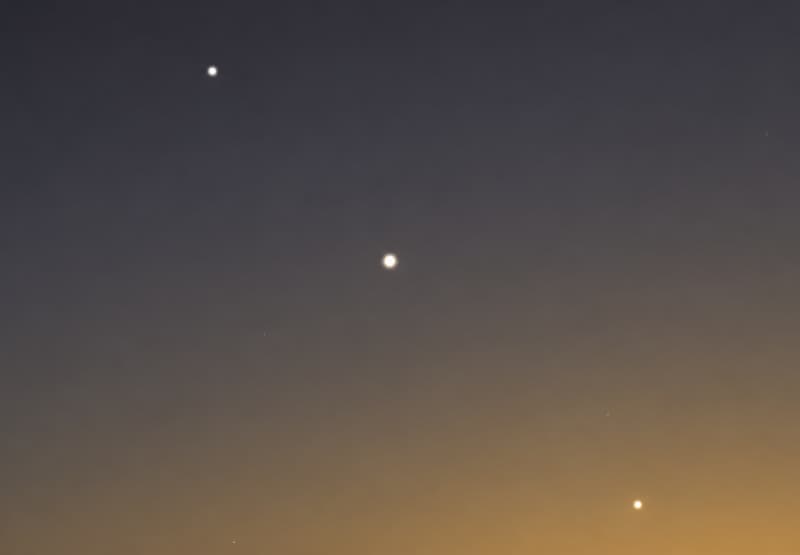
For astronomy enthusiasts, this week presents a golden opportunity for detailed lunar observations using binoculars and small telescopes.
May 22: The Spring Triangle Illuminates the Night Sky, Moon Approaches Regulus
On the evening of May 22, the famous "Spring Triangle" will take center stage in the night sky. This massive constellation of stars—Acturus, Spica, and Denebola—will be highly visible.
It includes:
Arcturus in Boötes
Spica in Virgo
Deniheim in Leo
About an hour after sunset, this triangle will appear in the Southern Sky. Due to the extreme brightness of these three stars, they are easily identifiable even in lightly lit urban environments, making them a popular choice for novice astronomical navigation.
Simultaneously, the Moon will approach Regulus, the brightest star in Leo. With binoculars, you might even be able to observe the spectacular sight of the Moon and stars appearing side-by-side.
For North American stargazers, the Spring Triangle is not only an important marker of the changing seasons, but also signifies that the Galactic Core will soon return to the night sky in the summer.
May 23: First Quarter Moon Offers Optimal Lunar Observation Opportunity
The first quarter moon will arrive at 7:11 AM Eastern Time on May 23.
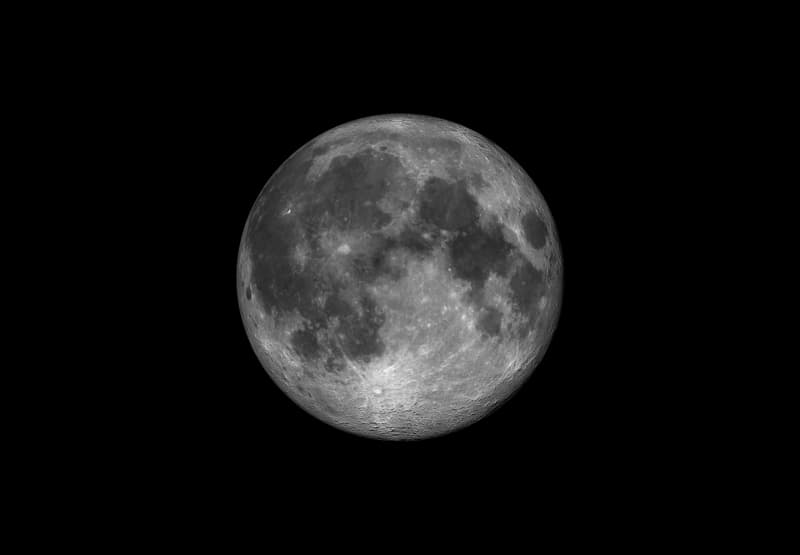
This is one of the best times of the year for lunar surface observation. At this time, a distinct shadow forms near the terminator, enhancing the three-dimensionality of craters, lunar mountains, and rilles.
The most worthwhile areas to observe tonight include:
Aristoteles Crater
Eudoxus Crater
Vallis Alpes
Vallis Alpes is considered one of the most challenging lunar structures for amateur astronomers. This 166-kilometer-long valley contains a very thin rille at its center, requiring high magnification and stable seeing conditions to observe.
If you have a reflector telescope with an aperture of 6 inches or more, tonight is a great opportunity to try and capture details of the lunar valley.
May 24: Asteroid 13 Egeria Passes Through Virgo
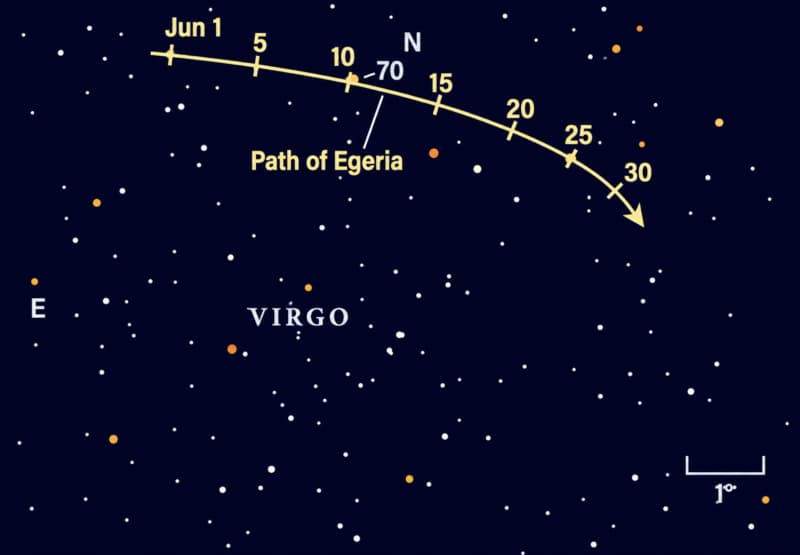
On the evening of May 24, asteroid 13 Egeria will pass through the inner constellation Virgo, providing an ideal target for astrophotography enthusiasts.
Egeria is one of the large objects in the Main Asteroid Belt, with a magnitude of approximately 11, and can be observed with a medium-sized telescope.
How to find it:
1. Locate the bright star Spica.
2. Move it about 5° north.
3. Use a star chart to locate the moving object.
Because asteroids can shift significantly within hours, many amateur astronomers use the "blink comparison" method to confirm its trajectory.
May 25: Mercury Reappears in the Evening Sky
The most anticipated planetary event of the week is undoubtedly Mercury's return to the evening sky.
Due to Mercury's long proximity to the Sun, it is usually difficult to observe. However, around May 25th, Mercury will reach its best evening apparition.
Approximately 30 minutes after sunset:
Mercury will be low in the western sky.
Brightness: approximately -1.1 magnitude
Altitude: approximately 6° above the horizon
More importantly, Venus, Jupiter, and Mercury will form a clear visual line, making them ideal for naked-eye observation.
With a telescope:
Venus's apparent diameter: approximately 13 arcseconds
Mercury's: approximately 6 arcseconds
Both will be in waxing phase (Gibbous phase)
This is one of the most photographable planetary landscapes over North America in May 2026.
May 26: Observe Lunar Librations
On the evening of May 26, lunar libration will be very noticeable.
Libration refers to the slight wobble that occurs during the Moon's orbital motion, a phenomenon that allows observers on Earth to see areas of the lunar surface that are normally hidden near the edges.
The most noteworthy features tonight are:
Mare Serenitatis
Endymion Crater
Normally, Endymion appears elongated due to perspective. However, tonight, due to the libration, it will appear more rounded.
May 27: Searching for the "Ruby Star" La Superba
Y Canum Venaticorum, also known as "La Superba," is one of the most famous carbon stars in the night sky.
Its most distinctive feature is its extremely intense deep red color.
This is due to:
A carbon-rich atmosphere
Absorption of blue light wavelengths
The ability of red light to penetrate
Therefore, even with ordinary binoculars, its color is clearly distinct from that of ordinary stars.
Currently, its brightness is approximately magnitude 6, making it suitable for:
Binocular observation
Small refracting telescopes
Astrophotography Many North American deep-sky observers refer to it as the "ruby of the night sky."
May 28: M80 Globular Cluster Enters Optimal Observation Window
In the early morning of May 28, the famous globular cluster M80 will reach an ideal observation altitude.
M80 is located in the constellation Scorpius, near the red star Antares.
It has several very distinctive characteristics:
Magnitude approximately 7.3
Extremely dense structure
Contains hundreds of thousands of stars
Approximately 32,600 light-years from Earth
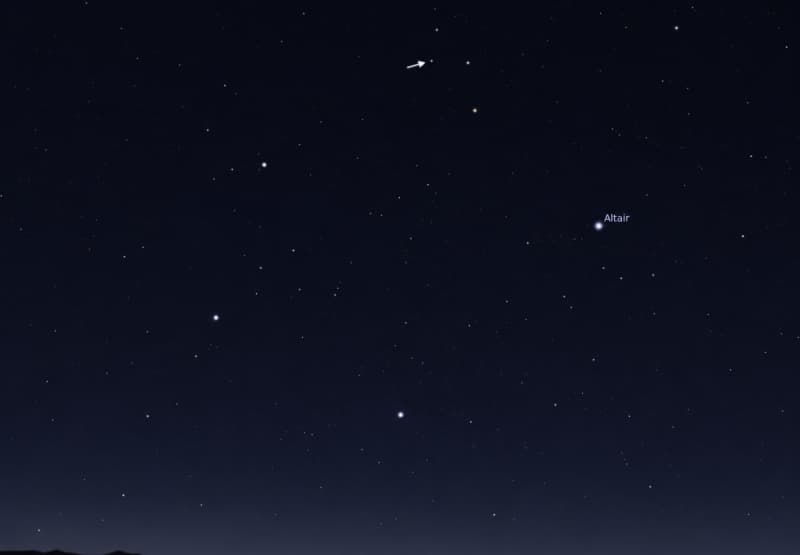
With small telescopes, M80 will appear as a bright, fuzzy patch of light; larger instruments can resolve the outer stellar structures.
Due to its high-density structure, many observers believe that M80 looks like a "tailless comet nucleus."
May 29: The Famous Binary Star ν Draconis Reaches its Best Observation Period
The last major target of the week is the classic binary star system ν Draconis in the constellation Draco.
The greatest charm of this binary system lies in:
The two stars are almost identical in brightness
The star spacing is extremely wide
It can be separated using binoculars.
For beginners, it is one of the best targets for learning "double star splitting."
Many North American astronomical societies include ν Draconis in their "Top Ten Binary Star Observations for Beginners."
If you have a stable equatorial mount and a high-magnification eyepiece, you can even further challenge its inner companion star system.
North American Stargazing Summary for May 2026: This Week is the Golden Window for Spring Deep Sky Observation
The night sky in late May 2026 covers almost all the classic types of observation in amateur astronomy:
Planetary Observation
Lunar Observation
Asteroid Tracking
Globular Cluster Observation
Double Star Observation
Astrophotography