
June's night skies are entering one of the best times of the year for observing deep-sky objects. In the coming week, both binocular users and telescope enthusiasts will find targets worth tracking. From the ancient globular cluster M5 and the vibrant binary star system Albireo, to the captivating Sunflower Galaxy M63, and the close encounter between Venus and Jupiter, this week's night skies are packed with events.
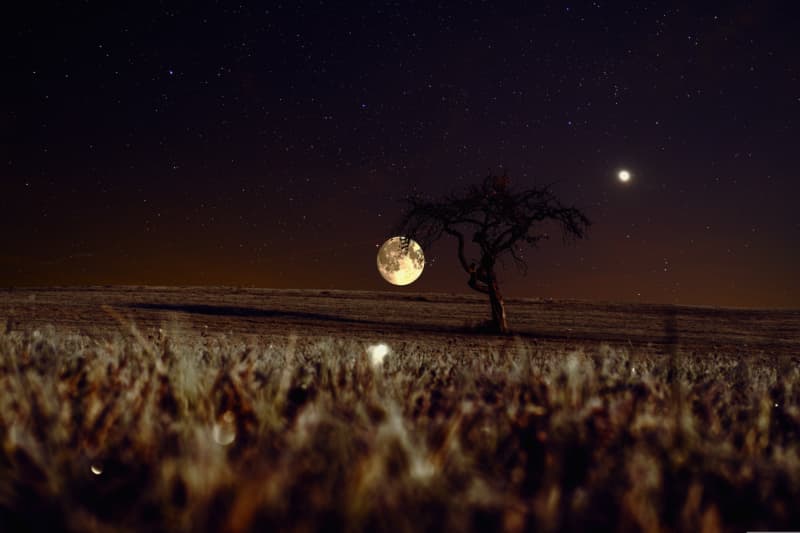
Below is a list of noteworthy astronomical phenomena for this week, arranged by date.
June 5: Observing the Ancient Globular Cluster M5
As night falls, Messier 5 (M5), located near Ophiuchus, will appear high in the south, making it one of the most worthwhile deep-sky targets to observe this week.
M5 is approximately 24,500 light-years from Earth and contains over 100,000 stars. It is considered one of the oldest globular clusters in the Milky Way, dating back to the early universe.
In areas with low light pollution, experienced observers can even spot it with the naked eye. With binoculars, M5 appears as a circular, hazy patch of light; however, with medium to large telescopes, its outer stars gradually become distinguishable, forming a typical granular structure.
Note that there is another star of similar brightness nearby that can easily be confused with M5; therefore, it is recommended to prepare a star chart beforehand for easier location.
June 6: Admire the Famous Colorful Binary Star Albireo
As summer approaches, the Summer Triangle begins to emerge in the night sky.
Tonight, we recommend observing Albireo (Uranus) in the constellation Cygnus, one of the most popular binary star systems of the day.
Albireo's most captivating feature isn't its brightness, but rather its striking color contrast. Even with a small telescope, you can see two stars of different colors:
The primary star appears a warm golden yellow.
The companion star emits a bluish-white glow.
Due to differences in color perception, different observers may see slightly different hues. Some may perceive the companion star as bluish, while others may perceive it as greenish.
This visual effect has long made Albireo an important target for amateur astronomers to test the imaging capabilities of their telescopes.
June 7: Searching for the Sunflower Galaxy (M63)
If you enjoy observing extragalactic galaxies, don't miss M63 in the constellation Canes Venatici tonight.
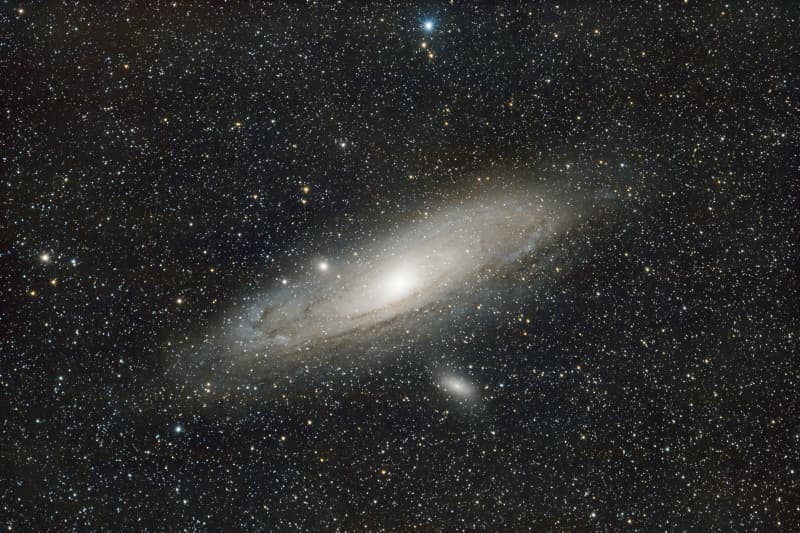
This galaxy is approximately 30 million light-years from Earth and belongs to the famous M51 galaxy group, thus both belonging to the same large cosmic structure.
M63 is nicknamed the "Sunflower Galaxy" because its spiral arms resemble sunflower petals.
Observing M63 is not difficult with telescopes of 80mm or larger. Observers will typically first see a bright, compact core region surrounded by a fainter elliptical halo.
However, the true details of its spiral arms are extremely faint, requiring excellent sky conditions and high magnification even with large-aperture equipment to detect them discernibly.
June 8th: The Last Quarter Moon and the Venus-Jupiter Double Star Show Begins
Today, the moon will be in its last quarter phase.
Meanwhile, the most eye-catching phenomenon in the western sky this evening will be Venus and Jupiter.
About an hour after sunset, the two planets will appear low in the western sky:
Venus, approximately -4 magnitude
Jupiter, approximately -2 magnitude
Their distance will have narrowed to less than 2 degrees, allowing binoculars to easily capture both in the same field of view.
When observed through a telescope, it will be clearly visible that:
Venus will appear as a gibbous shape
Jupiter will appear as a complete disk.
Although the two planets are similar in brightness, their actual sizes differ significantly; Jupiter's apparent diameter is much larger than Venus's.
June 9th: Venus officially passes by Jupiter's north side.
Tonight will see one of the most anticipated celestial events of the week.
Venus appears to move faster than Jupiter across the sky, and has therefore passed by Jupiter's north side.
If observed for two consecutive nights, the change in Venus's position will be clearly visible, while Jupiter remains almost stationary.
This is the visual effect caused by the changing orbits of the planets relative to Earth.
When observed with binoculars, both planets will still appear in the same field of view, offering a great opportunity to capture a planetary conjunction.
Photography enthusiasts can use:
Lenses with a focal length of 200mm or longer
Tripod
Low ISO settings
to record this rare spectacle.
June 10: The Moon Approaches Saturn
At dawn, the eastern sky will witness the Moon and Saturn appearing side-by-side.
Saturn, located in the constellation Pisces, will be nearly magnitude 1 and remain quite prominent before sunrise.
Through a telescope, you will be able to see:
Saturn's rings are clearly visible.
The rings are tilted at approximately 8 degrees.
Titan is located near the planet.
Observers with telescopes of 150mm or larger may be able to distinguish even more of Saturn's moons.
Meanwhile, Mars will also be nearby, adding another touch of orange-red light to the morning sky.
June 11: Challenge NGC 188 near the North Pole
Tonight, we recommend observing an easily overlooked target—NGC 188.
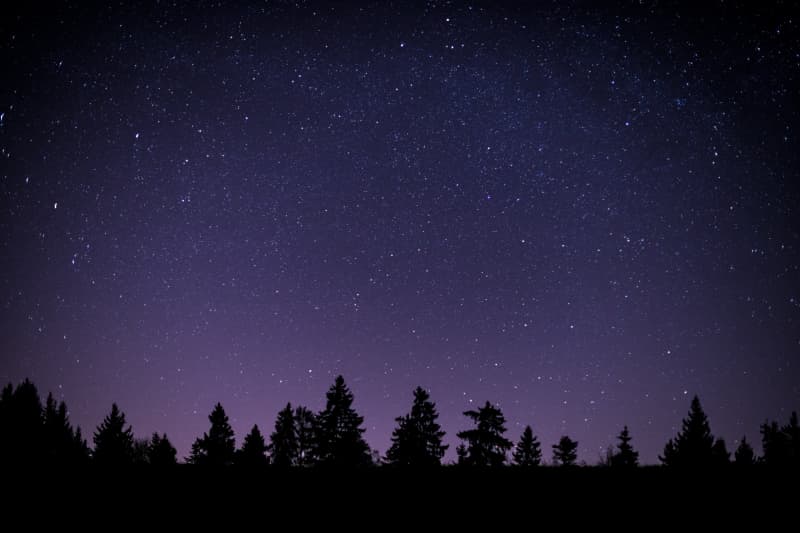
Because of its very proximity to the North Celestial Pole, it's almost always visible throughout the year.
NGC 188 is an ancient open cluster, possibly billions of years old, and is considered one of the oldest open clusters in the Milky Way.
It's approximately 5,000 light-years from Earth and is listed as target number one in the Caldwell Catalogue.
Its faint outline can be detected with binoculars, while a medium-sized telescope can further resolve its many member stars.
June 12: Crescent Moon and Mars in the Same Frame
This week's observation activities will conclude with a close encounter between the Moon and Mars.
Before dawn, the waning crescent moon will be located in the constellation Aries, forming a striking pair with Mars.
Mars is currently still quite far from Earth, so even with high-powered telescopes, it's difficult to see significant surface details.
However, its distinctive orange-red color is still easily recognizable.
Near Mars, you can also try to find the famous Pleiades star cluster (M45). This young open cluster consists of numerous blue-white stars and is excellent for viewing with binoculars.
This Week's Key Observations Summary: The most noteworthy phenomena in the coming days include:
1. The observation window for the M5 globular cluster opens;
2. Optimal viewing period for the Albireo color binary star system;
3. The Sunflower Galaxy (M63) is suitable for deep-sky photography;
4. Venus and Jupiter will meet at close range;
5. The Moon will approach Saturn;
6. A waning crescent moon will accompany Mars rising.
For observers in North America, early June nights are pleasantly warm, and the Milky Way's core is gradually entering its best observation season. Whether for planetary observation, deep-sky exploration, or astrophotography, this week will offer a wealth of exciting observation opportunities.