
North America boasts some of the world's best stargazing conditions, with numerous low-light-pollution observation points stretching from the high-altitude deserts of the western United States to the prairie regions of Canada. However, North America is also highly urbanized, experiences significant weather variations, and suffers from substantial latitudinal differences, all of which directly impact the stargazing experience.
Therefore, truly mastering night sky observation requires more than simply buying a telescope. It necessitates understanding the laws governing the sky, recognizing seasonal changes in the night sky, mastering the characteristics of observation equipment, and learning how to observe at the right time and place.
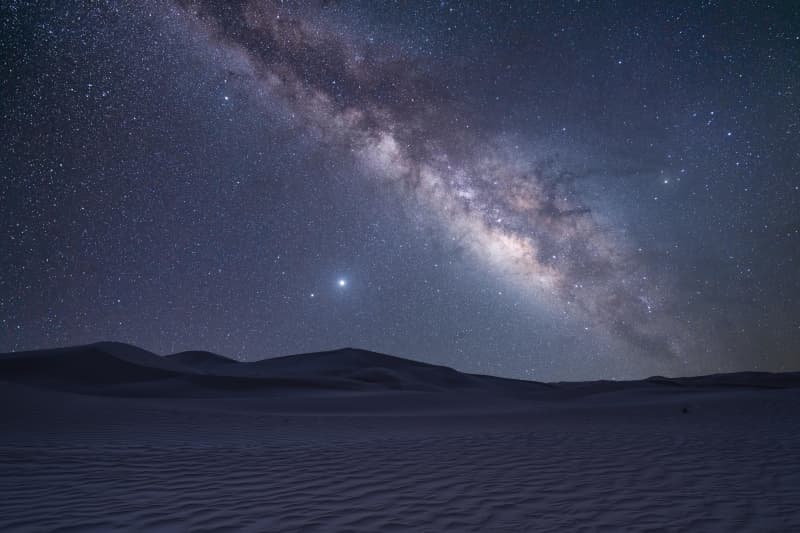
For astronomy enthusiasts just starting out, the naked eye remains the most important "observational tool." North America, primarily located in the mid-latitudes of the Northern Hemisphere, experiences four distinct seasons, each offering entirely different celestial structures. Spring is ideal for searching for the Leo and Virgo galaxy clusters, summer is the most spectacular time to observe the Milky Way, autumn is suitable for observing deep-sky objects with binoculars, and winter offers the extremely bright constellation Orion and the winter Milky Way. Understanding these seasonal changes is the first step into astronomical observation.
Why is North America ideal for stargazing?
North America boasts many excellent stargazing regions, such as Arizona, Utah, and New Mexico in the southwestern United States, and Alberta in Canada. These areas offer dry, cloudless, and high-altitude environments with low atmospheric moisture content and high sky transparency. This reduces atmospheric scattering of starlight, resulting in clearer observations of the Milky Way and fainter stars.
Compared to densely populated regions like Europe and East Asia, North America has a much lower population density and numerous national parks and wilderness areas. For example, Death Valley National Park and Arches National Park in the United States, and Jasper National Park in Canada, are all certified Dark Sky Reserves by the International Dark-Sky Association. In these locations, the dust structure of the Milky Way is often visible to the naked eye.
Latitude is also a crucial factor affecting stargazing. Some southern states in the United States offer more views of southern constellations, while Canada, located in the high latitudes of the Northern Hemisphere, is more likely to observe the aurora borealis. Therefore, understanding latitude differences is essential for astronomy enthusiasts in North America, as it directly determines whether certain celestial objects can be observed.
How Light Pollution Affects the Stargazing Experience
Some beginners fail at stargazing not because of poor equipment, but because they ignore light pollution. Modern urbanization, with its LED streetlights, billboards, and building lighting, emits a large amount of stray light into the sky. This light, scattered in the atmosphere, significantly increases the brightness of the background sky, causing faint celestial objects to be obscured by light pollution. Deep-sky objects, especially the Milky Way, nebulae, and galaxies, are more easily affected.
In North America, most cities have a Bottler light pollution level between 7 and 9. Under these conditions, only a few dozen bright stars are visible to the naked eye. In the desert regions of the western United States, the Bottler light pollution level can reach 2 or even 1, making the Milky Way's cloud-like structure even more prominent.
Some astronomers believe that simply buying a large-aperture telescope can solve the light pollution problem, but this is not the case. While telescopes can collect more light, they also amplify the brightness of the background sky. In environments with severe light pollution, a large telescope may even be less effective than binoculars in a dark environment.
Therefore, one of the core principles for beginners learning to observe the night sky is to prioritize finding suitable dark locations.
Common Mistakes Beginners Make When Choosing Observational Equipment
Many novice astronomers immediately buy high-magnification telescopes. However, such specialized equipment is unnecessary at the beginning, and magnification is not the key factor determining observation quality.
The core parameter determining image quality is the telescope's aperture. A larger aperture collects more light, resulting in higher resolution. For most beginner astronomers, a small 70mm to 100mm refracting telescope is sufficient for observing the Moon, Jupiter, Saturn, and some bright nebulae.
The biggest advantage of refracting telescopes is their stable structure and simple maintenance, making them ideal for beginners. Their star inference is also very helpful for observing the Moon and planets. However, the downside is that large-aperture telescopes are usually more expensive.
Reflecting telescopes offer better value for money. In the North American market, the Dobson reflector has long been one of the most popular entry-level devices for amateur astronomers. It provides a large-aperture instrument at a relatively low cost, making it ideal for observing nebulae and galaxies. However, the reflector requires regular optical axis calibration, which is less user-friendly for complete beginners and requires a learning curve.
Compared to the previous two types, binoculars are often underestimated. For beginners, 7x50 or 10x50 binoculars are actually more practical, offering a wider field of view and making it easier to locate targets, ideal for observing the Milky Way or large star clusters.
Typical Observation Targets in the North American Sky During the Four Seasons
North America experiences distinct seasons, resulting in different celestial objects suitable for observation in each season.
Spring is often called "galaxy season" because the Milky Way's core is below the horizon during this period, creating a darker background. This makes many extragalactic galaxies in the Virgo and Coma Berenices regions easier to observe. Even with a small telescope, it's possible to see faint elliptical patches of galaxy light.
Summer is the most popular stargazing season in North America. The Milky Way's core rises higher at night, and Cygnus, Aquila, and Lyra form the famous "Summer Triangle." In the dark conditions of the southwestern United States, the Milky Way's dust lanes can even be seen with the naked eye.
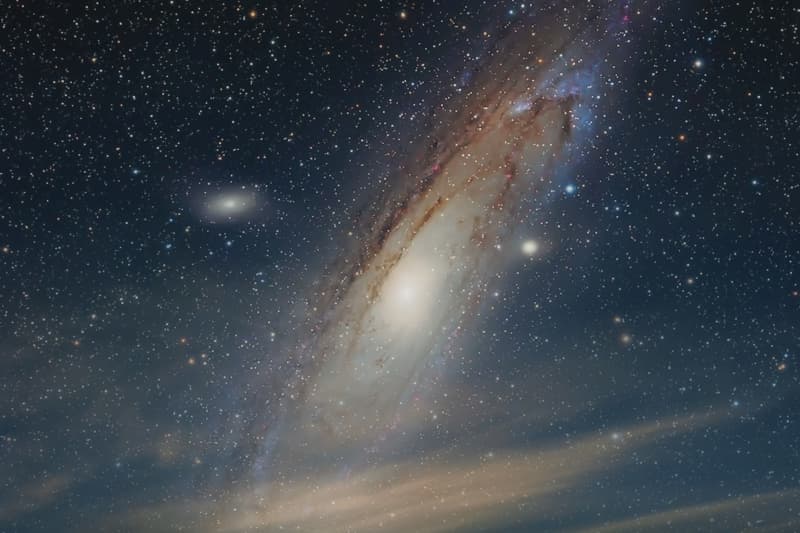
In autumn, the Andromeda Galaxy becomes one of the most important targets. Located 2.5 million light-years from Earth, it is the most distant celestial object visible to the naked eye. Under ideal viewing conditions, the Andromeda Galaxy appears as a long, hazy patch of light.
The winter sky boasts the brightest stars. Betelgeuse and Rigel in Orion are particularly prominent, and the Orion Nebula is one of the best deep-sky targets for beginner astronomers. Even in ordinary conditions, its cloud-like structure can be seen with a small telescope.
How Beginners Can Develop True Stargazing Skills
"How beginners can observe the night sky" is ultimately not a matter of equipment, but rather a matter of understanding.
Truly experienced astronomers can quickly determine whether the day's transparency, seeing, humidity, and lunar phase are suitable for observation. They know when it's best to observe planets, when it's best to observe the Milky Way, and they know how to use star chart apps to find deep-sky targets.
Therefore, for beginners, learning to identify seasonal constellations is more important than upgrading equipment. Only when you can locate Polaris using the Big Dipper, determine the direction of the Milky Way using the Summer Triangle, and identify the winter sky using Orion, will the entire night sky begin to show regularity, no longer just randomly distributed bright spots.
This is what truly makes amateur astronomy so appealing. Stargazing is not just about "seeing," but about understanding the structure of the universe. When every bright star and every constellation in the sky begins to have a clear position and meaning, the night sky itself becomes a map that can be read.